A fire ball placed near a workshop panel may add a useful first-response layer, but it cannot see through a closed cabinet or replace engineered detection, isolation, and portable-extinguisher provisions. You will be able to compare the two systems, identify a suitable mounting location, and decide what evidence to demand before approving one.
Key takeaways
- Use a fire ball as first response, not a replacement for panel suppression.
- Do not rely on it to reach fires inside closed electrical cabinets.
- Match placement to occupancy, heat sources, and workshop hazards.
- Approve the device only after checking agent, trigger, seal, and service records.
What a Fire Ball Adds That Panel Suppression Does Not
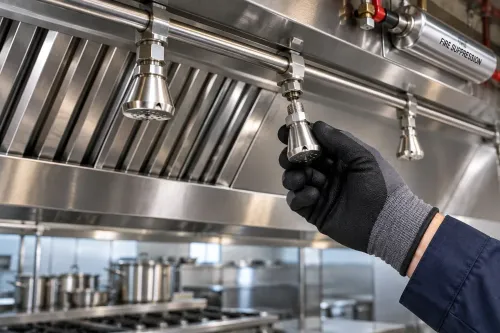
A fire ball can add a useful first-response layer near a workshop panel, but it does not duplicate the panel system’s protection. It activates after heat reaches its trigger and releases agent into the surrounding space; the installed system detects and discharges at designed points inside the protected enclosure.
The question “are fire balls for worth adding near workshop panel suppression systems in bhandup” has a narrow answer: yes, only when the device covers an exposed flame risk that the panel system does not cover. It is not primary panel protection.
| Option | Panel suppression system | Fire ball |
|---|---|---|
| Activation | Engineered detection and release | Heat-triggered activation |
| Discharge location | Nozzles aimed at internal risk points | Local discharge around the device |
| Coverage | Tested enclosure volume | Immediate flame zone |
| Agent quantity | Calculated for the protected volume | Fixed product charge |
| After discharge | Designed alarm, isolation and service response | Powder cleanup and device replacement |
Its supplementary value is strongest when:
- An exposed cable route or nearby combustible item could ignite outside the cabinet.
- The area has low occupancy, so delayed discovery creates a real response problem.
- You have a stable mounting point within the manufacturer’s specified distance from the hazard.
A fire ball will not provide total-flooding protection inside a sealed or compartmented panel unless its model-specific test covers that enclosure and mounting arrangement. It also does not replace a listed panel system, an appropriately rated portable extinguisher, electrical isolation procedures, or maintenance.
Treat it as an extra local safeguard, not as credit for removing any of those controls.
Can It Reach a Fire Inside a Closed Electrical Cabinet?
A fire ball will not reliably control a fire inside a closed electrical cabinet. If the device hangs outside an MCC, HT panel, or switchgear cabinet, its powder cannot be assumed to pass through doors, gaskets, partitions, cable entries, or ventilation paths.
That limitation applies to:
- A closed motor control centre (MCC)
- A high-tension (HT) panel
- A compartmented switchgear cabinet
An external fire ball acts where its heat-sensitive element detects flame; it is not a total-flooding system. Use it inside the enclosure only when the manufacturer provides a model-specific test report covering the cabinet volume, mounting position, discharge duration, and re-ignition performance. Otherwise, an installed panel suppression system provides better detection and agent placement.
Dry chemical powder can be non-conductive yet unsuitable for an energized panel. Require evidence of energized-equipment testing, personnel-exposure limits, toxicity information, and performance around busbars and hidden cable compartments. A live electrical fault can continue after discharge and reignite when power remains on.
The residue creates a second problem. Powder settles on contactors, relays, terminal blocks, filters, and ventilation paths, so post-discharge isolation, cleaning, insulation checks, and component inspection can exceed the fire ball’s purchase cost.
That is the fire ball value for electrical panels: supplementary early response near an accessible hazard, not a substitute for internal detection, isolation procedures, or tested panel suppression.
When Location, Occupancy, and Workshop Hazards Make the Difference
A fire ball is a sensible supplementary measure when a small, isolated ignition point is unattended, discovery could be delayed, and the device has a clear mounting position above the likely flame zone. It is not a substitute for panel suppression, electrical isolation, or a correctly rated extinguisher.
| Situation | Decision | Why |
|---|---|---|
| Low-occupancy area with an exposed cable route | Sensible | It can respond before a small flame reaches nearby limited combustibles. |
| Continuously occupied control room | Usually poor | Powder discharge reduces visibility, contaminates equipment, and may delay evacuation or fault isolation. |
| High heat, strong vibration, or impact exposure | Poor | The thermal actuator or mounting can be damaged, displaced, or triggered unnecessarily. |
| Heavy dust, water spray, condensation, or chemical vapour | Poor unless rated | Contamination and moisture can impair the device or its agent. |
| Bulk solvent, oil, packaging, or wood storage nearby | Poor as the main measure | A small discharge cannot control a rapidly spreading fuel load. |
| Sealed or compartmented electrical panel | Poor | Heat may not reach the ball, and the discharge does not automatically fill the enclosure. |
A fire ball for workshops in Bhandup has its strongest case beside, not inside, a panel: use it for an exposed, accessible flame zone where powder contamination is acceptable. It will not reliably detect smoke, arcing, or a hot connection that produces insufficient heat at the actuator.
Keep it away from welding sparks, moving machinery, forklift routes, and wash-down areas. A fire ball also cannot control a cable-tray, flammable-liquid, or housekeeping fire beyond its immediate discharge zone.
How to Specify and Inspect the Device Before You Buy
Do not approve a fire ball from a catalogue image alone. Require evidence for the exact model, because activation temperature, agent quantity, discharge duration, protected volume, and electrical suitability vary between products.
1. Obtain the model-specific fire-test report, agent safety data sheet, electrical-equipment test evidence, rated protected volume, activation-temperature tolerance, environmental limits, replacement interval, and instructions after discharge. “Automatic” and “non-toxic” are not test results.
2. Specify the mounting point on the drawing. Show the bracket, fixing method, clearance from the panel door, flame path, and distance from vibration, impact, water spray, dust deposits, welding sparks, and stored combustibles.
Do not place it where a falling device can block an exit or where an open workshop fire ball is expected to protect a sealed cabinet.
3. Confirm the site conditions against the manufacturer’s temperature, humidity, corrosion, vibration, and installation limits. Record whether the target is a panel exterior, cable route, or nearby storage; a device tested for one location does not automatically cover another.
4. Before handover, check the model and batch marking, intact seal, undamaged shell, secure bracket, unobstructed access, legible instructions, and replacement date. Add monthly visual checks to the fire-safety log and replace the unit after discharge or damage.
Ask Ignitek Solutions Pvt Ltd to document these points alongside the appropriately rated portable extinguisher; NFPA 10 requirements are not automatically satisfied by an automatic fire ball. Compare it with other workshop panel fire protection options without counting it as enclosure suppression.
Related products
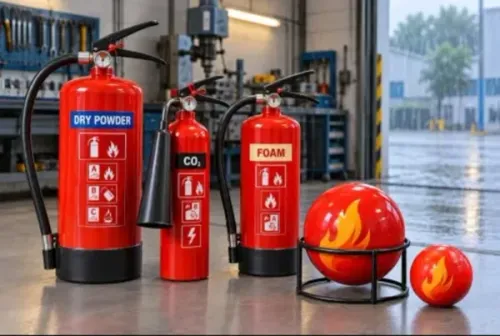
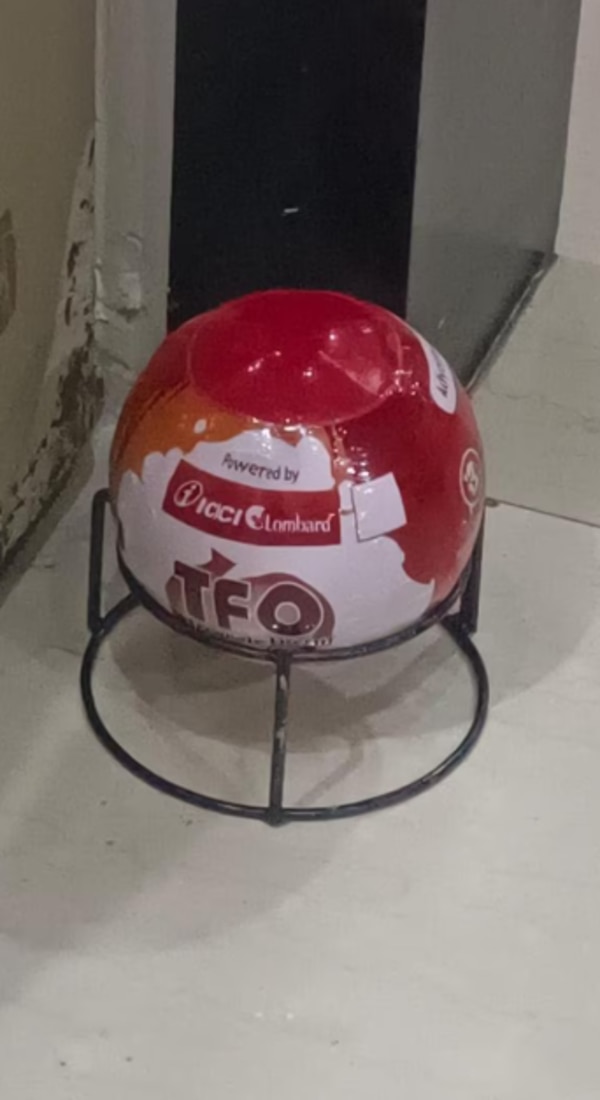
 | Fire Ball ₹1150 A “Fire Ball” is a lightweight, spherical extinguisher that activates automatically within 3–5 seconds of contact with flames. View product → |
 | Panel Suppression System 6 kg The Panel Protection System is the most effective and reliable product for protection of enclosed panels or cabinets from fire. |
A Practical Approval Test for a Bhandup Workshop
Approve a fire ball only when it adds early warning or first-response value without being credited as the panel’s primary protection.
1. Define the fire scenario. Record whether the credible event is inside a closed MCC or switchgear cabinet, along a cable tray, at an oil or solvent store, during hot work, or in general combustible stock.
An open-mounted device covers only its immediate flame zone; it does not protect a sealed enclosure unless its model-specific approval covers that volume and mounting arrangement.
2. Compare the fire ball with the installed panel system. Check activation temperature, agent type and quantity, discharge duration, detection method, protected volume, electrical-use evidence, and post-discharge cleanup. Require the exact model’s test report and installation instructions. Do not assume two similarly sized devices perform alike.
3. Reject the device if the panel needs detection before flame growth, the fault can reignite while energized, or powder discharge would endanger occupied work areas through lost visibility and contamination. Also reject locations exposed to damaging vibration, moisture, dust, impact, or poor access.
4. Verify the mounting point. It must face the hazard, remain unobstructed, stay within the manufacturer’s temperature and distance limits, and avoid interfering with panel doors, isolation controls, cable access, or the existing suppression discharge pattern.
5. Obtain written approval against the project’s National Building Code requirements, electrical-safety rules, Maharashtra fire-authority conditions, insurer terms, and client engineering standard. Keep inspection records and retain portable extinguishers; NFPA 10 provisions are not automatically satisfied by a fire ball.
If the device passes every step, label it supplementary first-response protection. If one fails, spend the budget on panel protection, isolation controls, detection, or housekeeping instead.
Frequently asked questions
What does a fire ball add near a workshop panel suppression system?
It provides a first-response layer in the surrounding area after heat reaches its trigger. A panel suppression system detects and discharges agent at designed points inside the protected enclosure, so the two devices serve different roles.
Can a fire ball extinguish a fire inside a closed electrical cabinet?
Do not assume it can. A fire ball outside the cabinet releases agent into the surrounding space, while a closed cabinet can block the agent from reaching internal components. Use protection designed for the enclosure and its electrical hazards.
What should determine fire ball placement in a Bhandup workshop?
Place it where heat from a likely fire can reach the trigger and where workers can access and inspect it without obstruction. Consider the panel layout, combustible materials, ventilation, occupancy, and nearby ignition sources.
What should you inspect before buying a fire ball?
Check the agent type, operating trigger, manufacturer identification, batch or serial number, intact seal, expiry or replacement instruction, mounting method, and service documentation. Confirm that the supplier can explain inspection and replacement procedures.
Related products
 | Panel Suppression System 2 kg The Panel Protection System is the most effective and reliable product for protection of enclosed panels or cabinets from fire. |
 | Panel Suppression System 4 kg The Panel Protection System is the most effective and reliable product for protection of enclosed panels or cabinets from fire. |
Keywords