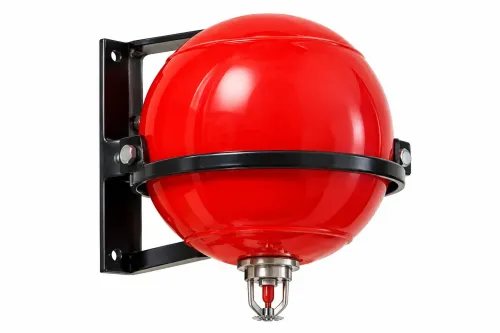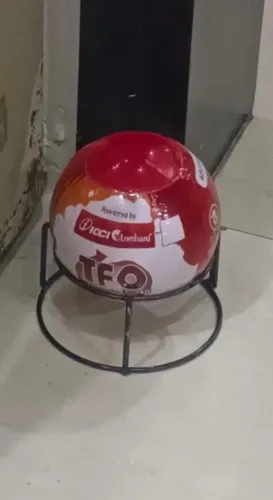
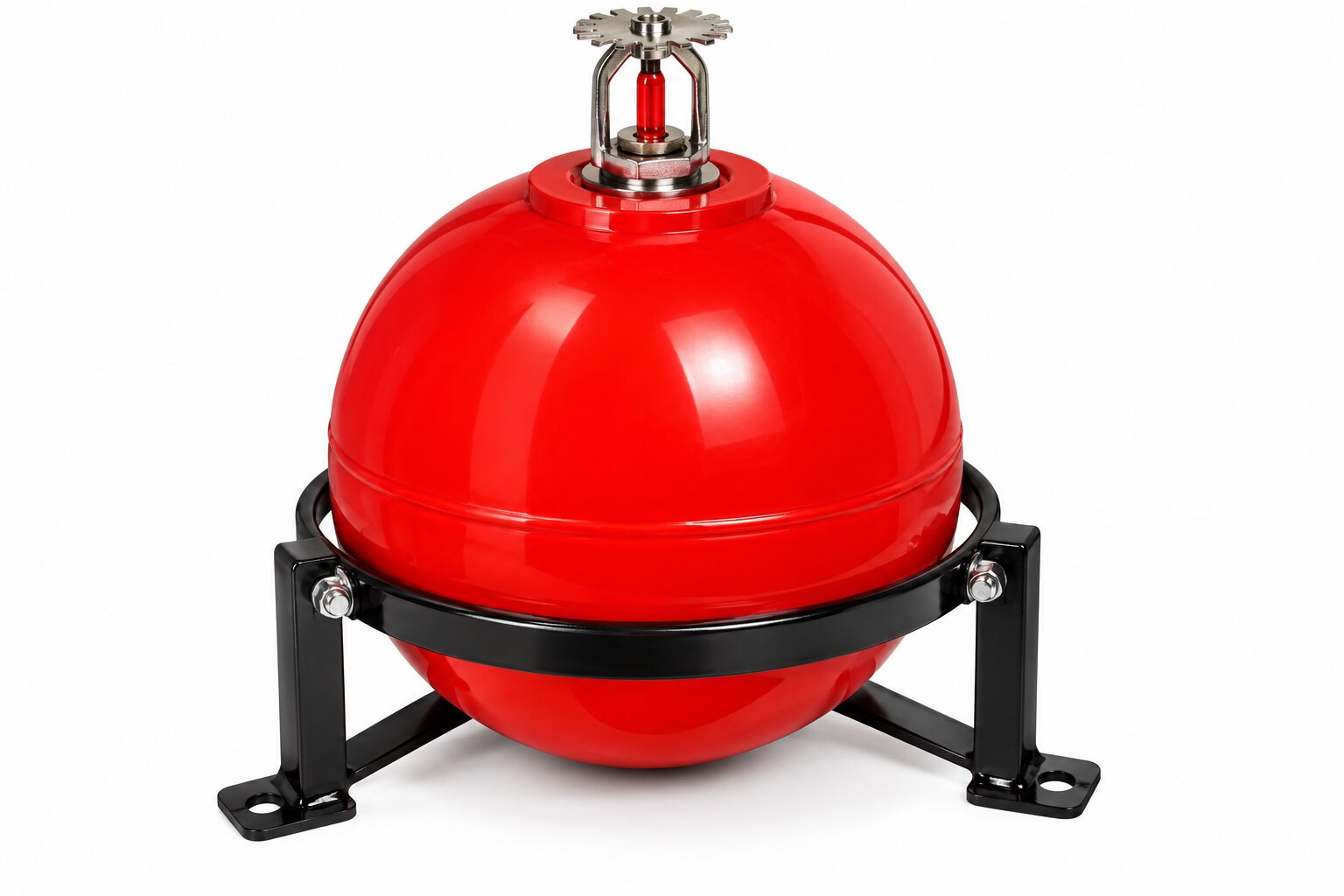
A fire ball protects only the hazard within its tested discharge reach, so mounting one in a food court does not automatically protect every stall, fryer, hood or duct. By the end, you will know how to map each cooking hazard, decide where a fire ball is supplementary protection, calculate the units required, and specify the evidence and controls needed before purchase.
Key takeaways
- Map cooking, electrical, storage and waste hazards before counting units.
- Use fire balls for small, defined risks—not whole kitchens, hoods or ducts.
- Ask for test reports, batch details, commissioning records and local fire review.
- Train staff to isolate fuel, raise the alarm and evacuate after activation.
Map every fire hazard before selecting a fire ball
Choosing a fire ball for food court fire protection in Bhandup starts with a hazard map, not a unit count. A fire ball protects the small area around its mounting point after flame or heat triggers it; it does not cover an entire kitchen, dining hall, hood, or exhaust duct.
Treat it as supplementary first response, not the fixed kitchen-suppression system.
| Area | Record before selection | Why it needs separate assessment |
|---|---|---|
| Cooking line | Fryers, griddles, ranges, tandoors, burners, fuel and hood dimensions | Oil, gas and solid-fuel fires require different control methods |
| Gas and service zone | LPG cylinders, regulators, hoses, shut-off valves and access | A ball will not isolate gas after activation |
| Electrical zone | Distribution boards, cables, appliances and isolation points | Dry powder can contaminate equipment; use correctly rated protection |
| Hood, filter and duct | Hood layout, filters, concealed voids and duct route | A visible flame ball cannot suppress a hidden duct fire |
| Public and support areas | Seating, waste-oil storage, corridors, exits and responder access | Occupant evacuation and combustible-waste risks differ from cooking risks |
- Photograph each hazard and mark its position, clearances, mounting height, access route and nearby steam, oil splash or cleaning-chemical exposure.
- Record extinguisher locations separately: cooking-oil, ordinary-combustible and energized-electrical hazards are not one-device hazards.
- Include manual alarm initiation, gas and electrical isolation, evacuation routes, cleanup and food disposal in the assessment. Have the proposed layout reviewed against Maharashtra fire-safety and Mumbai municipal requirements before installation.
Decide whether a fire ball is suitable for the cooking hazard
A fire ball is suitable only as a supplementary first-response device for a small, clearly defined fire risk. It can help near one appliance, but it does not detect smoke across a stall, protect an exhaust duct, shut off LPG or electricity, or summon occupants and firefighters.
Use this checklist before approving one:
- Choose it only where the manufacturer states that its agent and rating suit the specific hazard, and where its mounting point covers the appliance without exposure to steam, oil splashes or cleaning chemicals.
- Reject an “ABC” label as proof of fryer protection. Deep-fat fryers and cooking oils need a Class K or Class F-rated agent and discharge arrangement that limits re-ignition; ordinary dry chemical can knock down flames briefly and leave hot oil burning again.
- Treat a fire ball for food courts in Bhandup as an extra layer alongside correctly rated portable extinguishers, alarms, evacuation instructions, staff training and a procedure to isolate gas and electricity.
- Require a listed wet-chemical kitchen suppression system when a stall has a fryer battery, multiple cooking appliances, a hood and duct, concealed grease spaces, or a fuel supply that needs automatic shut-off.
That system must provide fixed detection, piping, nozzles, appliance coverage, fuel isolation and post-discharge protection. Ask for a system evaluated to UL 300, installed with NFPA 17A requirements and coordinated with NFPA 96 ventilation protection. A kitchen suppression system in Bhandup is the primary choice for commercial cooking lines; a fire ball alone is not.
Calculate the number of units and place them around real hazards
There is no safe “one fire ball per stall” rule. Count units by tested hazard zones: one fryer bank, burner line, tandoor, waste-oil container or electrical board may each need separate protection. A fire ball protects the small area around its mounting point, not the whole kitchen, dining hall or exhaust duct.
Use this calculation:
- Obtain the manufacturer’s tested protected volume or hazard size, agent type, activation temperature, discharge time and approved mounting orientation.
- Assign each unit to a specific hazard zone. Add another unit when the fryer line, burner spacing or equipment dimensions exceed the tested coverage.
- Treat obstructions, canopy edges and separate cooking islands as separate assessment areas; do not rely on a ball hidden behind a hood or partition.
- Mount above the protected flame zone at the manufacturer’s stated height and distance from fryers and burners. Never choose a generic square-metre figure from a fire ball buying guide in Bhandup.
- Add protection for concealed hood or duct spaces only when the product is tested and approved for that location. A visible kitchen unit does not protect an exhaust duct.
- Keep every unit visible, accessible and firmly secured. Avoid positions exposed to steam, oil splashing, wash-down chemicals or impact.
- Do not place one unit in a dining area and call the cooking line covered. Review the layout against Maharashtra and Mumbai fire-safety requirements before approval.
Mark each unit on the hazard plan, including its zone, mounting height, inspection access and replacement date after discharge.
Require tested specifications, commissioning records and local review
Do not approve a fire ball arrangement from a carton label and an invoice. Require a signed technical submission, a site survey, commissioning evidence, and a local compliance review before installation.
1. Ask for the manufacturer’s data sheet and test report stating activation temperature, agent type and mass, discharge duration, mounting orientation, protected volume or hazard size, coverage limits, and restrictions caused by steam, oil splash, cleaning chemicals, or airflow.
2. Require a hazard survey and scaled layout showing each fryer, griddle, range, tandoor, hood, duct, LPG cylinder, electrical panel, waste-oil store, extinguisher, and access route. The drawing must show why each unit protects its stated hazard; one square-metre figure cannot be transferred between products.
3. Obtain commissioning records listing installation locations, mounting height, serial or batch numbers, activation-device condition, photographs, and the person who checked the arrangement. Keep maintenance, inspection, replacement, and staff-training records with the premises’ fire-safety file.
4. Have the proposed arrangement reviewed against applicable Maharashtra fire-safety provisions and Mumbai municipal requirements. A fire protection system supplier in Bhandup should identify when a fire ball is supplementary only and when a Class K/F kitchen system is necessary.
5. Treat a general ABC or laboratory claim as different from a commercial cooking system evaluated to UL 300. A fire ball buying guide in Bhandup should make that limitation explicit.
Ignitek Solutions Pvt Ltd can be considered only after it supplies these project-specific records, rather than merely offering a loose device.
Related products
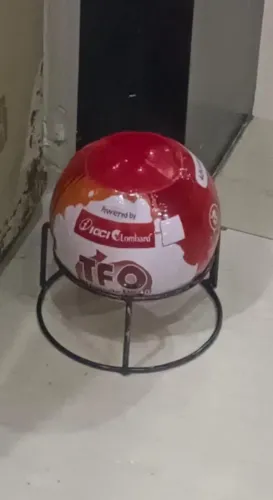
 | Fire Ball ₹1150 A “Fire Ball” is a lightweight, spherical extinguisher that activates automatically within 3–5 seconds of contact with flames. View product → |
 | Kitchenhood Fire Suppression System 9L Ignitek Solution Pvt. Ltd. Kitchen Hood Fire Suppression System is specially developed for Kitchen Fire application against specific requirement A... |
Plan the human response after automatic activation
Treat a fire ball’s activation as an alarm, not proof that the fire is over. Staff must raise the alarm, stop serving customers, call the local fire service or 112, and direct occupants to the marked exits without sending anyone back for belongings.
- Keep people away from the fryer, range, hood, cylinder area, and any powder cloud.
- Isolate LPG and electricity only if the shut-off is accessible and the trained person can reach it without crossing fire or smoke.
- Use a suitable portable extinguisher only on a small remaining fire, with a clear escape route behind the operator.
- Account for staff, vendors, contractors, and customers at the assembly point.
- Do not re-enter until firefighters or the responsible fire-safety authority declares the area safe.
A heat-triggered ball does not detect smoke across the food court, notify occupants, call the fire brigade, shut off fuel, cut power, or protect every concealed grease path. It also cannot guarantee that burning oil has not reignited after discharge. Staff remain responsible for evacuation, emergency calling, isolation, inspection, and preventing re-entry.
Afterward, close the affected stall, dispose of contaminated open food, arrange safe powder clean-up, replace the discharged unit, and record the incident. Choosing a fire ball for food court fire protection in bhandup also requires retaining activation, maintenance, training, and commissioning records for local fire-safety review.
Frequently asked questions
How do you map fire hazards before choosing a fire ball?
Mark cooking appliances, fryers, gas cylinders, electrical panels, storage areas, waste points, hoods and exhaust ducts. Record each hazard’s fuel, flame path, nearby combustibles and mounting position.
Is a fire ball suitable for a food court cooking hazard?
Use one only for a small, clearly defined hazard within its tested activation and discharge range. A fire ball does not protect an entire kitchen, dining hall, hood or exhaust duct; cooking lines may need a listed wet-chemical kitchen suppression system.
How many fire balls does a food court need?
Count units from the manufacturer’s tested coverage and activation limits, then place them near actual hazards rather than evenly across the room. Confirm the layout with a competent fire protection supplier and local reviewer.
What records should you require when buying fire balls?
Request the product test report, manufacturer and batch details, installation instructions, commissioning record, maintenance schedule and evidence that the proposed installation meets local fire authority requirements.
What should staff do after a fire ball activates?
Raise the alarm, isolate gas or electrical supplies only if safe, evacuate people, call emergency services and prevent re-entry. Treat the area as unsafe until inspection, cleanup and equipment replacement are complete.
Keywords