A factory extinguisher service is more than adding powder and sticking on a new date label. You will be able to map the complete service workflow, check whether a hydrotest was properly documented, identify cylinders that must be rejected, and plan fire-point coverage while equipment is off-site.
Key takeaways
- Record each extinguisher’s serial number, location, capacity and condition before removal.
- Reject cylinders with leaks, bulges, deep corrosion, damaged threads or failed pressure tests.
- Match every refill agent to the extinguisher type and the factory hazard.
- Keep equivalent, accessible extinguishers at every fire point during servicing.
What happens to each extinguisher during a factory service visit?
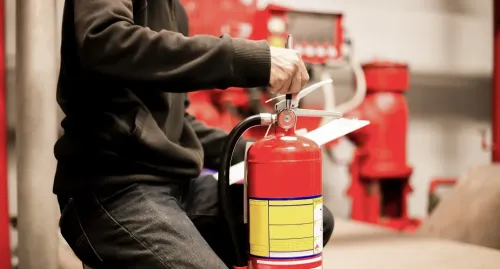
A factory extinguisher service in Bhandup begins with traceability, not refilling. Before removal, the technician records the serial number, extinguisher type, capacity, location and condition, then checks its rating against the nearby hazard, mounting, access, signage, pin, seal, gauge, hose and nozzle.
1. The extinguisher is removed from its mounting point. The contents are discharged safely or the agent is recovered, the valve is removed, and the cylinder is examined inside and outside for corrosion, pitting, dents, heat damage, damaged threads, leakage and other defects.
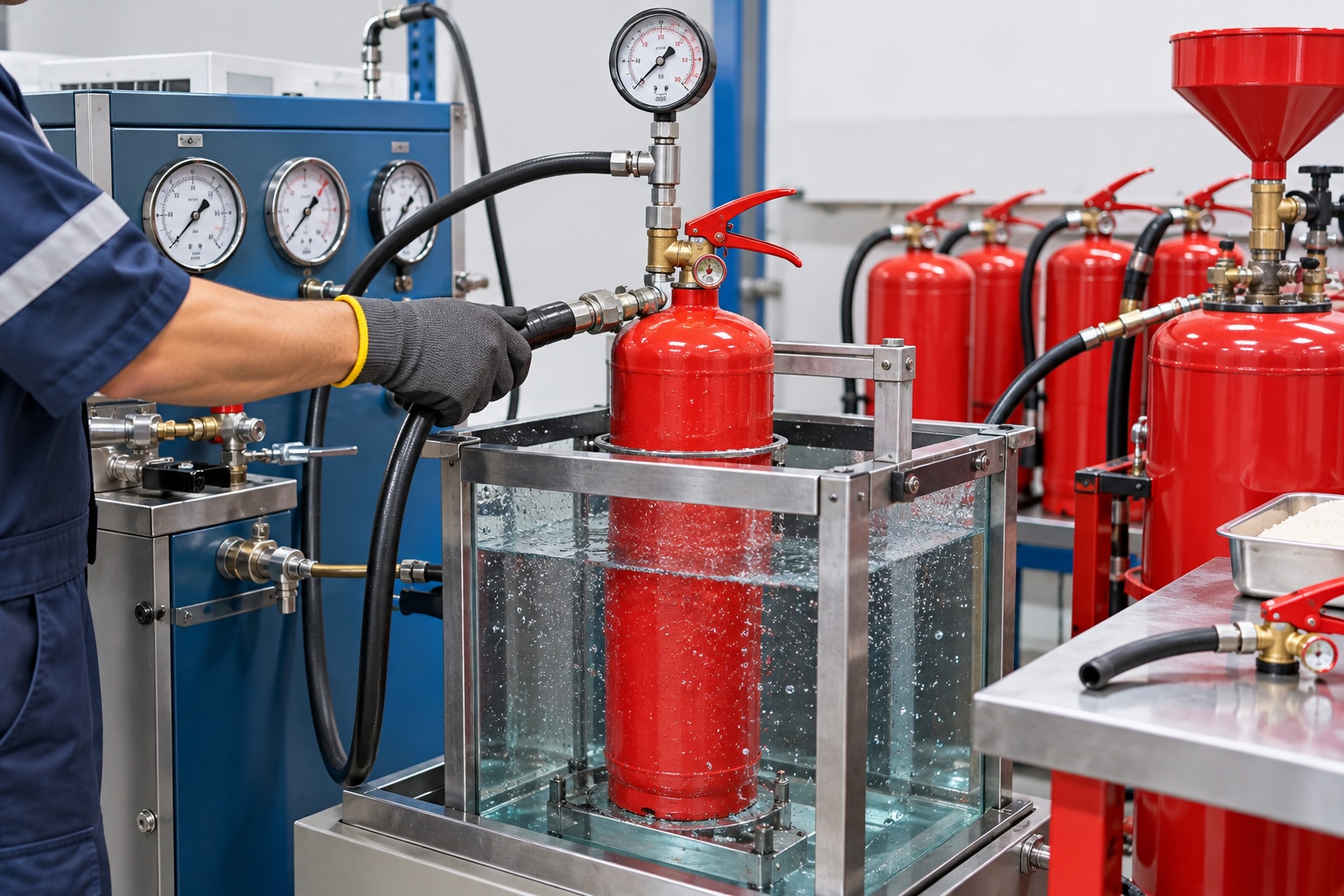
2. Hydrotesting is performed only when the cylinder is due under the applicable standard, its construction and the manufacturer’s instructions. The empty cylinder is water-tested using the specified pressure and method; a visual inspection alone is not a hydrotest.
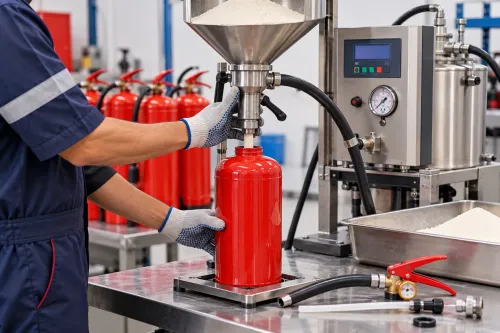
3. After testing, the cylinder is drained and dried completely. The technician replaces defective valves, O-rings, seals, siphon tubes, gauges, hoses or nozzles before charging the specified agent in the specified quantity and repressurising the unit.
4. A leak or pressure-retention check follows. The technician then verifies the safety pin, tamper seal, gauge indication where fitted, hose path, label, mounting arrangement, clear access and signage before tagging and returning the extinguisher to service.
Annual maintenance checks condition and installation. Refilling follows discharge, partial discharge or lost pressure. Hydrotesting is a separate pressure-safety examination. Do not wait for the service date after use, accidental activation, discharge during transport or pressure loss.
How is a hydrostatic test performed, and when is a cylinder rejected?
A genuine hydrotest starts with traceability, not a painted date sticker. The technician records the cylinder serial number or identification, type, capacity, markings and previous test history before testing.
1. Remove the valve from the empty cylinder and inspect the inside and outside. Fill it with water, connect it to a calibrated hydrostatic test pump and gauge, and raise it to the pressure specified for that cylinder by the applicable Indian Standard, its construction and the manufacturer’s instructions.
2. Require the report to state the exact test pressure and hold time, or identify the test method used. There is no single safe pressure for every extinguisher. During the water-pressure hold, check for leakage, permanent expansion, bulging and other deformation.
3. Examine the shell for deep corrosion, pitting, dents, heat damage, unauthorised welding, damaged neck threads and illegible mandatory markings. A short pressure hold does not make a structurally damaged cylinder safe.
4. Pass the cylinder only when it meets the specified pressure-test result and remains structurally sound. Reject and segregate it if it leaks, deforms, has unsafe threads or markings, or lacks reliable identification or test history.
Request a certificate listing the serial number, type, capacity, test date, pressure or method, result, repairs or parts replaced, recharge details and next due date. Ask a fire extinguisher hydrotesting provider in Bhandup who performs the test and how rejected cylinders are segregated.
What does refilling include for dry powder, water, foam, CO2 and clean-agent extinguishers?
Dry powder extinguisher refilling in Bhandup is not a common powder top-up. Topping up through the valve can trap moisture, contaminated powder or caking inside the cylinder, leaving an extinguisher that weighs correctly but will not discharge effectively.
1. Remove and recover the old agent, then clean and inspect the cylinder and valve inside and out.
2. Check the siphon tube, pressure gauge, hose or nozzle, safety components and operating parts. Replace damaged seals, O-rings and other service parts, and clear any blocked discharge path.
3. Match the replacement agent to the label, approval and fire classes. ABC and BC powders are not interchangeable; mixing grades can cause caking, poor flow or reduced extinguishing performance.
4. Weigh the labelled charge and compare the assembled extinguisher’s gross weight with the manufacturer’s specification. Never fill the cylinder to its physical capacity: inadequate propellant space creates unsafe conditions.
5. Pressurise the unit with the specified propellant, then perform a leakage and pressure-retention check. The service record should state the powder grade and quantity, not merely “DCP refilled.”
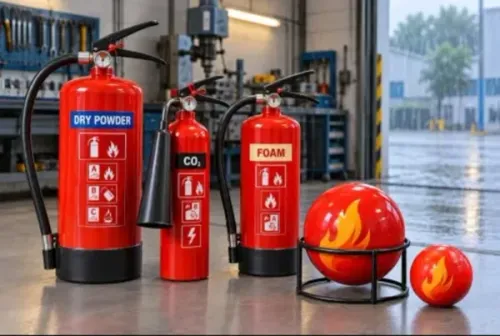
Water and foam extinguishers require the specified liquid, compatible seals and the correct operating arrangement. CO2 extinguishers need high-pressure-cylinder procedures, valve and horn checks, and charge-by-weight; do not treat them like stored-pressure DCP units. Clean-agent models require the named agent and the manufacturer’s charging method.
Replace any extinguisher immediately after discharge, partial discharge, accidental activation or pressure loss, regardless of its routine service date.
How should a Bhandup factory maintain fire-point coverage during servicing?
A factory loses fire-point coverage when units leave site without equivalent replacements. Build the service plan around risk areas, not the building’s total extinguisher count.
1. Create an inventory listing every fire point, serial number, extinguisher type, rating, capacity, hazard served and due date. Count coverage separately for the paint store, solvent store, welding bay, electrical room, oil area, warehouse and production line. Arrange equivalent type-and-rating spares before collection.
2. Collect the smallest practical group by shift, provide temporary cover, and reconcile every serial number on return. Keep replacement units accessible at the correct mounting height or on suitable stands, away from heat, moisture, corrosive vapour and stock obstruction. Check signage, pins, seals, hoses, nozzles and pressure indicators before restoring each point.
3. Match the agent to the hazard. Do not replace every discharged extinguisher with ABC powder: electrical rooms, flammable-liquid stores, factory kitchens and combustible-metal work areas can require different equipment and response plans.
4. Put transport, handling, labour, failed-cylinder replacement, agent, propellant, parts, labels, certificates and register updates in the quotation. Record discharge, partial discharge or loss of pressure immediately, regardless of the routine date. A low refill price is incomplete if it excludes these controls.
This is the practical scope of hydrotesting and refilling of fire extinguishers for factories in Bhandup.
What should you verify before appointing a Bhandup service provider?
Choose a fire extinguisher hydrotesting provider in Bhandup by verifying its process, equipment and records—not by accepting a generic fire-safety quotation.
Ask these questions before approving the job:
- Is hydrotesting performed in-house or sent to a named workshop?
- Which calibrated hydrostatic pump, pressure gauge and weighing equipment are used, and when were they calibrated?
- Who performs the work, and what training or authorisation can they show?
- How are failed cylinders tagged, recorded and physically segregated from serviceable stock?
| Testing arrangement | Evidence to request | Risk if absent |
|---|---|---|
| In-house testing | Facility address, equipment details and calibration records | Untraceable testing |
| Workshop testing | Workshop name, transfer inventory and return reconciliation | Lost, substituted or mismatched extinguishers |
| Mixed equipment capability | Written confirmation for DCP, water, foam, CO2, clean-agent and wheeled units | Incorrect procedure or recharge |
Require serial-number inventory and return reconciliation. The report must identify the agent grade, charge quantity, propellant or operating pressure, parts replaced, test pressure, result and next due date.
Make the quotation include temporary cover, transport, failed-cylinder replacement, certificates and register updates. Ignitek Solutions Pvt Ltd can be compared with any fire protection system supplier in Bhandup only after it demonstrates capability for your exact extinguisher types and supplies these records. Choose on traceability, hazard matching and documented pass/fail controls.
Related products
 | Refilling and Hydrotesting Set Up Provider Refilling and hydrotesting of fire extinguishers must adhere to IS 2190: 2024, requiring annual maintenance, 3-year refilling for water/foam/powder,... View product → |
 | Refilling and Hydrotesting of Fire Extinguishers 4 kg Refilling a fire extinguisher is a critical safety procedure that involves replenishing the extinguishing agent and repressurising the unit to ensure... |
Frequently asked questions
What happens to each extinguisher during a factory service visit?
The technician records its identity and location, checks its condition and rating, removes it safely, services or tests it, and documents its return or rejection.
How is a hydrostatic test performed, and when is a cylinder rejected?
The cylinder is emptied, examined, filled with water and pressure-tested using suitable equipment. Reject it for leaks, permanent deformation, severe corrosion, damaged threads or failure to hold pressure.
What does extinguisher refilling include?
Refilling includes using the specified agent, checking the cylinder and valve, replacing damaged seals or parts, restoring pressure where required, checking for leaks and recording the service details.
How should a Bhandup factory maintain fire-point coverage during servicing?
Keep approved, equivalent extinguishers at each active fire point, maintain clear access and signage, and replace removed units before the area resumes work.
What should you verify before appointing a Bhandup service provider?
Ask for trained technicians, calibrated pressure-test equipment, service records, agent details, rejected-cylinder procedures, collection and return controls, and evidence of applicable licensing and standards compliance.
Related products
 | Refilling and Hydrotesting of Fire Extinguishers 6kg Refilling a fire extinguisher is a critical safety procedure that involves replenishing the extinguishing agent and repressurising the unit to ensure... |
 | Refilling and Hydrotesting of Fire Extinguishers 9 kg Refilling a fire extinguisher is a critical safety procedure that involves replenishing the extinguishing agent and repressurising the unit to ensure... |
 | Refilling and Hydrotesting of Fire Extinguishers 2 kg Refilling a fire extinguisher is a critical safety procedure that involves replenishing the extinguishing agent and repressurising the unit to ensure... |
Keywords