A Fire Ball can offer point protection, but a food-court cooking line needs a hazard assessment before anyone treats it as kitchen suppression. By the end, you can match the device to the stall or appliance, identify the documents and installation limits to verify, and compare it with extinguishers and a fixed wet-chemical system.
Key takeaways
- Match the device to the cooking hazard, agent and activation method.
- Keep the Fire Ball within the manufacturer’s specified distance from the flame risk.
- Use a fixed system for multiple appliances, ducts or concealed grease hazards.
- Demand batch details, test records, installation instructions and maintenance support.
Where a Fire Ball fits in a food-court cooking line
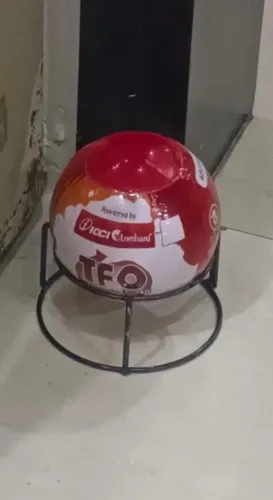
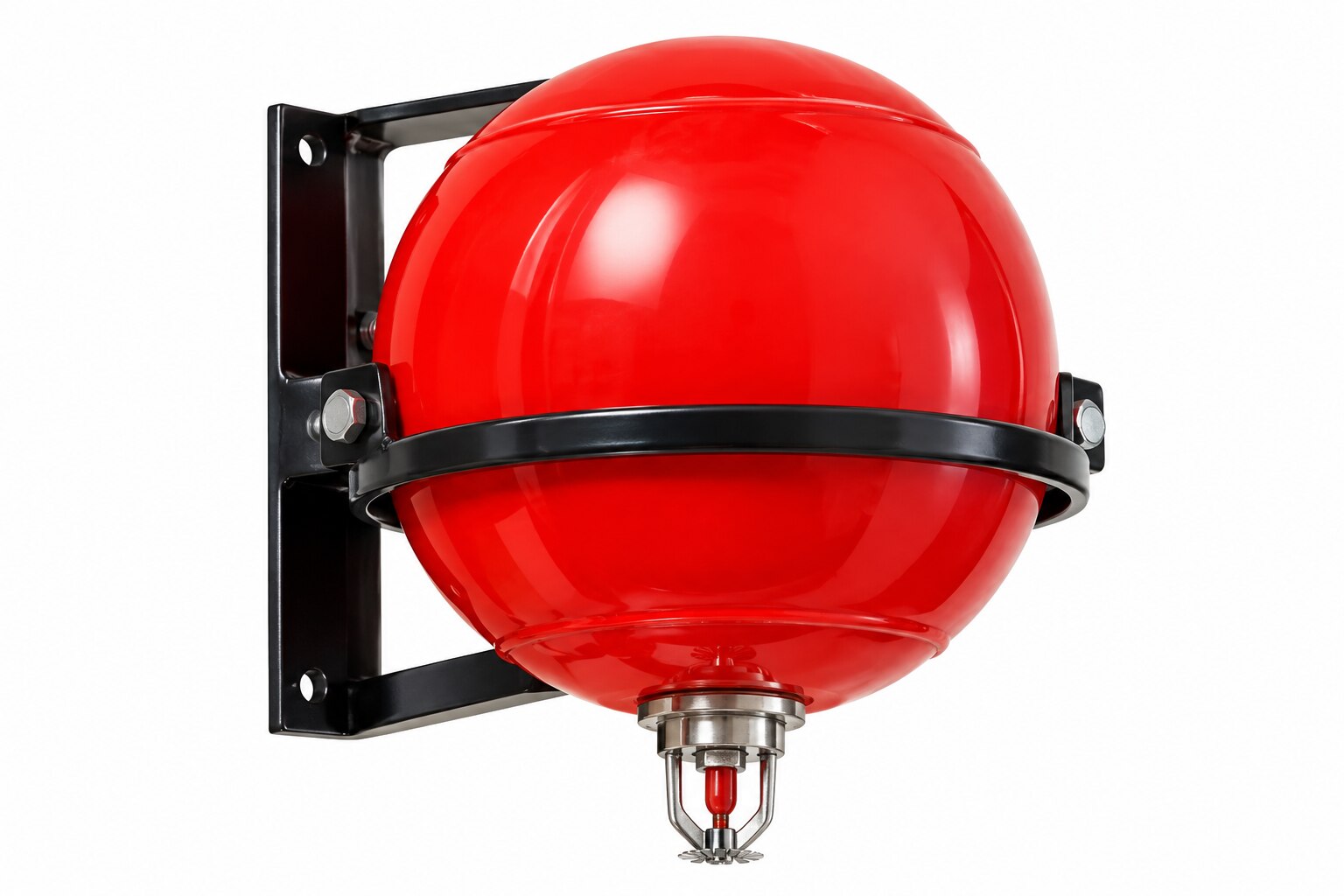
A Fire Ball is point protection for an exposed, small cooking hazard: a kiosk fryer edge, griddle, tandoor opening, or short cooking line where flames can reach its fuse or heat trigger. Models differ, so verify the listed agent and activation arrangement before treating it as food court fire safety equipment in bhandup.
| Option | What it addresses | Where it falls short |
|---|---|---|
| Fire Ball | An incipient flame near a fryer, griddle or exposed burner | It does not automatically protect the hood, plenum, duct or exhaust fan |
| Wet-chemical fixed system | Grease fires across connected appliances, with nozzles, detection and agent discharge | Requires engineered layout, fuel or electrical shutdown and servicing |
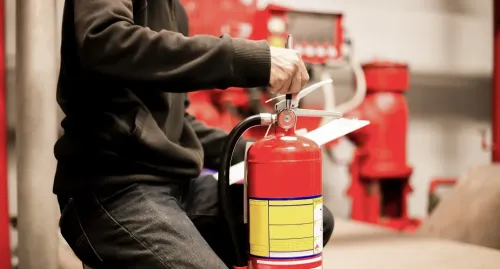
| Portable extinguisher | A trained operator attacking a reachable fire | It cannot provide automatic detection or protect a concealed grease duct |
The ball’s fuse or heat-trigger device must reach its specified activation condition; flame contact is not the same as sensing a fire anywhere in the line. A smouldering fire, a flame shielded inside equipment, or a fire blocked by a hood baffle may not activate it.
It is unsuitable as the sole safeguard for a shared kitchen, long fryer bank, grease-laden hood or duct covered by NFPA 96 controls. Ask any fire ball for kitchen suppression system supplier near bhandup food courts for the exact test certificate, datasheet, batch traceability, placement limits and replacement interval—not a generic brochure.
How to assess placement before installing the device
A fryer’s oil surface, gas connection and exhaust path determine whether a Fire Ball has a useful position. Do not mount it wherever a bracket fits.
Its specified fuse or heat trigger must face the likely flame path and receive direct flame contact; a smouldering fire, shielded fire inside equipment, or flame blocked by a hood baffle may not activate it.
1. Record each fryer’s footprint, oil capacity, fuel type and distance from the adjacent griddle, tandoor or cooking appliance. A ball aimed at one fryer does not protect the full cooking line.
2. Measure the ball’s required clearance, mounting height and distance from the likely ignition point against its product datasheet. Keep it away from hot surfaces, steam jets, moving shutters and areas where staff or utensils can strike it.
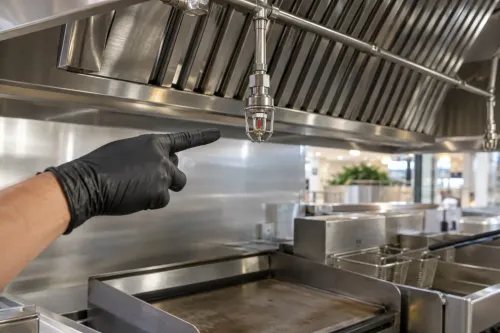
3. Inspect the hood, filters, baffles, plenum and duct opening. Grease deposits can obstruct flame travel, and a ball below the hood does not protect grease inside a duct or exhaust fan.
4. Check whether the hood overhangs the fryer and whether neighbouring stalls share one continuous canopy. A shared hood needs a coordinated design, not one ball per counter with unverified gaps.
5. Ask a fire ball supplier in Bhandup for the exact test certificate, datasheet, installation limitations and replacement interval. Confirm the ball’s coverage claims match the measured hazard.
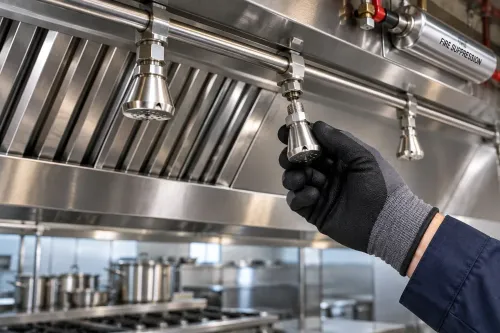
A ball provides point protection only. It does not replace a fixed kitchen system with detection, manual release, agent piping, listed nozzles, fuel or electrical shutdown, and engineered hood-plenum and duct coverage.
When to choose a Fire Ball, extinguisher or fixed system
Choose a Fire Ball for a small, clearly exposed point hazard, not as a substitute for kitchen-wide protection. Its fuse or heat trigger activates when flames reach the device; a smouldering fire, shielded fryer, fire inside equipment, or flame blocked by a hood baffle may not trigger it.
| Option | What it provides | When to choose it |
|---|---|---|
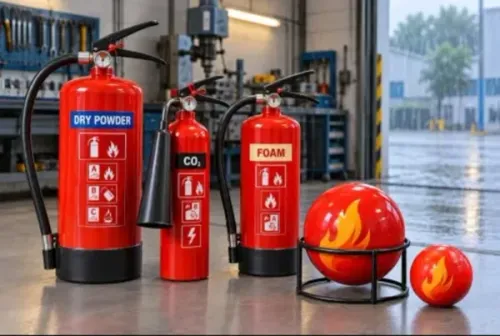
| Fire Ball | Automatic point protection over a limited, exposed area | A kiosk, tandoor, griddle, or small cooking point where the manufacturer confirms the coverage, mounting distance, and trigger temperature |
| ABC extinguisher | Portable response for ordinary combustibles and many electrical hazards | Keep it accessible for counters, packaging, wiring, and general fire response; do not treat it as the correct agent for burning cooking oil |
| Wet-chemical extinguisher | Portable Class K or equivalent protection for hot cooking oil, with cooling and reduced re-ignition risk | Place it near a fryer or cooking-oil station, even when another system is installed |
| Fixed hood system | Engineered detection, pipework, listed nozzles, agent quantity, manual release, and fuel or electrical shutdown for the hood, plenum, duct, appliances, and fuel sources | Use it for shared food-court kitchens, long cooking lines, multiple fryers, or grease-duct hazards |
A Fire Ball does not automatically protect the exhaust hood or duct. NFPA 96 addresses commercial cooking ventilation, protection, inspection, and cleaning; a fixed design must account for grease accumulation and appliance layout.
Ask a kitchen suppression system supplier in bhandup for the hazard survey, nozzle plan, calculations, commissioning record, and Fire Ball certificate before comparing prices.
What to demand from a Bhandup fire-protection supplier
A complete quotation names the hazard, coverage and evidence—not just a ball and a price. Ask any fire protection system supplier in Bhandup for:
- The product datasheet, exact test certificate, batch or cylinder traceability, installation limitations, fuse or heat-trigger arrangement and replacement interval.
- A site-survey drawing showing fryer, griddle, tandoor, cooking line, hood, plenum, duct and exhaust fan, with the proposed device position and clearance.
- For a fixed system, the hazard calculation, agent quantity, listed nozzle type and layout, detection method, manual release, fuel or electrical shutdown and commissioning procedure.
- NFPA 96 inspection and cleaning assumptions, plus documents required for the premises’ Mumbai fire-safety approval and inspection process.
- Written service terms: response time, preventive-maintenance frequency, spare-nozzle and agent availability, after-discharge recharge method and non-operating-hours work.
Compare the quotation’s actual scope before treating a Fire Ball as hood protection.
| Option | Evidence and design detail | Service commitment |
|---|---|---|
| Fire Ball point protection | Exact model, test certificate, trigger limits, mounting height, flame-contact requirement and excluded hazards | Replacement interval, batch traceability and post-discharge replacement |
| Fixed kitchen suppression | Hood, plenum, duct and appliance survey; agent sizing; pipework, nozzles, detection, manual release and shutdowns | Commissioning, periodic inspection, recharge and emergency response |
| Cylinder-only supply | Product invoice with little or no hazard design | Buyer arranges suitability, installation and future parts |
A fire ball supplier in Bhandup that cannot state these limits is not offering equivalent coverage. Ignitek Solutions Pvt Ltd belongs in your comparison only after its quotation answers the same questions. The cheapest offer can cost more when unavailable parts or a discharge shut several adjoining stalls.
Related products
 | Fire Ball ₹1150 A “Fire Ball” is a lightweight, spherical extinguisher that activates automatically within 3–5 seconds of contact with flames. View product → |
 | Kitchenhood Fire Suppression System 9L Ignitek Solution Pvt. Ltd. Kitchen Hood Fire Suppression System is specially developed for Kitchen Fire application against specific requirement A... |
How to keep protection compliant and ready after installation
Keep one service file for food court fire safety equipment in Bhandup, not just an invoice. Store the approved layout, product datasheet, exact test certificate, batch or cylinder traceability, commissioning report, installation limitations and replacement interval where managers can retrieve them during an inspection.
1. Record the protected appliances, hood and duct arrangement, ball or nozzle locations, manual-release points, fuel or electrical shutdown links, and the date each item was commissioned.
2. Inspect the installation at the frequency stated by its listing, manufacturer and local approval conditions. Check for damaged seals, corrosion, blocked discharge paths, shifted equipment, missing extinguishers and grease accumulation in the hood, plenum and duct. Keep NFPA 96 cleaning and inspection records where that standard applies.
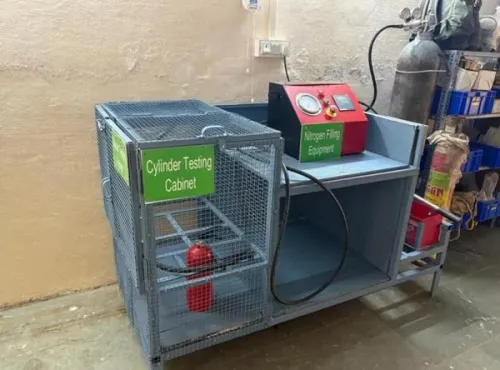
3. Test detection, manual release, alarms, interlocks and shutdown functions through an authorised technician. Log the date, result, defects, corrective action and technician’s details; retain separate extinguisher inspection and hydrotest records.
4. After any discharge, isolate the affected cooking line, clean agent residue, replace discharged components and recharge or replace the cylinder before reopening. Agree the response time, spare nozzles and agent availability, and non-operating-hours access with your kitchen suppression system supplier in Bhandup.
5. Train every stall team to raise the alarm, stop fuel or power only when safe, evacuate, report the exact appliance involved and never restart equipment after discharge. Run documented refresher drills and replace expired or damaged equipment immediately.
Frequently asked questions
Where does a Fire Ball fit in a food-court cooking line?
It suits a small, exposed hazard such as a kiosk fryer edge, griddle, tandoor opening or short cooking line where the fuse or heat trigger can reach flames.
When should you choose a Fire Ball instead of an extinguisher or fixed system?
Choose based on hazard size and coverage: an extinguisher requires trained manual response, while a fixed system suits multiple appliances, exhaust hoods, ducts or concealed grease hazards.
What should you ask a Bhandup fire-protection supplier for?
Request the product datasheet, listed extinguishing agent, activation method, batch details, installation instructions, test records and a maintenance schedule.
How do you keep a Fire Ball ready after installation?
Keep access clear, inspect its mounting and seal, record inspections, replace damaged or expired units, and follow the manufacturer’s servicing instructions.
Keywords