A fire ball quote can describe an automatic extinguisher while leaving out the bracket, installation, coverage limits, replacement terms and kitchen-system controls you actually need. By the end, you will be able to compare the supplied specifications, identify what is included in the price, and decide whether the device is supplementary protection or part of a complete cooking-line suppression design.
Key takeaways
- Demand a line-item quote covering hardware, installation, signage, warranty, and replacement.
- Check activation method, agent type, rating, dimensions, weight, batch number, and manufacture date.
- Use fire balls as supplementary protection, not as the sole commercial cooking-line system.
- Record mounting locations, product identifiers, instructions, tests, and handover documents.
What should be included in a fire ball purchase quote?
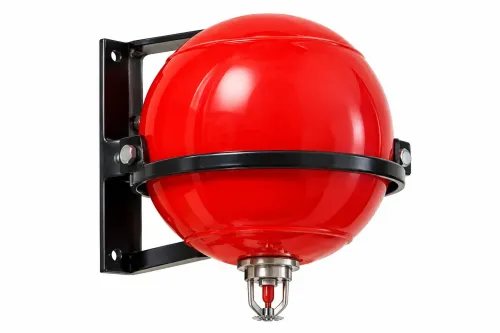
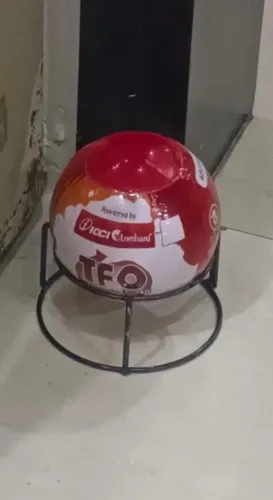
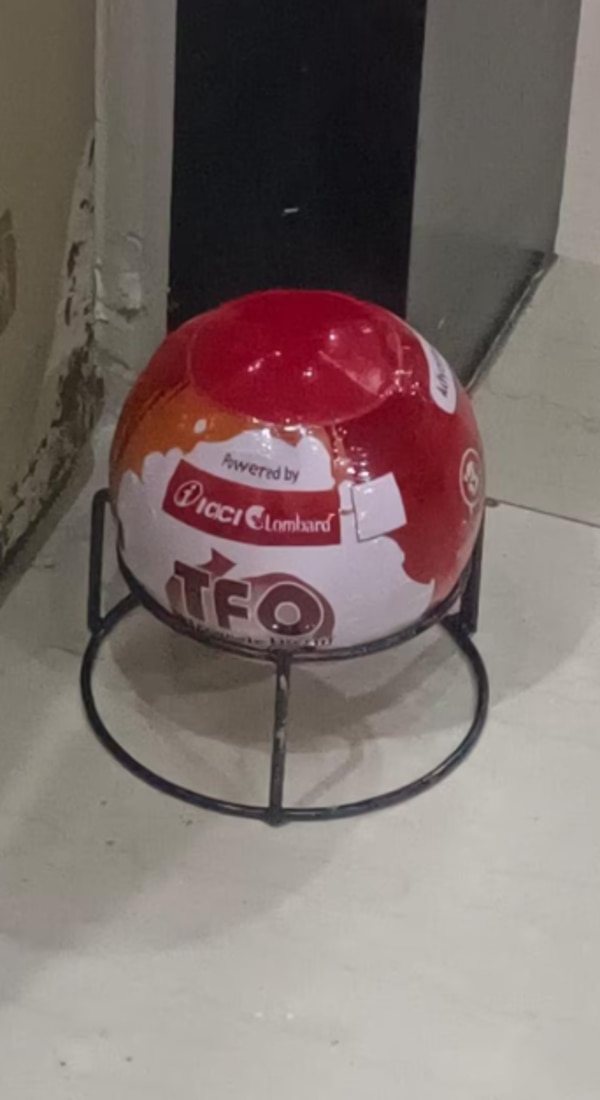
A fire ball purchase in Bhandup should identify everything delivered and every service included in the price. The equipment line must name the fire ball, activation fuse, wall bracket or stand, anchors and other installation hardware, warning signage, installation instructions, invoice, warranty terms, manufacturing date, batch or serial number, and the replacement procedure after discharge.
Separate these charges from site delivery, mounting, commissioning, user briefing and inspection. Require the quotation to state whether the installer checks the mounting surface, discharge path and nearby heat sources, and whether they issue an inspection or commissioning record. A delivery challan proves dispatch; it does not prove correct installation.
A standalone fire ball normally arrives as a single-use, factory-sealed device. It is not a refillable extinguisher that a local shop automatically services after activation. The quote must state who supplies and installs its replacement, and how the discharged unit is disposed of.
For what a fire ball for kitchen suppression system purchase includes in Bhandup, compare the scope this way:
| Option | Included scope | Check before accepting |
|---|---|---|
| Equipment-only | Device and listed accessories | Delivery, invoice, model, date, batch or serial number, warranty |
| Supply-and-installation | Equipment, delivery and mounting | Surface, discharge path, heat sources and commissioning record |
| Full kitchen-system | Survey, detection, piping, controls and handover | Training, inspection, shutdown links and replacement terms |
Ask these questions before signing:
- Is delivery included, or only a delivery challan?
- Are mounting, commissioning, user briefing and inspection separately priced?
- Does the installation record confirm the actual mounting position and unobstructed discharge path?
- Is post-discharge replacement included, quoted separately, or excluded?
Which fire ball specifications must appear on the datasheet?
A datasheet must let you compare two products without relying on the phrase automatic fire extinguisher. For fire ball specifications in bhandup, require these fields for the exact supplied model:
- Unit weight, sphere diameter and net extinguishing-agent mass
- Agent type and concentration, activation temperature and discharge duration
- Nominal coverage area or protected volume, recommended mounting height and installation orientation
- Operating-temperature range, shelf life, service life and replacement interval
- Manufacturing date, batch or serial number and storage conditions
- Test reports or a recognised listing, plus instructions for inspection after damage or activation
| Product | Compare this evidence | Reject if |
|---|---|---|
| Model A | Exact model number, agent, mass and coverage match its datasheet | Seller gives only a generic product name |
| Model B | Same fields, with temperature, life and mounting limits stated | Seller substitutes a typical value |
Treat every number as model-specific. A typical activation temperature or coverage figure cannot replace the datasheet supplied with your unit.
Agent identity matters. ABC dry powder can affect electrical equipment, but powder contaminates food-preparation areas and is not automatically suitable for cooking oils, where re-ignition control requires a compatible agent and application method.
Make the invoice and warranty repeat the exact model and agent. The words fire ball alone do not identify what you bought, how it performs, or when it must be replaced.
Is a fire ball adequate for a commercial cooking line?
A wall-mounted or standalone fire ball is not automatically adequate for a commercial cooking line. It is a compact, single-point device; a complete kitchen hood suppression system is engineered around the appliances, hood, filters, plenum, ducts and fuel sources.
Check the listed agent and application method against each hazard: cooking oil and fat, LPG or natural-gas burners, electrical equipment and solid combustibles. Concealed hood, plenum and duct fires need coverage at the actual risk locations, not merely a ball mounted nearby. Ordinary ABC powder is not equivalent to a wet-chemical fryer system.
A deep-fat fryer needs an agent and discharge method designed to control re-ignition; powder also creates substantial contamination around food equipment and exhaust components.
NFPA 17A covers wet-chemical extinguishing systems. NFPA 96 addresses commercial cooking equipment, grease-removal devices, exhaust hoods and ducts. Ask whether the quotation follows those system requirements rather than calling a fire ball a complete kitchen solution.
A complete proposal for kitchen suppression system equipment in Bhandup must identify:
- Detection tubing or other detection elements
- Wet-chemical storage cylinder, agent piping and appliance-specific nozzles
- Manual release station
- Gas shutoff and electrical isolation
- Fire-alarm connection
- Post-discharge reset and replacement procedure
Treat the fire ball as supplementary protection unless the supplier provides documented suitability, coverage and approval for the entire cooking installation. If the quote lists only a sphere, fuse and bracket, it is not a hood suppression system.
How should you position fire balls around appliances, hoods and ducts?
Calculate quantity from the manufacturer’s stated coverage limit and mounting-height instruction. Never accept “one sphere covers the whole kitchen” without a drawing that defines the protected area.
Require a site plan marking:
- Every fryer, range, griddle and burner
- The exhaust hood, grease filters, duct entrance and duct bends
- The gas manifold, electrical panel and each equipment housing
- Each proposed sphere, its mounting height, fuse position and discharge direction
Keep the temperature-sensitive fuse inside the specified flame or heat path, with a clear route for the agent. A canopy, filter, hood, duct bend or appliance casing can shield a fire from a device mounted outside that path. The manufacturer’s coverage figure does not erase those obstructions.
Automatic activation works only when the trigger reaches its stated temperature condition. It does not detect every concealed, shielded or smouldering fire, and discharge alone cannot stop fuel-fed re-ignition. Ask how the design prevents nuisance activation from steam, cooking vapour, hot surfaces and cleaning equipment; keep the sphere away from unintended heat sources.
Include gas-solenoid isolation, electrical shutdown, manual emergency release and re-ignition controls where the hazard requires them. These details define what a fire ball for kitchen suppression system purchase includes in Bhandup. Compare kitchen suppression system equipment in Bhandup by documented coverage, not by the word automatic.
What should a Bhandup supplier document before handover?
Accept the purchase against a written scope, not just a delivery challan. A fire ball purchase in Bhandup is incomplete if the quotation does not separate equipment supply, installation, commissioning and maintenance.
Ask the supplier to document:
- Site survey, appliance and hood measurements, and hazard classification
- Mounting points, brackets, anchors and other installation hardware
- Commissioning checks, user training and inspection visits
- Replacement after discharge, including disposal of the used unit
- Exact model, agent, quantity, manufacturing date, warranty and shelf-life statement
- Test reports or recognised listing, installation responsibility and service contact
| Supply | Installation | Commissioning | Maintenance |
|---|---|---|---|
| Equipment, invoice and warranty | Mounting and hardware | Functional checks and handover record | Inspection visits and replacement |
| A delivery challan only proves dispatch | Confirm surface, height and discharge path | Record coverage, controls and user briefing | State frequency, records and post-discharge response |
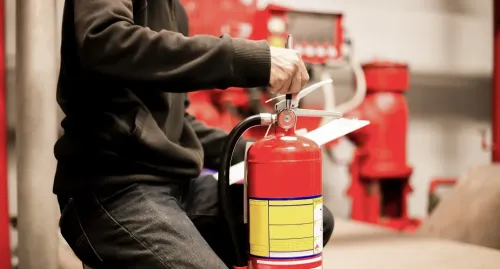
A fire ball is normally a factory-sealed, single-use or manufacturer-refill item; do not assume a local extinguisher shop can refill it. For a cylinder-based wet-chemical system or conventional extinguisher, request the applicable Indian Standard or manufacturer procedure, test interval, authorised test facility, refill agent and test records.
IS 2190 covers portable-extinguisher selection, installation, inspection and maintenance, but does not alone design a commercial hood system.
A fire protection system supplier in Bhandup such as Ignitek Solutions Pvt Ltd is useful when one documented scope covers equipment, mounting, commissioning and records. Compare that scope with the kitchen layout, not merely the price or word automatic.
Related product
 | Kitchenhood Fire Suppression System 9L Ignitek Solution Pvt. Ltd. Kitchen Hood Fire Suppression System is specially developed for Kitchen Fire application against specific requirement A... |
Frequently asked questions
What should be included in a fire ball purchase quote?
The quote should list the fire ball, activation fuse, bracket or stand, anchors, installation labour, warning signage, instructions, invoice, warranty terms, manufacturing date, batch or serial number, and the replacement procedure after discharge.
Which fire ball specifications must appear on the datasheet?
Check that the datasheet identifies the extinguishing agent, activation method and temperature, nominal weight, dimensions, operating or coverage limits, mounting requirements, manufacture date, batch or serial number, storage conditions, and replacement instructions.
Is a fire ball adequate for a commercial cooking line?
Treat a fire ball as supplementary protection unless a competent fire-safety designer confirms coverage. A commercial cooking line needs protection matched to cooking oil, gas or electrical hazards, hood and duct exposure, fuel shut-off, detection, and manual release requirements.
How should you position fire balls around appliances, hoods and ducts?
Follow the manufacturer’s mounting distance and coverage instructions. Position units where the activation path reaches the likely flame zone without obstruction, protect hood and duct areas separately when required, and keep brackets secure and accessible for inspection.
What should a Bhandup supplier document before handover?
Obtain the final equipment list, product datasheets, batch or serial records, invoice, warranty, installation locations, mounting photographs, instructions, inspection or test records, maintenance schedule, emergency guidance, and the post-discharge replacement process.
Keywords