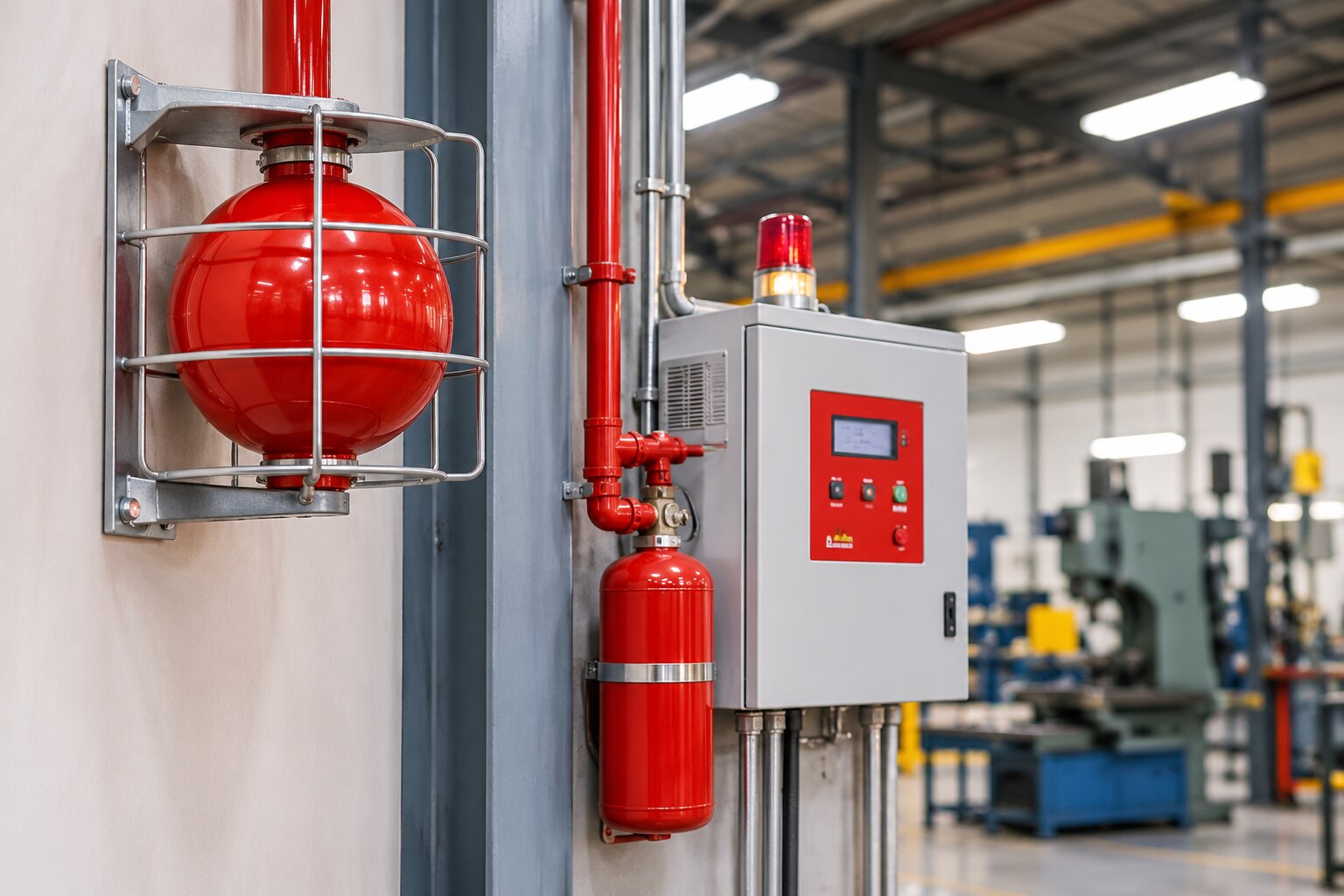
A fire ball and a panel suppression system solve different workshop problems: one provides local, supplementary protection, while the other is engineered around an enclosed electrical compartment. By mapping the hazard, checking the enclosure, and verifying the device limits, you can decide where either technology belongs and when a listed releasing system is necessary.
Key takeaways
- Use fire balls for small, localised panel and equipment hazards.
- Place the device inside, above or beside the hazard after checking coverage.
- Confirm fire class and agent compatibility before protecting electrical cabinets.
- Document inspection, testing and maintenance for every installation.
Match the device to the workshop hazard
For workshops considering fire ball panel suppression system use in Bhandup, reserve a fire ball for a small, localised hazard—not the entire workshop floor. It suits a welding-station equipment area, machine-tool control cabinet, compressor control panel, CNC electrical cabinet, or limited flammable-liquid equipment space as supplementary point protection.
- Near a welding bay, keep the ball away from direct sparks, radiant heat, fans, and moving parts. Confirm that normal operating temperatures stay within the manufacturer’s ambient range, and follow its activation-temperature and clearance limits; otherwise, routine work can trigger discharge.
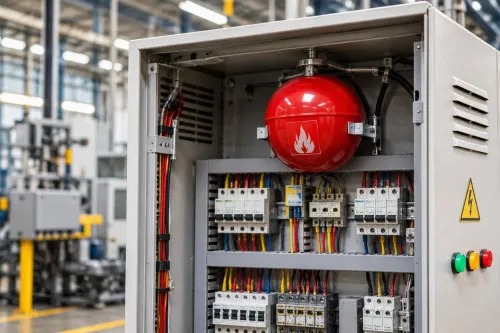
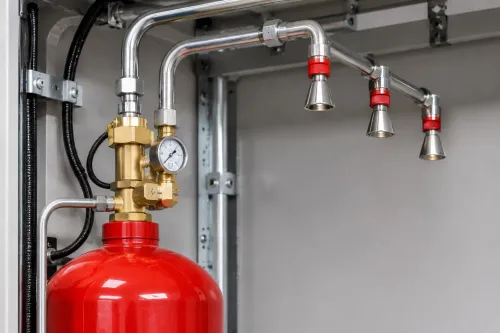
- Use an enclosed panel suppression system for a genuinely enclosed MCC compartment, machine-control cabinet, compressor panel, maintenance electrical-room cabinet, or switchgear enclosure. Heat-sensitive tubing, a fusible element, or another listed detector can release agent from a pressure vessel through nozzles, with alarm or shutdown interfaces when the design includes them.
- Treat battery-charging cabinets and lithium-ion work areas separately. Dry powder can knock down visible flame but does not by itself control thermal runaway, cell propagation, toxic gases, or re-ignition.
- Paint mixing, solvent dispensing, spray-finishing, gas-cylinder storage, and cutting-oil areas need ignition control, ventilation, spill control, separation, and a listed extinguishing design. A ball is only local backup.
These panel suppression system fire ball applications do not replace electrical isolation, portable extinguishers, hydrants, sprinklers, detection, or approved fire-safety provisions. Confirm the selected device’s listing, protected volume, mounting position, and compatibility before installation.
Decide whether the fire ball belongs inside, above, or beside the hazard
Choose the position only after checking the manufacturer’s listing or test evidence, protected-volume or coverage limit, mounting orientation, activation temperature, minimum clearance, agent type, and suitability for energized electrical equipment.
| Position | Use it when | Main failure risk |
|---|---|---|
| Inside a small enclosure | The product is approved for that enclosed volume and its agent can reach the fire | Partitions, cable trays, busbars, or internal equipment block discharge |
| Above a panel | Flame or sufficient heat reaches the actuator and agent can enter the burning area | An obstructed top, exhaust airflow, open door, or rear cable chamber defeats coverage |
| Beside a machine or welding station | The ball covers one defined local hazard | Sparks, radiant heat, fans, or moving parts trigger or damage it |
A fire ball for workshop panels belongs beside a hazard, not over an open production floor. Keep it outside direct spark paths and within the stated ambient-temperature and clearance limits.
For panel suppression system fire ball applications, treat point protection and releasing-panel protection as separate designs. A passive ball normally cannot provide confirmed alarm, trouble, supervisory, discharge, remote annunciation, fan shutdown, fuel-valve closure, manual release, or event history.
If those functions matter, specify separately listed detection and release equipment. Combine a ball with a releasing panel only when documented compatibility covers the interface, detector, shutdowns, and discharge monitoring. Agent weight or a product photograph proves neither coverage nor system performance.
Check the cabinet before selecting a suppression system
Inspect the cabinet before selecting a suppression system. For panel suppression system fire ball applications, confirm that the protected compartment is genuinely enclosed and define exactly what the agent must cover.
1. Record the enclosure type, internal length, width, height, calculated volume, door arrangement, cable-entry openings, ventilation fans, pressure-relief paths, busbar layout, and combustible insulation. Mark the positions of relays, VFDs, PLCs, terminals, and heat-producing components. Large cable gaps or active ventilation can let agent escape before it reaches the fire.
2. Trace the boundaries of protection. An adjacent rear cable chamber, capacitor bank, battery cabinet, or cable trench may remain outside the protected zone. Decide whether the design covers one cabinet, one compartment, or several connected compartments; linked panels do not automatically share one protected volume.
A fire ball panel suppression system in Bhandup must therefore be specified against measured boundaries, not the panel name.
3. Verify the selected system’s mechanism in its installation manual. Detection may use heat-sensitive tubing, a fusible element, a separate detector, or another listed device; release may use a pressure vessel and discharge nozzles, with alarm, shutdown, pressure-switch, or flow-switch interfaces.
Select 2 kg, 3 kg, 4 kg, or 6 kg only after applying manufacturer design data to volume, fire load, openings, geometry, and layout. Capacity by cabinet label alone is not defensible.
Account for agent damage, fire class, and workshop re-ignition
Dry chemical can support fires involving energized electrical equipment and ordinary combustible solids only when the product is listed for those uses. A fire ball for workshop panels is not a universal answer for flammable liquids, gas cylinders, cutting oils, or metal fires.
Aluminium, magnesium, sodium, and other reactive metals need a specialist agent selected for that metal.
Paint mixing, solvent dispensing, spray-finishing, and flammable-liquid storage need a design matched to the liquid, ventilation, spill size, ignition sources, electrical classification, and spill control. A local fire ball is supplementary protection, not a substitute for that design.
Dry powder inside a PLC, VFD, CNC, relay, or control cabinet can contaminate contacts and electronics. Cleaning, inspection, and replacement may follow; clean-agent or water-mist systems can reduce residue but require suitable enclosure, pressure-relief, detection, and maintenance arrangements.
Use this checklist for panel suppression system fire ball applications:
- Confirm whether the hazard is an enclosed cabinet or a local open hazard. Use listed cabinet protection for the former and point protection near a welding station only within the product’s coverage limits.
- Include electrical isolation, fuel or gas isolation, hydraulic-oil shutdown, and machinery stop logic in the assessment.
- Expect re-ignition while oil, solvent, heated metal, rotating machinery, or another energy source remains active.
- Treat battery-charging and lithium-ion areas separately: plan for thermal runaway, propagation, toxic gas, and re-ignition rather than relying on ordinary panel protection.
Specify, document, and maintain the installation in Bhandup
Before approving a fire ball panel suppression system in Bhandup, require an evidence pack, not a catalogue photograph. Treat “workshops fire ball panel suppression system use in Bhandup” as a search phrase, not proof that the proposed arrangement is suitable.
1. Request the product listing or test documents, agent type, batch or manufacture details, activation-temperature evidence, and compatibility evidence for energized electrical equipment.
2. Obtain the protected-volume calculation, installation drawing, mounting orientation, minimum clearances, and a compartment schedule. The schedule must name every cabinet, rear chamber, connected compartment, cable trench, capacitor bank, and battery cabinet included or excluded from protection.
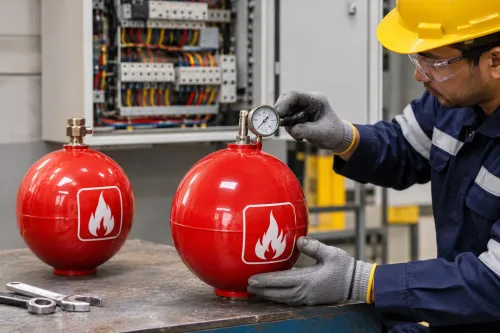
3. Require instructions for isolating electrical power and process energy, the discharge cleanup procedure, replacement interval, and post-discharge inspection. Powder inside a PLC, VFD, relay cabinet, or CNC enclosure can turn a small fire into costly contamination and component replacement.
4. If alarm or shutdown is required, obtain compatibility documents for the detector, pressure switch, flow switch, releasing panel, fan interlock, fuel valve, and manual release. A passive ball does not automatically provide confirmed alarm, trouble, discharge, or shutdown signals.
Confirm the final arrangement against the premises’ sanctioned fire-safety design and the approving authority’s conditions in Bhandup. Do not credit it as a replacement for hydrants, sprinklers, portable extinguishers, smoke or heat detection, or emergency access.
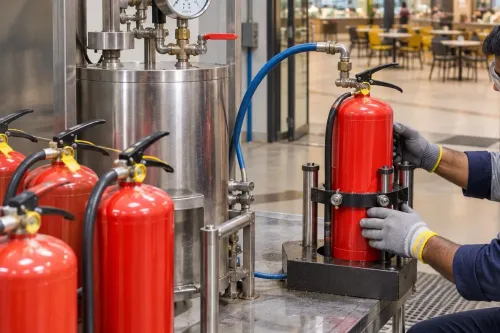
Ignitek Solutions Pvt Ltd can help coordinate selection, installation, refilling, hydrotesting, and maintenance records when one documented procurement process is preferable.
Related products
 | Panel Suppression System 2 kg The Panel Protection System is the most effective and reliable product for protection of enclosed panels or cabinets from fire. |
 | Panel Suppression System 6 kg The Panel Protection System is the most effective and reliable product for protection of enclosed panels or cabinets from fire. |
Frequently asked questions
Which workshop hazards suit a fire ball panel suppression system?
Use a fire ball for small, localised hazards such as welding-station equipment areas, machine-tool control cabinets, compressor panels, CNC electrical cabinets and limited flammable-liquid equipment spaces.
Where should a fire ball be installed around a workshop panel?
Place it inside, above or beside the hazard according to the protected enclosure, expected fire location and the system’s coverage instructions. Do not treat one device as protection for the entire workshop floor.
What should you check before choosing suppression for a control cabinet?
Check the cabinet size, openings, internal equipment, ignition sources and the agent’s suitability for electrical equipment before selecting the suppression system.
Why do fire class and re-ignition matter in workshop suppression?
Match the agent to the material burning, account for possible re-ignition after discharge and consider whether the agent could damage panels, controls or other equipment.
What installation records should a Bhandup workshop keep?
Record the protected hazard, device location, agent, installation date, inspection results, testing and maintenance actions for each panel suppression installation.
Related products
 | Panel Suppression System 4 kg The Panel Protection System is the most effective and reliable product for protection of enclosed panels or cabinets from fire. |
 | Fire Ball ₹1150 A “Fire Ball” is a lightweight, spherical extinguisher that activates automatically within 3–5 seconds of contact with flames. View product → |
 | Panel Suppression System 3 kg The Panel Protection System is the most effective and reliable product for protection of enclosed panels or cabinets from fire. |
Keywords