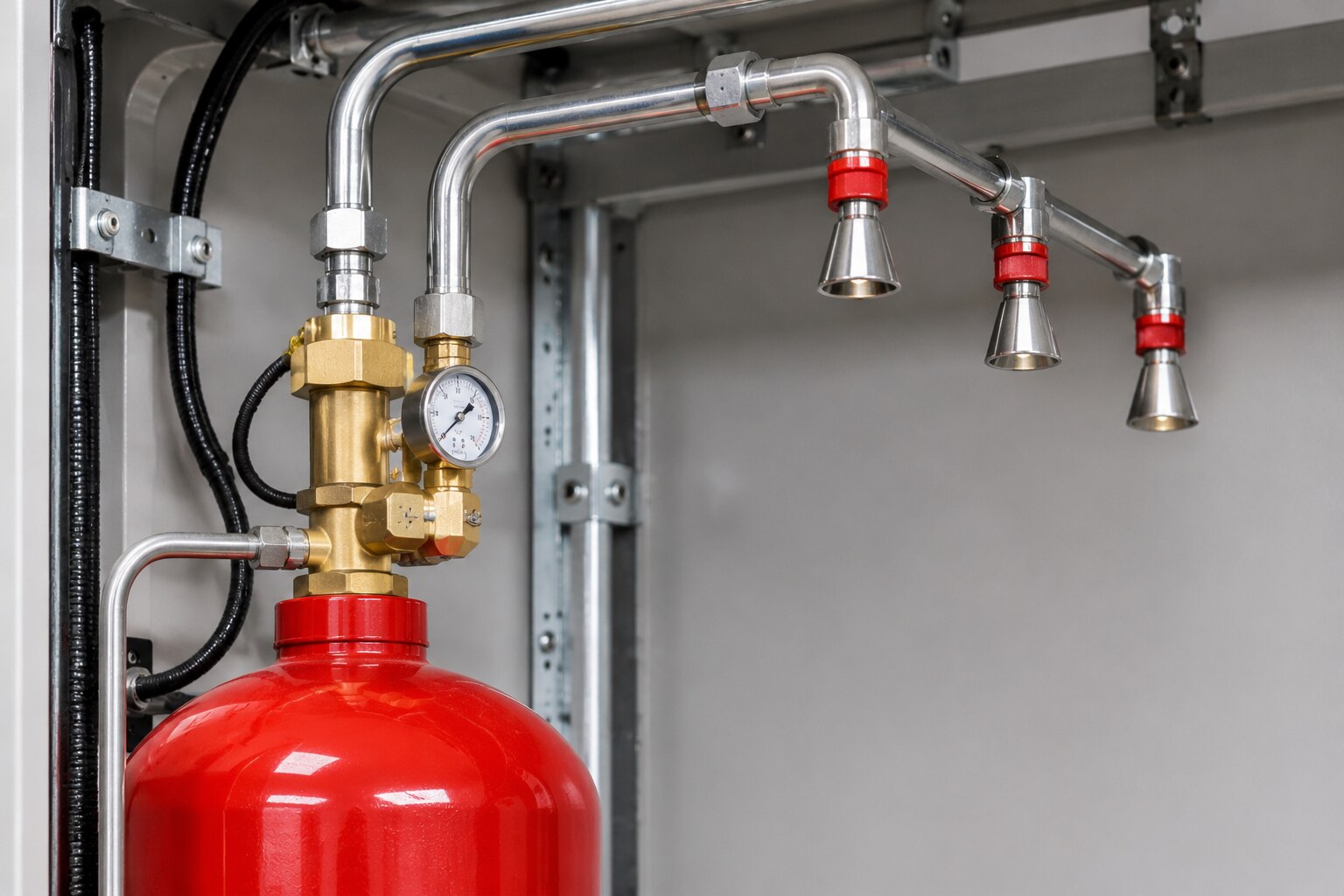
A nozzle marked “dry” is not enough to identify a safe replacement for a factory suppression system. You need to verify the agent, cylinder pressure, nozzle code, connection, orifice, cabinet layout, and approved discharge arrangement before fitting anything. By the end, you will know how to specify, inspect, replace, and test the correct nozzle without treating a visually similar part as interchangeable.
Key takeaways
- Confirm whether the nozzle is for a cabinet suppression system or portable extinguisher.
- Mount the nozzle where it can discharge across the protected cabinet volume.
- Match nozzle size, pressure, quantity, and cabinet volume to the approved system design.
- Replace nozzles only after isolating the suppression system and electrical hazards.
Is the stored-pressure dry nozzle a panel nozzle or an extinguisher nozzle?
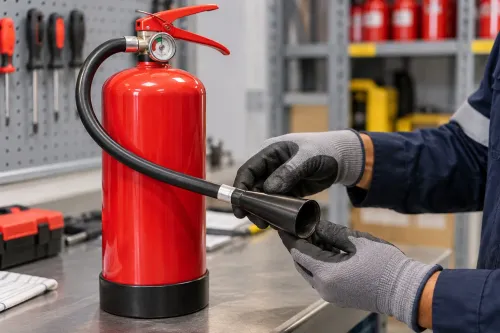
A “stored-pressure dry nozzle” is not enough information to identify the part. It may serve a cabinet suppression system or a portable extinguisher, and an extinguisher discharge nozzle is not automatically suitable for a cabinet unit.
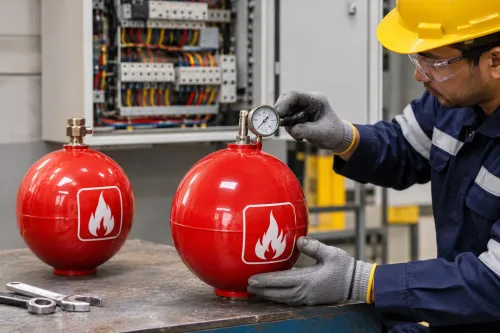
For a stored pressure dry nozzle for factory panel suppression systems in bhandup, confirm the agent: dry chemical powder, clean agent, inert gas, or aerosol.
Record these details before ordering:
- Cylinder model and working pressure
- Nozzle model or code copied from the original marking
- Inlet thread or connection type, orifice diameter, body material, pressure rating, and operating temperature range
- Discharge direction and system approval
- Pipe or tubing length specified by the manufacturer
Compare the protected system nameplate, manual, original nozzle marking, flow direction, and specified tubing arrangement. The generic phrase dry nozzle for factory panels cannot prove compatibility.
| Type | Identification | Procurement decision |
|---|---|---|
| Panel nozzle | Matched to the cabinet system’s agent, cylinder pressure, orifice, tubing, direction, and approval | Order only against manufacturer documentation |
| Extinguisher nozzle | Matched to a portable extinguisher’s valve and discharge pattern | Do not substitute for a cabinet unit |
Never force metric and NPT threads together; leakage or thread damage can follow. The wrong orifice changes discharge performance, a reversed directional nozzle misdirects the agent, and thread sealant entering the passage can block release.
Where should a dry nozzle sit inside a factory electrical cabinet?
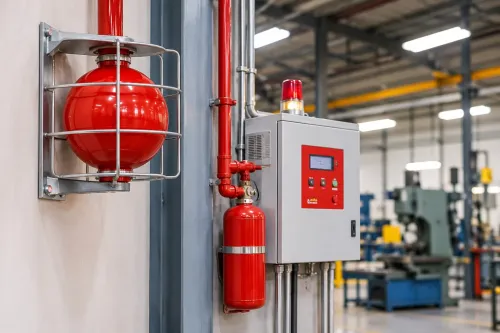
The nozzle should sit where the manufacturer’s tested discharge pattern reaches the likely ignition zone, not automatically beside the door or under the roof. Position depends on agent type, enclosure volume, internal compartments, obstructions, and the arrangement of energized components.
Panel suppression system nozzle applications differ by cabinet:
- MCCs, LT panels, and switchgear: direct discharge toward busbar, cable-termination, contactor, or breaker zones identified as the fire risk.
- PLC and control cabinets: avoid placing the outlet behind the PLC rack; cover the wiring and power-supply area without blocking ventilation paths.
- VFD cabinets: account for retrofit drives, heat sinks, filters, and cable ducts that can shield the discharge.
- CNC-machine electrical compartments: route tubing away from vibration and aim at the drive, contactor, or power-entry zone.
- Battery or charging cabinets: follow the specified agent and compartment arrangement; battery chemistry changes the protection requirement.
- Engine compartments: use the tested nozzle direction for the hot surface, fuel, oil, and wiring zones.
Keep the outlet clear of cable trays, gland plates, busbars, contactors, filters, stored materials, and retrofit equipment. Maintain the specified nozzle clearance and mounting direction, use gentle tubing or hose bends, and support pipework against vibration.
Protect the orifice from dust, insects, paint, powder caking, and thread-sealant fragments. Never probe or enlarge it. Adding trays or leaving louvers, cable entries, doors, or conduit penetrations unsealed can invalidate the original dry nozzle for factory panels arrangement.
How do you match nozzle size, pressure, quantity, and cabinet volume?
A 2 kg, 3 kg, 4 kg, or 6 kg label does not prove compatibility. A stored pressure dry nozzle for industrial facilities is a calculated assembly in which nozzle quantity, orifice diameter, discharge time, agent mass, cylinder working pressure, tubing pressure loss, and enclosure volume must match.
1. Identify the agent, cylinder model, working pressure, nozzle code, orifice diameter, and system approval from the nameplate and manual. A dry nozzle for factory panels is not interchangeable with an extinguisher nozzle or another manufacturer’s model.
2. Check the manufacturer’s design data for minimum and maximum tubing length, required operating or stored-pressure range, allowable temperature range, and the number and orientation of nozzles in each compartment. A blocked tube, altered orifice, low gauge reading, damaged gauge, corroded cylinder, or incompatible cylinder can prevent the required concentration or discharge duration.
3. Confirm that every nozzle outlet is clear and that tubing has no unapproved bends or crushed sections. Do not accept a replacement based on appearance alone; compare its thread, connection, orifice, pressure rating, and discharge direction with the original documentation.
4. Inspect enclosure integrity before approving the design. Failed door gaskets, open louvers, missing blanking plates, unsealed conduit penetrations, and oversized cable entries let agent or powder escape.
A cabinet modification can require a revised calculation even when its external dimensions are unchanged. Added trays, gland plates, drives, or partitions alter volume, obstructions, flow, or compartment boundaries; obtain the manufacturer’s revised nozzle arrangement instead of adding a nozzle by guesswork.
What is the safe procedure for a factory electrical cabinet nozzle replacement?
A factory electrical cabinet nozzle replacement is a controlled system intervention, not a like-for-like swap. Only qualified personnel should work on live or critical equipment systems, and a stored pressure dry nozzle for factory panel suppression systems in Bhandup must match the installed agent, cylinder, pressure, connection, and approved discharge design.
- Isolate the protected equipment under the site’s lockout procedures. Confirm electrical isolation before opening the cabinet.
- Place the suppression system in its safe maintenance state. Isolate or disable automatic release exactly as the system manufacturer directs.
- Depressurise the cylinder and connected hose or tubing through the approved method. Do not loosen a pressurised nozzle.
- Remove the old nozzle and inspect the inlet threads, hose or tubing, mounting supports, discharge opening, and cylinder pressure. A low gauge reading, damaged gauge, corrosion, tampered seal, or discharge evidence requires cylinder service.
- Fit the specified replacement without forcing threads, introducing sealant into the passage, contaminating the orifice, or probing or enlarging its opening.
- Restore pressure to the manufacturer’s specified range and confirm the assembly remains supported and correctly directed.
- Test detection coverage, manual release, alarm indication, actuator operation, and equipment interlocks without releasing powder into the cabinet.
- Record photographs, nozzle marking, thread type, agent and cylinder model, pressure reading, cabinet dimensions, internal obstructions, and the reason for replacement.
Ignitek Solutions Pvt Ltd can help identify the assembly and arrange refilling, hydrotesting, or a documented functional check when site records or test evidence are incomplete.
Related products
Fire Extinguishers Spare Nozzle - Stored Pressure Dry Powder ₹50 Discharge Nozzles for ABC Stored Pressure Dry Powder Type Fire Extinguishers View product → |
 | Panel Suppression System 4 kg The Panel Protection System is the most effective and reliable product for protection of enclosed panels or cabinets from fire. |
When is a dry-chemical nozzle the wrong choice for panel protection?
Dry chemical is the wrong choice when residue-free recovery matters more than immediate flame knockdown. Powder can enter relays, contactors, circuit boards, ventilation paths, insulation, and sensitive drive equipment. A discharge then requires electrical isolation, residue removal, inspection, and investigation before restart.
| Agent | Recovery consequence | Suitable decision |
|---|---|---|
| Dry chemical powder | Fast flame knockdown, but deposits can remain in electrical and ventilation spaces | Choose when rapid suppression outweighs cleanup and equipment-recovery demands |
| Clean agent | Avoids powder deposits when concentration, enclosure integrity, detection, and discharge design are suitable | Consider for sensitive electronics, but do not treat energized equipment as automatically safe |
Clean-agent nozzle systems still need power, ventilation, door, alarm, and time-delay interlocks designed and tested. A stored pressure dry nozzle for industrial facilities is not interchangeable with a clean-agent nozzle, and panel suppression system nozzle applications depend on the complete tested assembly.
Check dust, oil mist, humidity, vibration, corrosion, and temperature variation around Bhandup factory installations. These conditions affect cylinder and nozzle materials, pressure, orifice performance, and environmental limits.
After a fire or unwanted release, correct the cause, isolate the panel, service the agent container and actuator, and complete a detection and releasing-circuit test before returning it to operation.
- Agent type and cylinder pressure
- Nozzle code, thread, and orifice
- System approval and environmental limits
- Cabinet arrangement and discharge design
- Complete manufacturer documentation
Frequently asked questions
Is a stored-pressure dry nozzle a panel nozzle or an extinguisher nozzle?
The description alone does not identify it. Check the manufacturer, system model, connection, pressure rating, and approved application; an extinguisher discharge nozzle is not automatically suitable for cabinet suppression.
Where should a dry nozzle sit inside a factory electrical cabinet?
Position it inside the protected enclosure so its discharge covers the hazard area without obstruction. Follow the suppression system layout and keep it clear of cable trays, partitions, and components that block discharge.
How do you match nozzle size, pressure, quantity, and cabinet volume?
Use the system manufacturer’s design data for the cabinet volume, agent, nozzle orifice, operating pressure, and required nozzle count. Do not substitute a nozzle based only on thread size or appearance.
What is the safe procedure for a factory electrical cabinet nozzle replacement?
Identify and isolate the suppression cylinder, prevent accidental discharge, isolate electrical energy under site procedures, verify zero pressure where required, replace the approved nozzle, and record the work before returning the system to service.
When is a dry-chemical nozzle the wrong choice for panel protection?
Choose another protection method when dry chemical could damage sensitive equipment, create unacceptable cleanup or visibility hazards, or fail the enclosure’s approved fire-risk and agent compatibility requirements.
Related products
 | Panel Suppression System 2 kg The Panel Protection System is the most effective and reliable product for protection of enclosed panels or cabinets from fire. |
 | Panel Suppression System 6 kg The Panel Protection System is the most effective and reliable product for protection of enclosed panels or cabinets from fire. |
 | Panel Suppression System 3 kg The Panel Protection System is the most effective and reliable product for protection of enclosed panels or cabinets from fire. |
 | Refilling and Hydrotesting Set Up Provider Refilling and hydrotesting of fire extinguishers must adhere to IS 2190: 2024, requiring annual maintenance, 3-year refilling for water/foam/powder,... View product → |
Keywords