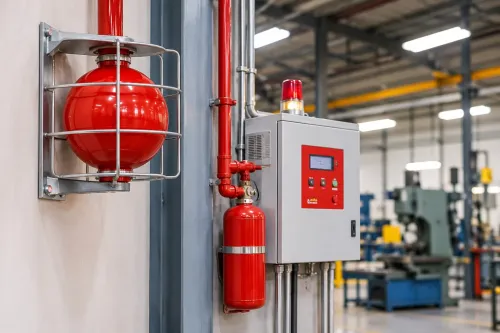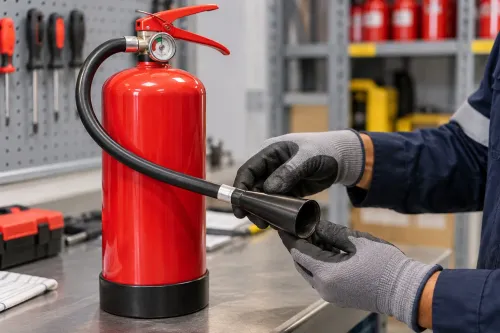
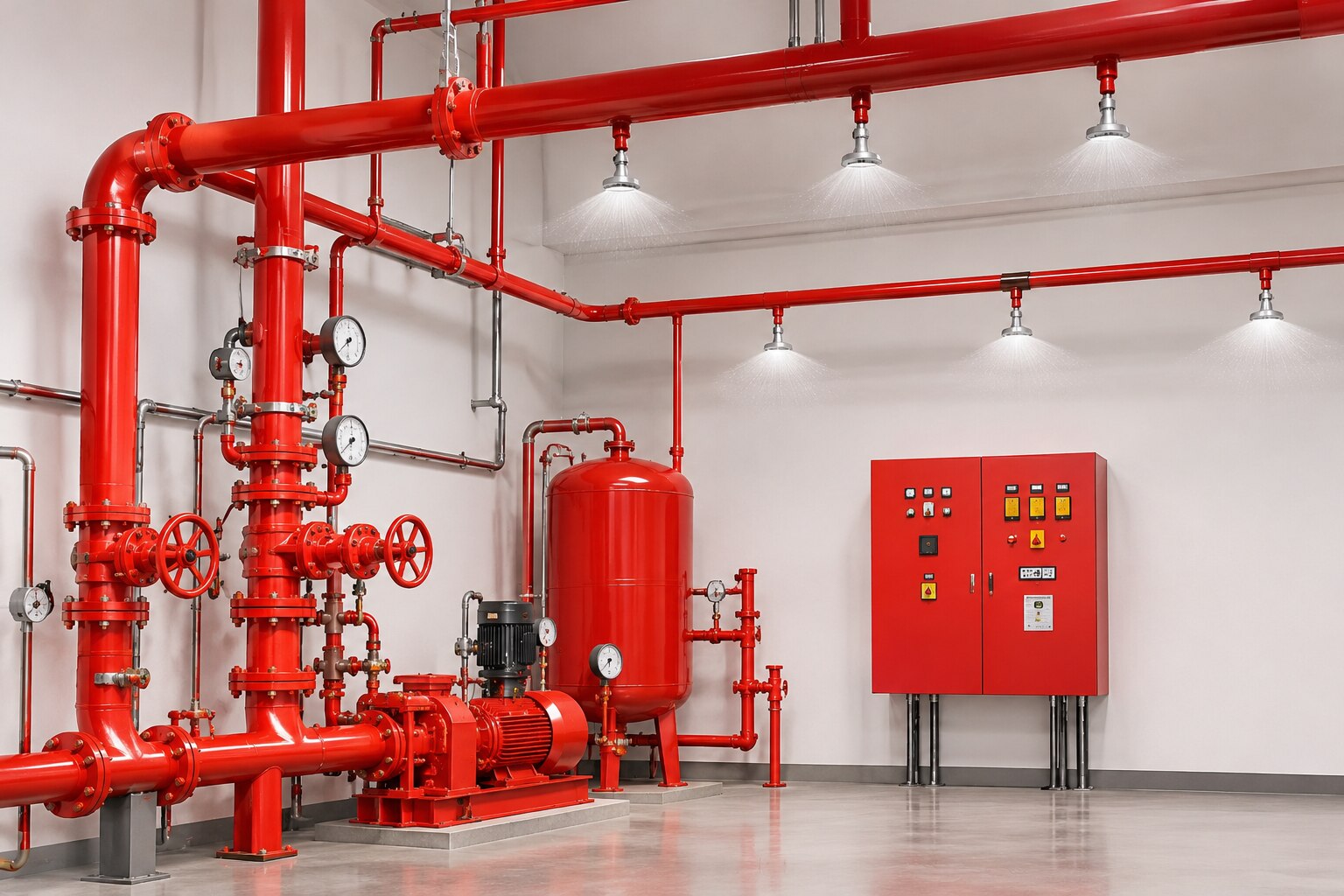
A nozzle inside an electrical panel is not a complete suppression system: it must match the detection method, extinguishing agent, cylinder, pipework and discharge calculation. By the end, you will know how to identify the correct nozzle arrangement, specify installation details, compare dry chemical with cleaner agents, and request a quotation that can be inspected and maintained.
Key takeaways
- Match the nozzle, agent, cylinder valve and detection method before purchase.
- Size agent quantity from enclosure volume, hazard type and manufacturer discharge data.
- Seal cable entries and position nozzles to prevent blind spots and leaks.
- Specify shutdown, testing, refilling and post-discharge support in writing.
What a panel suppression nozzle actually does
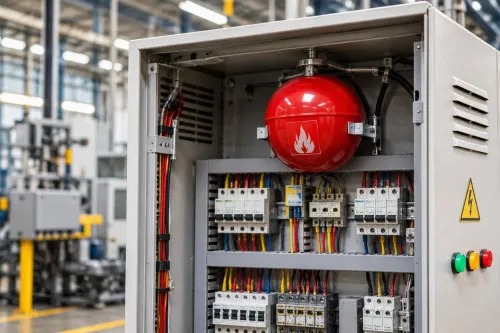
A panel suppression nozzle releases extinguishing agent into an electrical enclosure and directs the discharge toward the likely ignition zone. The nozzle itself does not always detect heat: a system may use a heat-sensitive detection tube routed above terminals, or a separate detector that triggers the cylinder valve.
When heat reaches the specified activation temperature, the actuator opens and the agent discharges.
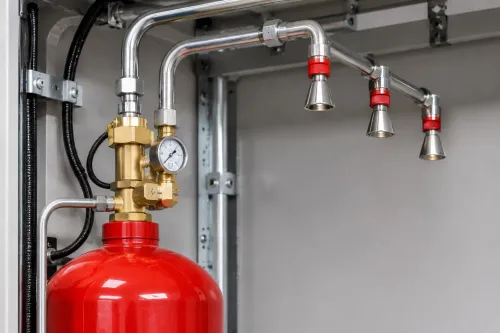
A complete panel system includes more than the nozzle:
- Compatible extinguishing agent and cylinder
- Detection tube or fixed detector
- Actuator, valve and release mechanism
- Pipe or tubing with calculated flow
- Nozzle with a specified model, orifice and mounting thread
- Alarm, shutdown or electrical-isolation interfaces
A nozzle aimed at a cabinet exterior cannot protect an internal fire unless the design specifically provides for that arrangement. Cable ducts, gland plates, busbar barriers, door stiffeners and partitions can block the spray, while excessive openings can let agent escape.
A quotation for panel suppression system nozzle use in Bhandup must identify the enclosure, agent quantity, detection method and discharge pattern. A fire protection system supplier panel suppression system nozzle use in Bhandup quotation that lists only a nozzle is incomplete.
Discharge does not remove electrical danger. Coordinate breaker trip, shunt trip, contactor isolation, alarm transmission and any HVAC shutdown with the electrical and controls designer. Confirm whether the design protects one cabinet locally or floods an entire room; those are different systems with different enclosure, ventilation and hazard calculations.
Confirm the nozzle and release system are compatible
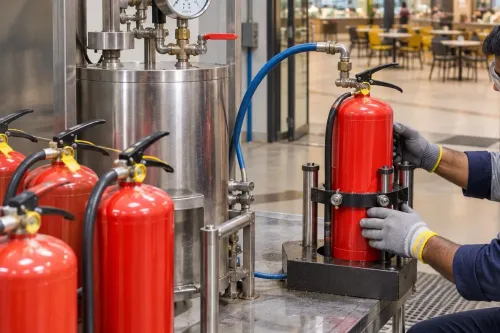
A nozzle is part of a complete panel system only when its model, orifice, agent and release method match the cylinder and detection arrangement. A threaded discharge fitting sold for a portable ABC extinguisher does not prove compatibility with an enclosure system.
| Quoted item | What confirms its purpose |
|---|---|
| Portable-extinguisher replacement nozzle | Identified only by extinguisher thread or discharge size; no cylinder, detection or actuation data |
| Panel-system nozzle | Manufacturer model, orifice, discharge pattern, activation temperature and mounting specification are stated |
| Complete system quotation | Nozzle is matched to agent, cylinder pressure, detection tube or detector, actuation method and pipe or tubing |
Ask for the manufacturer’s data sheet and the exact system diagram, not a catalogue photograph. The quotation must state whether the arrangement is stored pressure dry nozzle panel protection using dry chemical or another dry agent, or a cartridge-operated system; these systems have different pressure, servicing and flow requirements.
For panel suppression system nozzle use in bhandup, require the supplier to identify the protected enclosure, agent quantity, nozzle model, detection route, release temperature, alarm output and commissioning test. Confirm whether discharge also initiates breaker trip, shunt trip, contactor isolation, HVAC shutdown or only local alarm.
If the quote lists “nozzle” without these interfaces, treat it as a replacement part—not a complete release system—and obtain written compatibility confirmation before purchase.
Choose nozzle coverage and agent capacity from the enclosure hazard
Nozzle quantity follows the enclosure’s calculated hazard, not its kVA rating or cabinet width. Map likely ignition zones, internal partitions, busbars, cable entries and obstructions, then verify that each zone receives the required agent discharge.
The calculation must use agent type, enclosure volume, design concentration or discharge density, cylinder pressure, tubing length, fittings, nozzle orifice and flow rate. One nozzle cannot protect a cabinet with hidden or separated compartments unless the manufacturer’s design confirms it.
For a quotation covering fire protection system supplier panel suppression system nozzle use in Bhandup, require the nozzle model, orifice, agent, detection-tube route or detector type, release method and calculated cylinder size.
| Cylinder | What it means | When it applies |
|---|---|---|
| 2 kg | Lower agent capacity and limited flow reserve | Small, compact enclosure after the manufacturer’s calculation confirms concentration and discharge time |
| 3 kg | Intermediate capacity | Medium enclosure or a design requiring more agent than a 2 kg cylinder |
| 4 kg | Higher agent quantity | Larger volume, multiple protected zones or longer pipe runs when the flow calculation supports it |
| 6 kg | Highest listed capacity | Large or divided enclosures that need the calculated agent mass; not a default upgrade |
A stored pressure dry nozzle panel protection arrangement is incomplete unless the dry agent and release method are named. Dry chemical and cartridge-operated systems require different pressures, servicing and nozzle-flow specifications. Do not substitute a larger cylinder or add nozzles without recalculation; excess agent can impair electrical equipment, while too little leaves a re-ignition risk.
Include alarm, breaker or contactor isolation interfaces in the design.
Install the nozzle without creating blind spots or enclosure leaks
Place the nozzle so its discharge pattern reaches the likely ignition zone, not merely the cabinet centre. Keep the orifice clear of busbars, cable bends, partitions and cooling fans; an obstruction can leave a hot connection untouched or deflect agent toward the door.
Before fixing the assembly, verify these installation points:
- Mounting position, thread and nozzle model match the approved calculation for that agent and cylinder pressure.
- Maintain the manufacturer’s clearance around the orifice and avoid pointing directly at an open vent or louvre.
- Route detection tubing or pipe along protected, accessible paths, with supported bends and no crushing, kinks or unapproved fittings.
- Seal unused cable entries, gland plates and door gaps without blocking pressure relief or required ventilation.
- Anchor the cylinder upright where vibration, heat and accidental impact cannot damage it.
- Leave enough access to inspect the nozzle, tubing, actuator, cylinder gauge and enclosure interior.
A sealed cabinet is not automatically a total-flooding room. A cabinet-level system protects the enclosure named in its design; open doors, large cable penetrations or adjacent cabinets can create leakage and an unprotected fire path. Confirm whether the electrical designer requires breaker trip, shunt trip, contactor isolation or alarm transmission alongside discharge.
For panel suppression system nozzle use in Bhandup, request the enclosure volume, nozzle orifice, pipe length, agent quantity and calculated flow in writing. A fire protection supplier for electrical panels in Bhandup should also document commissioning tests and the inspection interval.
Specify testing, shutdown and post-discharge support in Bhandup
Before commissioning, require a signed design and test record, not only a mounted cylinder. A fire protection supplier for electrical panels in Bhandup should identify the protected enclosure, agent quantity, nozzle model and orifice, detection-tube route or detector type, actuation method, and discharge direction.
The record must also state whether the system triggers a breaker trip, shunt trip, contactor isolation, alarm transmission, HVAC shutdown, or local discharge only.
Require these commissioning checks in writing:
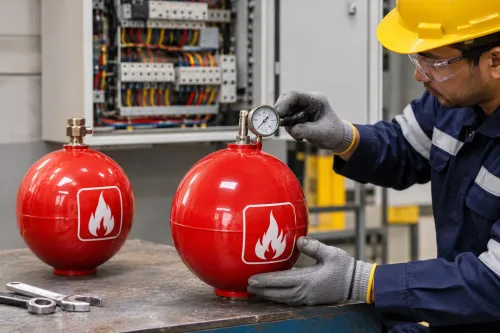
- Confirm the cylinder pressure, agent identity, tubing or pipe connections, nozzle obstruction clearance, enclosure penetrations, and corrosion protection.
- Test detection and manual release using the manufacturer’s approved method without releasing agent.
- Verify alarm indication and every shutdown interface with the electrical and control-system designers.
- Record the enclosure identification, test date, installer, cylinder serial number, and next inspection date.
- Check that inspection access remains available and that moisture or condensation cannot collect around the cylinder, actuator, supports, or panel entry.
For “fire protection system supplier panel suppression system nozzle use in Bhandup,” require a written response plan after operation. It must cover electrical isolation, scene safety, cylinder replacement or recharge, residue removal, inspection of relays, contactors, boards and busbars, and the cause investigation before re-energising.
Dry-chemical discharge needs specialist cleaning; wiping the visible powder away is not enough. Ignitek Solutions Pvt Ltd can be evaluated against these documented tests and recovery services, rather than against nozzle price alone.
Related products
 | Panel Suppression System 4 kg The Panel Protection System is the most effective and reliable product for protection of enclosed panels or cabinets from fire. |
 | Panel Suppression System 6 kg The Panel Protection System is the most effective and reliable product for protection of enclosed panels or cabinets from fire. |
Frequently asked questions
What does a panel suppression nozzle do?
It directs extinguishing agent into an electrical enclosure toward likely ignition points. Detection comes from a heat-sensitive tube or a separate detector, depending on the system.
How do you confirm nozzle and release-system compatibility?
Check that the nozzle orifice, agent type, cylinder valve, detection method, operating pressure and manufacturer-approved components match as one tested system.
How should you choose nozzle coverage and agent capacity?
Use the enclosure’s internal volume, fire hazard, agent concentration or discharge requirement, nozzle coverage data and the system manufacturer’s sizing instructions.
What should installation and support specifications include?
Specify nozzle placement, enclosure sealing, electrical shutdown logic, inspection and testing intervals, cylinder refilling, hydrotesting where required and post-discharge service.
Related products
 | Panel Suppression System 2 kg The Panel Protection System is the most effective and reliable product for protection of enclosed panels or cabinets from fire. |
 | Panel Suppression System 3 kg The Panel Protection System is the most effective and reliable product for protection of enclosed panels or cabinets from fire. |
Keywords