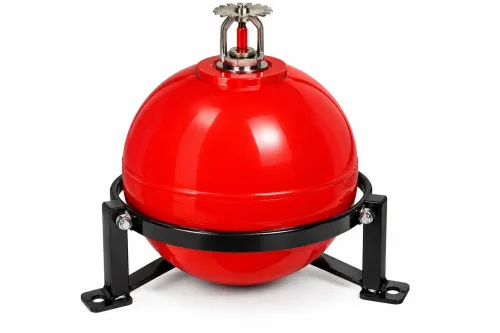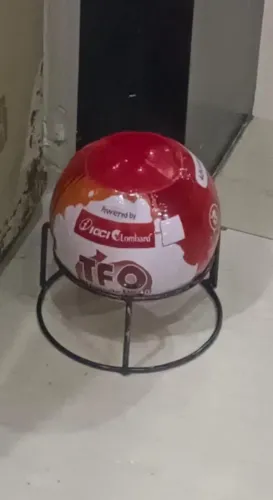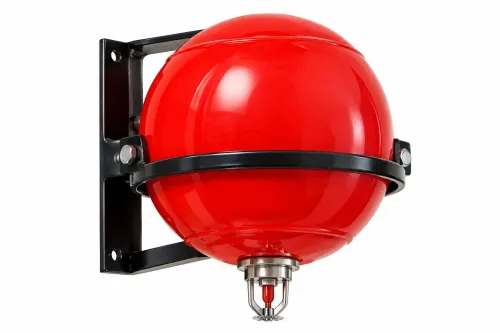
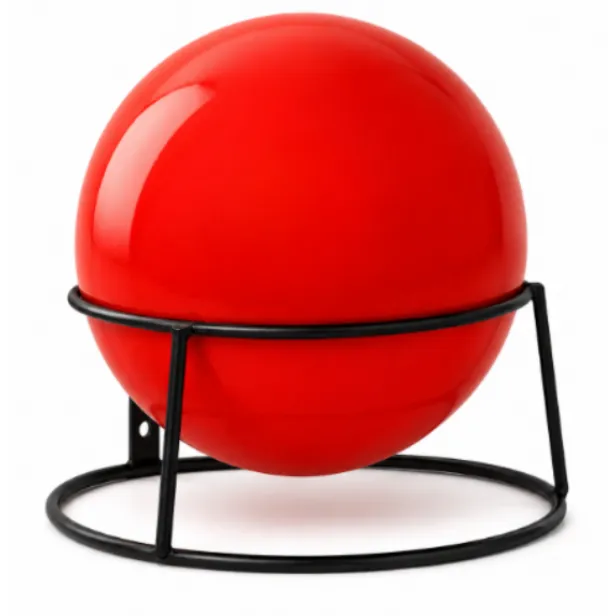
Fire balls have attracted attention as compact fire suppression devices that may activate when exposed to fire, depending on their specific design. Their simple appearance can make them seem like an easy addition to almost any property.
However, facility managers evaluating a fire ball supplier in Bhandup should avoid treating these devices as universal replacements for conventional fire protection equipment.
The more useful question is where a particular fire ball is designed to be used, what limitations apply, and how it fits into the property's broader fire safety strategy.
Understand What a Fire Ball Is Intended to Do
A fire ball is generally designed to release an extinguishing agent when its activation mechanism is exposed to fire conditions according to the product design.
Different products can have different specifications, activation characteristics, agent quantities, coverage claims, installation instructions, and limitations.
That means purchasing decisions should be based on documented product information rather than assumptions formed from demonstration videos or appearance.
Fire Balls and Portable Extinguishers Serve Different Roles
A conventional portable extinguisher is manually operated by a person who identifies a fire, selects appropriate equipment, approaches from a safe position, and discharges the agent.
A fire ball may be intended to activate through exposure to flame or fire conditions depending on the device.
These operating methods are fundamentally different.
One should therefore not automatically be treated as a direct substitute for the other.
Facilities should maintain the fire protection equipment required for their hazards and applicable safety needs rather than removing established protection simply because an additional device has been introduced.
Ask What Fire Types the Product Is Suitable For
The first technical question should be application suitability.
Not every extinguishing agent is appropriate for every fire.
Before purchasing, review:
- Extinguishing agent
- Intended fire applications
- Activation mechanism
- Product limitations
- Recommended positioning
- Coverage information
- Environmental restrictions
- Storage requirements
- Manufacturer instructions
If these details are unclear, the product should not be selected solely on the basis of a sales demonstration.
Location Is Critical
Even an appropriate device can provide little value when positioned badly.
Consider the actual hazard.
Where could ignition reasonably begin? Would the device be exposed to the conditions necessary for activation? Are there barriers between the device and the potential fire? Could airflow, enclosure design, equipment configuration, or room geometry affect its usefulness?
Fire protection should always relate to the hazard location.
Installing a device simply because there is an empty wall or convenient mounting point is not the same as risk-based placement.
Be Careful Around Electrical Equipment
Electrical panels are a common area where buyers may consider compact suppression devices.
However, electrical enclosures require specific evaluation.
A facility should determine whether the selected product is intended and suitable for the particular application and whether a dedicated panel suppression solution would provide more appropriate protection.
Factors such as enclosure geometry, sensitive equipment, agent characteristics, detection method, and discharge arrangement may influence the decision.
A fire ball positioned somewhere near a panel should not automatically be assumed to provide the same protection as a system designed specifically for the enclosure.
Consider the Consequence of Failure
One useful way to evaluate any fire safety product is to ask what happens if the protected asset is lost.
For a low-value isolated area, the risk may be relatively limited.
For a critical control cabinet that can stop an entire production line, the consequences may include:
- Equipment replacement
- Production downtime
- Delayed orders
- Electrical repairs
- Data or control loss
- Business interruption
As asset criticality increases, the case for purpose-designed detection and suppression generally deserves more careful evaluation.
Check Documentation Before Buying
Procurement teams should request technical information from a fire ball supplier rather than relying only on verbal claims.
Review the manufacturer's instructions and relevant product documentation for the exact model being considered.
Useful details include the agent quantity, intended applications, installation guidance, operating conditions, storage requirements, service life information, and relevant testing or conformity information.
This allows the buyer to compare products on technical suitability rather than appearance.
Do Not Ignore Conventional Fire Protection
Adding a fire ball does not remove the need to consider other protection measures.
A facility may still require, depending on its risk profile:
- Portable fire extinguishers
- Detection systems
- Fire alarms
- Hydrant arrangements
- Sprinkler protection
- Localised suppression
- Emergency signage
- Evacuation procedures
- Staff training
- Preventive maintenance
Fire safety is strongest when different measures work together.
Where Additional Protection May Be Considered
Fire balls may be evaluated as supplementary protection in suitable locations when their documented specifications match the intended application.
The key word is supplementary.
They should not be selected simply because they are compact, visually distinctive, or easy to install.
Ignitek Solutions Pvt Ltd supplies fire safety equipment for different facility requirements in Bhandup. Buyers considering fire balls should discuss the actual hazard with the provider and compare the device with alternative protection methods before deciding where it fits.
Make the Decision Based on Risk
A useful fire safety product is one that matches a defined hazard.
Before purchasing fire balls for a factory, commercial property, housing society, or other facility in Bhandup, identify the intended protection area and examine the product specifications carefully.
Then determine whether the device is appropriate as supplementary protection or whether a different fire protection solution better addresses the risk.
That evaluation is more valuable than asking whether fire balls are simply 'good' or 'bad.' Their usefulness depends on correct application, appropriate positioning, technical suitability, and integration with the rest of the property's fire safety measures.
Keywords