Portable fire extinguishers are among the most recognisable pieces of fire safety equipment in any building. Their familiarity, however, can create a misleading impression that choosing one is straightforward.
A reliable portable fire extinguisher dealer in Bhandup should help buyers look beyond cylinder size and price. The first question should be what type of fire risk exists at the location where the extinguisher will be installed.
Different fuels and hazards require different extinguishing approaches. Selecting equipment without understanding those hazards can leave a facility with extinguishers that are poorly matched to its actual risks.
Start by Identifying What Could Burn
Fire extinguisher selection begins with a simple assessment: what combustible materials or fire hazards are present?
An office may contain paper, furniture, electrical equipment, and pantry appliances.
A workshop may introduce oils, machinery, electrical panels, packaging, and process-related hazards.
A warehouse could contain large quantities of combustible stock.
A commercial kitchen presents hot cooking oils and high-temperature appliances.
Because the risks differ, a single extinguisher type should not automatically be assumed to be suitable everywhere.
Understand the Main Extinguisher Categories
Portable extinguishers use different extinguishing media for different applications.
Common options include:
Water-based extinguishers
These may be appropriate for specified ordinary combustible materials where their use is suitable.
Foam extinguishers
Foam can be used for particular classes of fire depending on the extinguisher specification and hazard.
Dry chemical powder extinguishers
These are widely used across various applications, with suitability depending on the powder type and fire classification.
Carbon dioxide extinguishers
CO2 extinguishers are commonly considered where appropriate electrical equipment risks are present because the agent does not leave the same type of residue as dry powder.
Other specialised extinguishing agents may be used for particular hazards.
The key is to match the extinguisher to the identified risk rather than selecting based on familiarity alone.
Capacity Matters Too
Choosing the correct extinguishing medium is only one part of equipment selection.
Capacity, fire rating, placement, accessibility, operating environment, and the number of units required also need consideration.
A small portable extinguisher may be easy to handle but may not provide the same capability as a larger appropriately rated unit. Conversely, simply choosing the largest extinguisher available does not automatically make it the right choice for every location.
The equipment needs to fit the risk and intended users.
Placement Can Determine Practical Usefulness
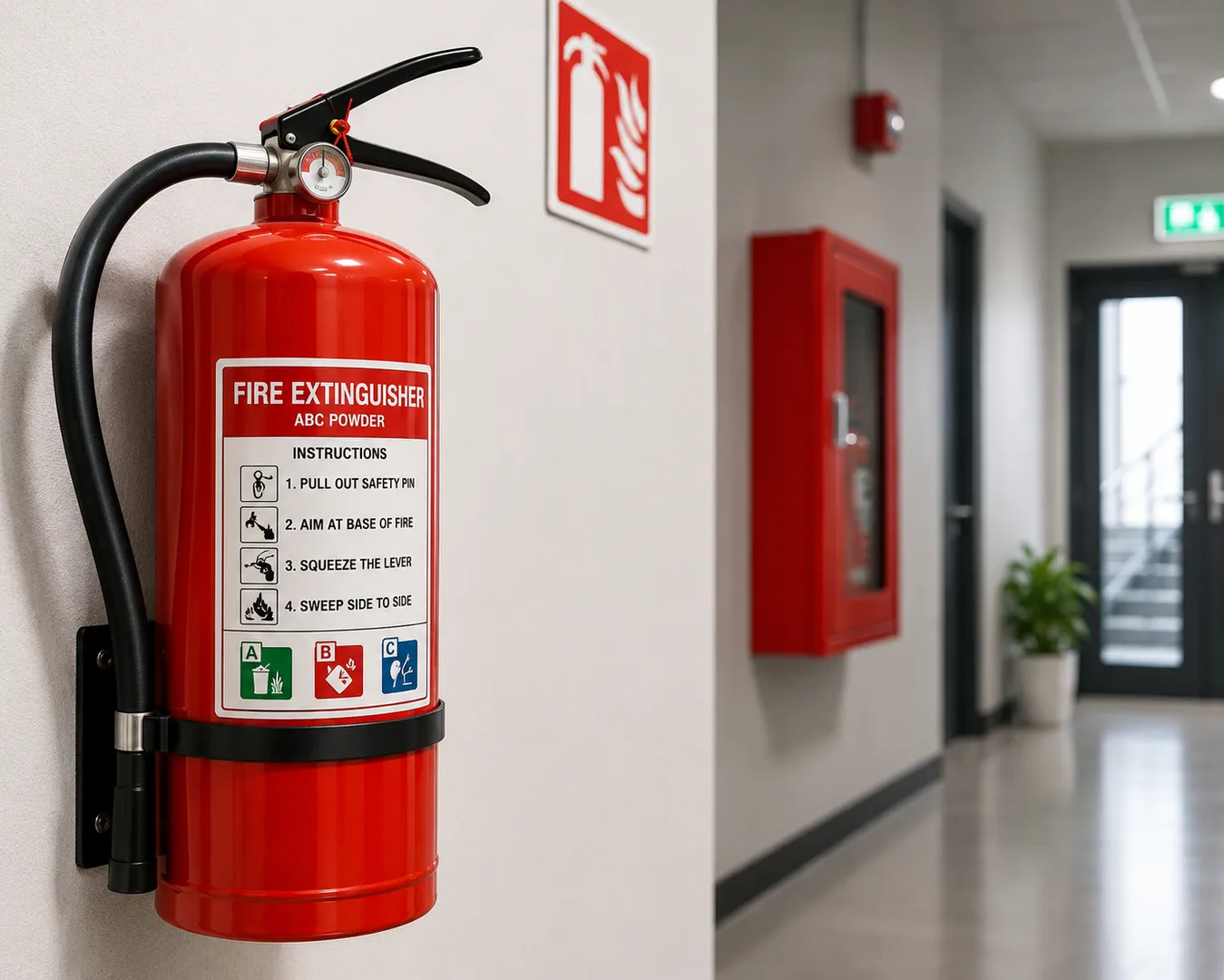
Even correctly selected extinguishers can become ineffective if they are installed poorly.
Common placement problems include:
- Extinguishers hidden behind doors
- Units blocked by stock or furniture
- Equipment installed too far from relevant risk areas
- Extinguishers moved from designated locations
- Poor visibility
- Difficult access
- Missing identification
- Equipment exposed unnecessarily to damaging conditions
During an emergency, people should be able to locate appropriate equipment quickly without searching through a facility.
Do Not Treat Every Floor Identically
A multi-storey commercial building may have offices on one floor, an electrical or utility area elsewhere, parking facilities below, and a pantry or kitchen in another section.
Installing an identical combination of extinguishers everywhere without considering the individual risks can result in weak protection planning.
Instead, assess the hazards area by area.
Facility managers in Bhandup can divide a property into practical risk zones, such as:
- Office areas
- Electrical rooms
- Storage areas
- Parking spaces
- Kitchens or pantries
- Workshops
- Production areas
- Utility spaces
The appropriate equipment can then be considered for each zone.
Ask About Servicing Before Purchasing
Fire extinguishers require attention after installation.
Before buying, ask the dealer how inspection, servicing, refilling, testing, spare parts, and replacement are handled.
This is particularly important for facilities purchasing multiple extinguishers.
A procurement decision based entirely on initial equipment price may overlook the longer-term responsibility of keeping every unit serviceable.
Check Product Information Carefully
Facility and procurement teams should be able to identify exactly what they are purchasing.
Review information such as:
- Extinguisher type
- Capacity
- Fire rating where applicable
- Manufacturing information
- Relevant conformity or certification information
- Operating instructions
- Maintenance requirements
- Suitability for the intended hazard
Avoid choosing fire safety equipment simply because two cylinders appear similar.
The technical specifications matter more than appearance.
Remember That Extinguishers Are Only One Protection Layer
Portable extinguishers provide an important first-response measure, but they do not replace a complete fire protection strategy.
Depending on the property, broader protection may involve alarm and detection systems, hydrants, sprinklers, suppression systems, emergency procedures, evacuation planning, signage, maintenance, and employee training.
The right combination depends on the building and its hazards.
Make Risk the Starting Point
Ignitek Solutions Pvt Ltd supplies fire safety equipment for facilities in Bhandup. When evaluating a portable fire extinguisher dealer, buyers should focus on whether the equipment recommendation reflects the actual application rather than simply the available inventory.
A good purchasing process starts with hazard identification, followed by extinguisher type, capacity, rating, quantity, placement, and maintenance planning.
That approach turns extinguisher procurement from a routine purchase into a more meaningful part of facility fire safety.
Keywords