A vehicle suppression quotation is incomplete if it names only a cylinder size or says “panel suppression.” You need to match the agent, detection method, nozzles, controls, mounting and service plan to the vehicle’s actual fire zones, then compare Bhandup suppliers on engineering evidence and response capability.
Key takeaways
- Protect each engine, battery, hydraulic and fuel compartment separately.
- Match detection method and cylinder capacity to each fire zone.
- Require vibration-resistant installation with clear shutdown and service access.
- Agree discharge recovery, inspection and recharging steps before handover.
Start with the Vehicle, Fire Zones and Hazard You Need to Protect
A panel suppression system for vehicles suits enclosed, high-risk compartments where fire can spread before an operator reaches them: truck and bus engine bays, forklifts, excavators, mining machinery, generator vehicles, and large commercial vehicles. Protect the actual fire zones, not merely the space around a cylinder.
| Vehicle or zone | Main hazard | When fixed panel suppression fits | When another method is better |
|---|---|---|---|
| Engine or machinery bay | Diesel or petrol, oil, hydraulic fluid, turbocharger, exhaust manifold | Frequent heat, fuel and vibration justify automatic detection and nozzles aimed at ignition sources | A small car with accessible engine space may rely on a suitable portable extinguisher and emergency response plan |
| Battery or electrical compartment | Battery thermal event, wiring fault, control equipment | Use only when the agent and enclosure are compatible with energized equipment | A building fire alarm, clean-agent room system, or battery-specific protection may suit a stationary enclosure |
| Hydraulic or underbody equipment | Pressurized fluid, oil, mud and mechanical damage | Protect defined zones with guarded detection lines and nozzles | Exposed, changing equipment may need portable extinguishers or a redesigned enclosure |
Do not accept “vehicle panel suppression system” as a complete specification. Require the quotation to name the vehicle, compartment volume, fuel and fire load, agent, detection tubing or thermal actuator, manual release, nozzle locations, isolation method, discharge time, and governing design standard.
A fire protection supplier for engine compartments must also show protection against vibration, heat, water, oil and abrasion; cylinder weight alone proves nothing.
Match Detection, Agent and Cylinder Capacity to the Compartment
A 2 kg cylinder is not automatically right for a small vehicle. Select capacity from the protected compartment volume, fire load, nozzle count, agent type and the manufacturer’s design limits—not vehicle size or cylinder weight alone.
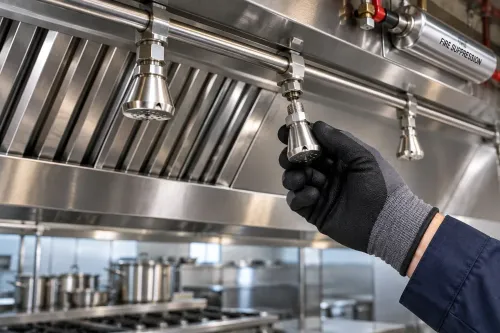
Linear pneumatic detection tubing suits engine bays because heat at a vulnerable point ruptures or actuates the line. Add a manual release within the operator’s reach, then discharge the approved agent through nozzles aimed at fuel lines, turbochargers, exhaust manifolds, hydraulic equipment, batteries and wiring.
The quotation must identify the agent’s suitability for diesel, petrol, oil, hydraulic fluid and energized electrical parts.
| Cylinder capacity | What it indicates | Selection basis |
|---|---|---|
| 2 kg | Smaller agent charge | Compact, lightly loaded compartment with a manufacturer-approved nozzle layout |
| 3 kg | Intermediate charge | More equipment or fire sources than a 2 kg design can cover |
| 4 kg | Larger protected zone | Greater compartment volume, fire load or nozzle demand within design limits |
| 6 kg | Highest listed charge | Large or heavily loaded compartment requiring the specified agent quantity and discharge arrangement |
Ask the supplier to show the protected volume, hazard zones, agent quantity, nozzle orifice sizes, detection-line coverage and discharge time. A cylinder mounted beside an engine proves nothing without that calculation.
For a panel suppression system for vehicles, confirm whether “panel” means an engine compartment, electrical cabinet or another enclosure. Record cylinder pressure or mass, line integrity, manual release, alarm output, nozzle orientation and tamper seals at commissioning.
Design the Installation for Heat, Vibration, Service Access and Safe Shutdown
Route the detection line through the protected compartment’s hottest credible fire zones, not directly against the exhaust or moving components. Use the manufacturer’s specified activation temperature, secure the line with vibration-resistant clamps, and protect it from abrasion, sharp edges, fuel leaks and maintenance tools.
- Mount the cylinder upright on a rigid bracket, away from impact, excessive radiant heat and water spray; leave enough clearance to read the gauge or remove the cylinder.
- Use short, supported pipe runs with approved fittings and flexible sections where the engine or panel moves. Unsecured piping cracks, leaks or changes nozzle alignment.
- Aim each nozzle at the fuel, oil, hydraulic or electrical source identified in the design. Do not hide a nozzle behind a fan, guard, duct or engine component.
- Place the manual release where the operator can reach it from a safe position, label it clearly, and provide a visible and audible alarm.
- Keep detection-line joints, actuators, gauges, nozzles and isolation valves accessible without dismantling major vehicle parts.
The vehicle interface needs a written cause-and-effect diagram. If the design includes engine shutdown, fuel or hydraulic isolation, fan shutdown or battery isolation, test each interlock for safe operation and document what remains powered after discharge. Never add undocumented wiring that could stop steering, braking or emergency movement.
Ask the vehicle panel suppression system supplier to record cylinder pressure or mass, agent quantity, line integrity, manual release, alarm, nozzle orientation, interlocks and tamper seals during commissioning. Check that heat shielding and vibration protection match the vehicle’s duty cycle, not just a workshop demonstration.
Compare Bhandup Suppliers by Engineering Evidence, Service and Total Downtime
For a fire protection system supplier vehicle panel suppression in Bhandup decision, reject any quotation that names only the product and capacity. Require the supplier to identify the vehicle, protected compartment, compartment volume, fuel or electrical hazard, agent, detection method, nozzle layout, governing design standard and installation exclusions.
| Supplier evidence | What to demand | Why it matters |
|---|---|---|
| Engineering | Layout drawing, hazard calculation, agent quantity, nozzle positions, bracket details and detection-line routing | A 6 kg cylinder does not prove that the engine bay or electrical cabinet is covered |
| Commissioning | Record of cylinder pressure or mass, detection-line integrity, manual release, alarm output, nozzle direction, interlock and tamper seal | Missing records leave a failed system looking serviceable |
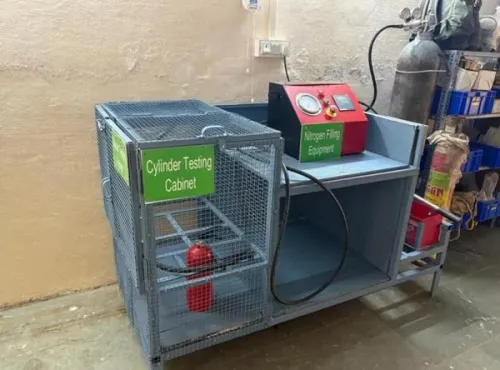
| Service | Mumbai response time, mobile-service capability, compatible cartridges, tubing, nozzles and valves, plus cylinder-testing arrangements | A discharged vehicle remains unavailable while parts are sourced |
| Downtime | Written recovery time after discharge, accidental activation, collision or engine-bay repair | The cheapest quote can cost more through immobilisation |
Ask the vehicle fire protection in Bhandup supplier for the manufacturer’s inspection schedule, not a portable-extinguisher checklist. It must cover tubing, actuators, hoses, nozzles, gauges, brackets and cylinders, including inspection after fire, impact or major repair.
If Ignitek Solutions Pvt Ltd is quoting, ask it to state these same deliverables rather than accepting “ISI approved,” “CE” or “fire certified” as proof of a complete mobile installation. A vehicle panel suppression system supplier that cannot document vibration, heat, water, mud and oil-resistance measures has not shown suitability for service.
Related products
 | Panel Suppression System 6 kg The Panel Protection System is the most effective and reliable product for protection of enclosed panels or cabinets from fire. |
 | Panel Suppression System 4 kg The Panel Protection System is the most effective and reliable product for protection of enclosed panels or cabinets from fire. |
Set the Inspection, Discharge Recovery and Recharging Process Before Handover
Keep the package on a documented pre-shift checklist; a portable-extinguisher service tag does not prove that a fixed vehicle system is ready. For vehicle fire protection in bhandup, agree the manufacturer’s inspection schedule and Mumbai service response before handover.
1. Before each shift, check the pressure gauge, cylinder seal, manual release, alarm indicator, brackets, detection tubing, hoses, nozzles, nozzle guards and visible wiring. Look for abrasion, oil contamination, corrosion, loose fasteners, blocked nozzles or a bent detection line.
2. Record the vehicle number, date, gauge condition, alarm test and inspector’s name. Do not operate the vehicle if the system is discharged, isolated, damaged or showing a fault; attach a clear “out of service” notice.
3. After automatic or manual discharge, accidental activation or a false release, isolate the system safely, preserve the controller and activation parts for diagnosis, and inspect the protected compartment for heat damage and re-ignition risk. Do not simply reset the panel.
4. After a collision or engine-bay repair, inspect cylinders, brackets, tubing, hoses, nozzles, wiring and interlocks before restarting service. A shifted nozzle or pinched detection line can leave the hazard unprotected.
5. Recharge only with the specified agent and compatible cartridge, replace single-use actuators and damaged parts, pressure-test or certify the cylinder when required, and perform a documented functional test before release.
Keep compatible parts and mobile-service contacts available so recovery does not leave the vehicle idle while parts are sourced.
Frequently asked questions
Which vehicle compartments need panel suppression protection?
Identify enclosed, high-risk fire zones such as engine bays, battery compartments, hydraulic areas, fuel systems and generator compartments. Protect each zone rather than placing one cylinder near the general vehicle space.
How do you match a suppression system to a vehicle compartment?
Assess the compartment volume, fuel and heat sources, airflow, access points and likely fire location. Then select the detection arrangement, extinguishing agent and cylinder capacity for that specific hazard.
What installation details matter on vehicles?
Check resistance to heat and vibration, secure routing of detection lines, protected nozzles, safe access for servicing and an appropriate shutdown or alarm sequence.
How should you compare vehicle panel suppression suppliers in Bhandup?
Ask for hazard calculations, zone drawings, component specifications, installation records, testing evidence, maintenance response times and a clear total-downtime estimate.
What must be agreed before handover?
Document inspection intervals, discharge recovery, cylinder testing, agent recharging, replacement parts, post-discharge response and the vehicle’s return-to-service process.
Related products
 | Panel Suppression System 2 kg The Panel Protection System is the most effective and reliable product for protection of enclosed panels or cabinets from fire. |
 | Panel Suppression System 3 kg The Panel Protection System is the most effective and reliable product for protection of enclosed panels or cabinets from fire. |
Keywords