Commercial kitchens combine several fire hazards within a relatively small working area. High-temperature cooking, hot oils, electrical equipment, gas supply, extraction systems, and continuous operations can create conditions in which a small incident escalates quickly.
This is why selecting the right kitchen fire suppression system supplier in Bhandup involves more than purchasing a fire safety product. A kitchen suppression arrangement needs to correspond with the actual cooking equipment, hood configuration, fire hazards, and operating environment.
Why Commercial Kitchen Fires Need Specific Planning
A commercial kitchen does not have the same risk profile as a standard office.
Cooking appliances operate at high temperatures for long periods. Grease can accumulate in filters, hoods, and ducts. Frying equipment introduces hot cooking oils that can remain above dangerous temperatures even after flames are initially suppressed.
This makes early control particularly important.
A kitchen fire suppression system is intended to provide dedicated protection around identified cooking hazards rather than relying exclusively on portable extinguishers elsewhere in the building.
How Kitchen Fire Suppression Works
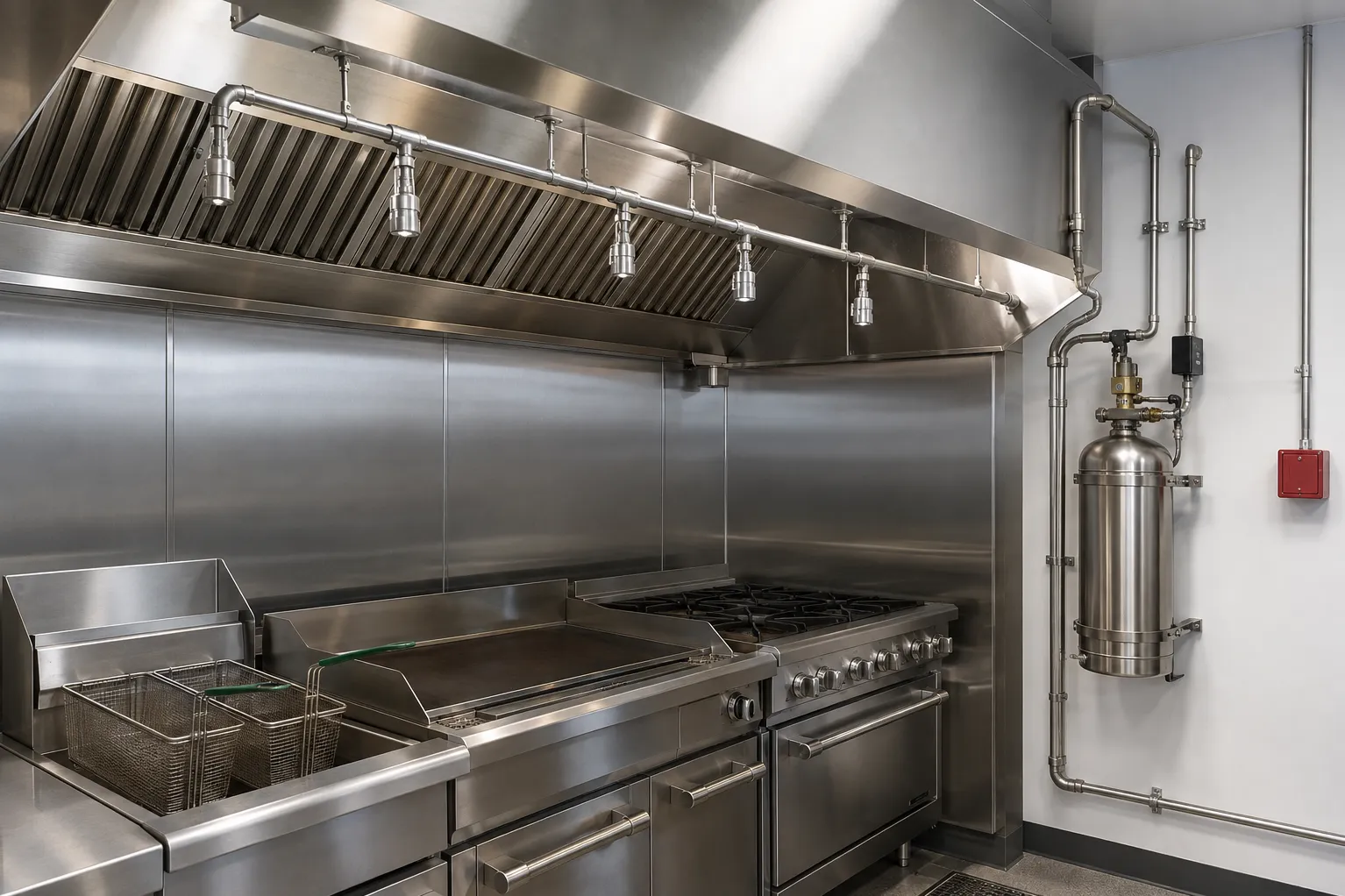
Although system configurations vary, commercial kitchen suppression commonly involves detection and discharge components arranged around the protected cooking zone.
A typical setup may involve:
- Detection elements
- Suppression agent storage
- Discharge piping
- Nozzles positioned for protected appliances
- Manual activation arrangements
- Control mechanisms
- Interfaces with relevant kitchen utilities where designed
When the system activates, the suppression agent is discharged toward designated hazard areas.
The exact design should be based on the kitchen configuration rather than copied from another property.
The Cooking Line Matters
Two kitchens serving the same number of customers may still require different fire protection arrangements.
Consider a kitchen containing fryers, ranges, grills, ovens, and other high-temperature appliances. Now compare it with a smaller pantry or food preparation space with substantially different equipment.
Their risks are not identical.
Before system selection, the supplier or system professional needs to understand:
- Appliance types
- Appliance positions
- Hood dimensions
- Extraction arrangement
- Cooking processes
- Fuel sources
- High-risk cooking areas
- Available installation space
- Operational patterns
Changes to the cooking line after installation may also affect whether the original protection arrangement remains appropriate.
Why Grease Creates an Additional Hazard
Grease accumulation is one of the reasons commercial kitchen fire safety requires consistent attention.
Cooking vapours can deposit grease inside filters, hoods, and extraction ducts. Without proper cleaning, these deposits can contribute to fire spread.
A suppression system therefore does not replace housekeeping and duct maintenance.
Effective kitchen fire risk management combines several measures:
- Appropriate suppression protection
- Regular hood and duct cleaning
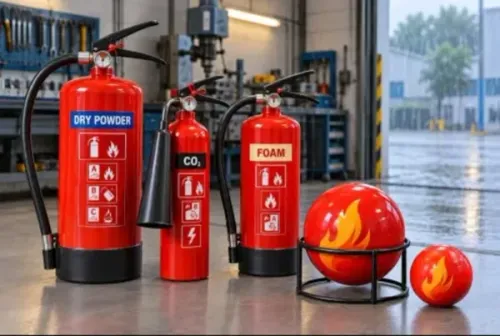
- Suitable portable extinguishers
- Safe gas and electrical practices
- Staff training
- Clear emergency procedures
- Routine inspection of fire protection equipment
Each layer addresses a different part of the risk.
Automatic Protection Is Valuable When Reaction Time Is Limited
Kitchen staff may notice a developing fire quickly, but conditions can change within seconds.
Automatic detection and suppression can provide an important layer of protection where the system has been correctly designed for the identified hazards.
Manual activation may also form part of the arrangement so personnel can initiate the system when appropriate.
Staff should know where manual activation points are located and understand the site's emergency procedures. A sophisticated system is less effective if employees have never been told what to do when a fire occurs.
Installation Is Not the End of the Process
One misconception is that kitchen suppression becomes a permanent fit-and-forget system after commissioning.
Commercial kitchens change.
Appliances are replaced. Fryers move. Cooking capacity expands. Hoods are modified. New equipment is installed. Renovations alter the layout.
Any significant change around the protected cooking area should prompt a review of the suppression arrangement.
Nozzle positions and protection coverage established for the original configuration may not automatically remain suitable after equipment changes.
What to Discuss With a Kitchen Fire Suppression System Supplier
Before choosing equipment, facility managers and restaurant operators should provide accurate information about their kitchen.
Useful questions include:
- What hazards will the system protect?
- Which appliances are included in the protected area?
- How will detection take place?
- Where will discharge nozzles be positioned?
- Is manual activation included?
- What happens to relevant utilities when the system activates?
- What maintenance will the system require?
- What happens if kitchen equipment is rearranged?
- How will staff know the system has activated?
Clear answers make it easier to understand the protection strategy rather than treating suppression equipment as an isolated purchase.
Fire Safety Should Reflect the Actual Kitchen
Commercial kitchens in Bhandup can range from restaurant cooking lines and catering facilities to canteens and institutional food preparation areas. Their operating intensity and equipment configurations can differ substantially.
Ignitek Solutions Pvt Ltd works with fire protection equipment and suppression requirements for such environments in Bhandup.
The fundamental principle is simple: the fire protection arrangement should be developed around the actual hazard.
Choosing a kitchen fire suppression system based only on price or a generic package can overlook differences in appliance layout, cooking processes, extraction design, and maintenance requirements. A hazard-specific approach provides a much stronger foundation for commercial kitchen fire safety.
Keywords