A fire inside an engine bay can begin with a leaking petrol line, diesel, hydraulic fluid, lubricating oil, battery cable or electrical short circuit, then spread before the driver can open the bonnet safely. By the end, you will know where to place a fire ball, how to judge whether one device is suitable, and when a certified automatic suppression system or portable extinguisher is the better choice.
Key takeaways
- Mount away from heat, moving parts, service access and impact paths.
- Confirm the activation temperature and protected engine-bay volume before installation.
- Treat activation as an emergency alarm, not proof the fire is extinguished.
- After activation, stop the engine, evacuate safely and call emergency services.
What an engine-bay fire ball can stop before it spreads
A fire ball can interrupt a small engine-bay flame before it reaches the bonnet, cabin or surrounding fuel sources. It is suited to early fires involving leaking petrol or diesel, hydraulic fluid, lubricating oil, battery wiring faults and electrical short circuits in cars, trucks, buses, generators, forklifts, construction equipment, agricultural machinery and refrigerated vehicles.
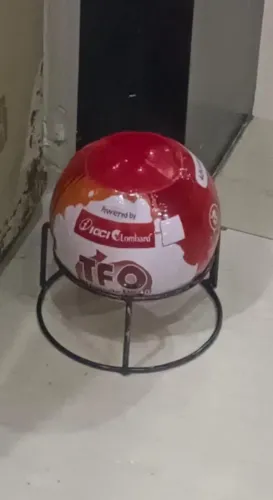
The fire ball benefits for vehicle engine compartments in Bhandup include rapid first response without waiting for someone to open the bonnet and fetch a loose extinguisher.
| Fire source | What the fire ball can address | What it cannot fix |
|---|---|---|
| Petrol or diesel leak | Suppress flames around fuel-fed ignition | Stop the leak or prevent re-ignition |
| Hydraulic-fluid leak | Knock down a localised spray or pool fire | Isolate a ruptured hose |
| Oil on hot components | Suppress burning oil near the engine | Cool an overheated manifold or turbocharger |
| Battery wiring fault | Extinguish an electrical flame | Repair a shorted cable or isolate power |
A fire ball usually discharges from one point, so belts, ducts, covers and engine components can block the powder cloud. Its stated protected volume, activation temperature and test certificate must match the actual bay; products are not interchangeable. These are fire ball fire protection benefits, not a guarantee against every vehicle fire.
If fuel continues flowing or a cable remains live, flames can return after the powder settles. Stop the engine, evacuate and call emergency services; retain any required portable extinguisher.
Where to mount the device without creating a new hazard
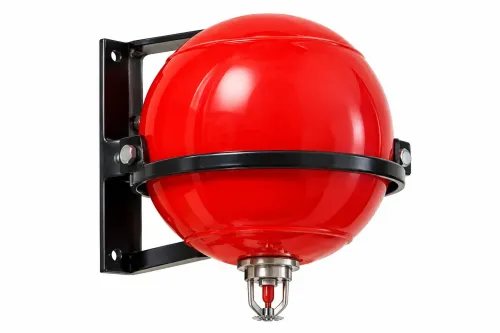
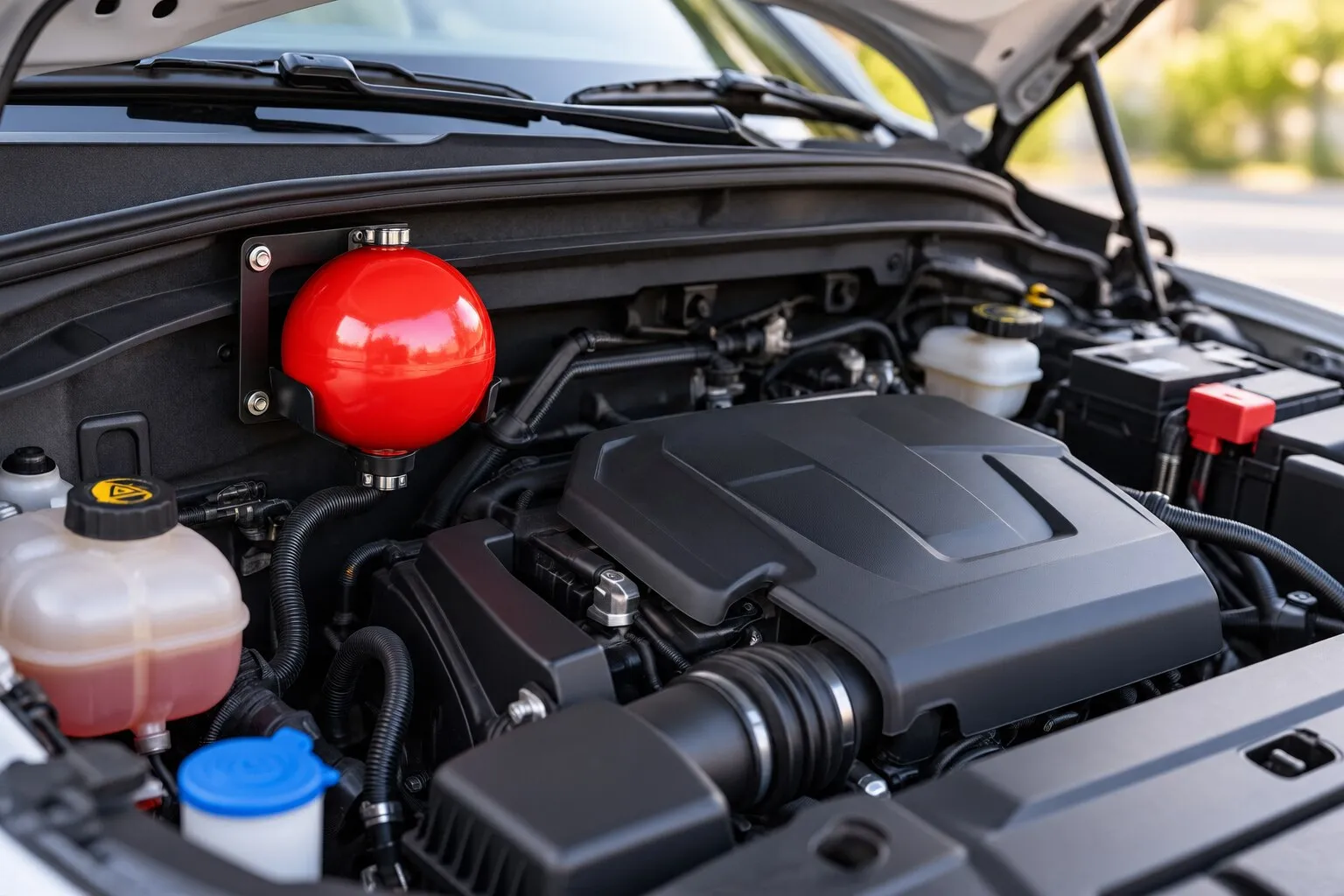
Mount a fire ball for engine compartments on a rigid bracket where the discharge path reaches the likely ignition area without crossing moving machinery. This advice applies to cars, trucks, buses, generators, forklifts, construction equipment, agricultural machinery and refrigerated vehicles.
- Keep the sphere clear of belts, fans, pulleys and other moving parts. A loose bracket can become a projectile or damage the drive system.
- Do not mount it directly beside an exhaust manifold, turbocharger or after-treatment component. Their heat can trigger a 68–85 °C thermal fuse during normal operation or heat soak.
- Keep the device away from batteries, exposed terminals and wiring that could chafe against its bracket. Use a secure mount that cannot contact a live connection.
- Point the heat-triggered fuse toward the likely flame path. Do not hide it behind the bonnet, insulation, ducts, engine cover or another component.
Place the ball near the probable fuel, oil, hydraulic-fluid or electrical fire zone, but leave a clear line for the agent to spread. Check the manufacturer’s stated coverage against the actual bay volume; brackets, hoses and covers can create shadows.
A larger or heavily obstructed compartment may need an engineered system with several nozzles rather than one fire ball. Never attach the device to a belt guard, fan shroud or component that moves, vibrates excessively or reaches its activation temperature in normal service.
How to check coverage, temperature and system limits
A fire ball for engine compartments protects only the area its discharge can reach. Compare the manufacturer’s stated protected volume with the measured engine bay, then inspect whether belts, hoses, ducts, covers or brackets could shadow the agent. A single discharge point cannot match the source coverage of a suppression system with several nozzles.
1. Measure the compartment’s length, width and height, and record the manufacturer’s coverage limit in cubic metres. Reject the device if the bay exceeds that limit or if the certificate covers a different installation orientation.
2. Check the activation temperature against the hottest normal location. Keep the heat-triggered fuse exposed to a likely flame path, but away from direct exhaust-manifold, turbocharger or radiant heat that could cause nuisance activation. Confirm the supplier’s operating and storage temperature limits.
3. Identify the fuel, oil, hydraulic-fluid and electrical risks. Confirm that the extinguishing agent is tested for those fire classes and will not create an unacceptable residue or electrical hazard for the vehicle.
4. Inspect the proposed bracket, clearance and restraint. It must resist vibration, impact and engine movement while staying clear of fans, belts, exhaust parts and service access; use adhesive-only mounting only when the manufacturer approves it.
A vehicle fire ball in Bhandup also faces humidity, monsoon exposure and corrosion. Ask for inspection intervals, service life, storage humidity and vibration limits, then retain the vehicle’s required portable extinguisher: a fire ball does not automatically replace Central Motor Vehicles Rules, AIS or permit requirements.
What the operator must still do after activation
Activation buys time; it does not make the vehicle safe. A fire ball for vehicle operators can suppress flames before someone reaches a loose extinguisher, but its powder cloud does not stop leaking fuel, oil, hydraulic fluid or a live electrical fault.
| Automatic fire ball | Portable extinguisher |
|---|---|
| Activates when its heat-triggered device reaches the product’s rated temperature, or through a pull-cord arrangement | Requires a person to identify the fire, unlock it and aim at the base |
| Can respond inside a closed engine bay while the operator moves away | Offers directed discharge and follow-up control when the operator can approach safely |
| May miss a shielded flame or fail to cover the whole bay | Can be used at another accessible point, within its rating |
| Adds first-response speed; these are key fire ball fire protection benefits | Remains the required equipment where vehicle rules specify an extinguisher |
After activation, take these actions:
- Stop the engine immediately. Isolate the battery or other power source only if you can do so without entering smoke or flame.
- Move people away, keep clear of traffic, and call emergency services. Do not open the bonnet fully; added air can intensify the fire.
- Watch for re-ignition from continuing fuel flow, hot exhaust parts or damaged wiring. Do not restart the vehicle.
- Replace or service the discharged device and inspect the engine before use.
A fire ball does not automatically replace an extinguisher required by the Central Motor Vehicles Rules, AIS requirements, a permit or dangerous-goods provisions. Confirm that obligation, and distinguish IS 2190 portable-extinguisher requirements from engineered-system standards such as NFPA 17.
How Bhandup vehicle owners should specify and maintain protection
Do not approve a vehicle fire ball in bhandup from its shape or advertised activation time alone. Compare the manufacturer’s test certificate, extinguishing agent, activation temperature, protected volume, mounting instructions and service life with the actual bay in a car, truck, bus, generator, forklift, construction machine, agricultural machine or refrigerated vehicle.
- The certificate identifies the tested model, agent and fire class.
- The stated coverage includes your engine-bay volume, not just an open test enclosure.
- The fuse remains in a likely flame path and will not be shielded by insulation, ducts or the bonnet.
- The unit clears belts, fans, exhaust manifolds, turbochargers, batteries, wiring and other moving or hot parts.
- Storage humidity, temperature and vibration limits suit monsoon-exposed Bhandup operations.
2. Check compliance before purchase. A fire ball for vehicle operators is not automatically a substitute for the portable extinguisher, rating or equipment required by the Central Motor Vehicles Rules, applicable AIS requirements, transport permit or dangerous-goods provisions.
3. Record the installation date, batch number, inspection findings and replacement date. Many units are sealed and non-refillable, so do not assume extinguisher refilling or hydrotesting applies. Replace a ball with a cracked housing, corrosion, loose bracket, damaged fuse or powder leakage.
For a buyer assessing fire ball benefits for vehicle engine compartments in bhandup, Ignitek Solutions Pvt Ltd can help compare the device with a nozzle-based suppression layout when one discharge point cannot reach fuel, oil, hydraulic or electrical ignition sources.
Related product
 | Fire Ball ₹1150 A “Fire Ball” is a lightweight, spherical extinguisher that activates automatically within 3–5 seconds of contact with flames. View product → |
Frequently asked questions
What can a fire ball stop in a vehicle engine compartment?
It can interrupt an early fire involving leaking petrol or diesel, hydraulic fluid, lubricating oil, battery wiring faults or electrical short circuits before flames spread to the bonnet, cabin or nearby fuel sources.
Where should you mount a fire ball in an engine bay?
Mount it where the flame path reaches the device, while keeping it clear of exhaust heat, belts, fans, moving linkages, impact points and routine service access.
What should you check before choosing a vehicle fire ball?
Check the device activation temperature, extinguishing-agent type, rated coverage or protected volume, mounting method, expiry information and limits for the vehicle’s fire classes.
What should the operator do after a fire ball activates?
Stop the vehicle when safe, switch off the engine, move people away, call emergency services and do not restart or re-enter until the vehicle is inspected.
Keywords