Commercial buildings bring together people, electrical systems, storage areas, common spaces, parking zones, utility rooms, offices, and sometimes food preparation areas. Because these risks are different, commercial fire protection cannot be reduced to placing a few extinguishers near exits.
Businesses evaluating commercial fire protection solutions in Bhandup should begin with the building's actual use, occupancy, layout, and fire hazards. The most suitable solution is usually a combination of systems rather than one standalone product.
Start With the Building Risk Profile
Every commercial property operates differently.
A corporate office may have extensive electrical equipment, server rooms, meeting areas, and pantry facilities. A retail building may include stock rooms, display areas, electrical loads, and high visitor movement. A mixed-use commercial property may have parking, offices, utilities, restaurants, and service zones.
The first step is to identify the risks in each area.
A practical assessment should consider:
- Building occupancy
- Number of floors
- Electrical installations
- Server or control rooms
- Storage areas
- Pantry or kitchen facilities
- Parking areas
- Utility rooms
- Combustible materials
- Emergency routes
- Existing fire protection systems
This helps prevent under-protection in high-risk areas and unnecessary equipment in low-risk zones.
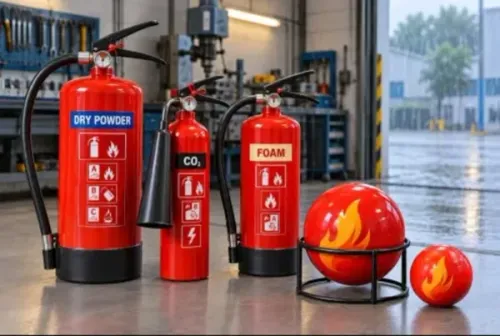
Portable Extinguishers Need Correct Selection
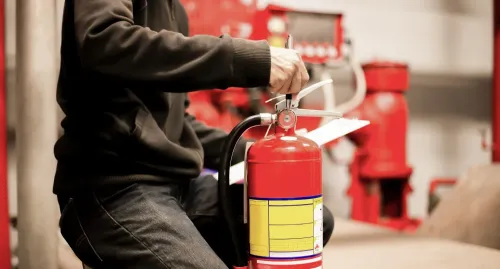
Portable extinguishers remain an important first-response tool, but their usefulness depends on matching the extinguisher to the fire hazard.
A building may require different extinguisher types across different areas.
Electrical rooms, office spaces, parking areas, kitchens, and storage zones should not automatically receive identical equipment.
Capacity, accessibility, visibility, and placement also matter.
A technically suitable extinguisher hidden behind furniture or blocked by stored material may not be useful during an emergency.
Fire Detection Supports Early Response
A developing fire may not be immediately visible, particularly after working hours or in enclosed spaces.
Detection systems can provide early warning and help initiate emergency procedures.
The right detection arrangement depends on the environment.
For example, a standard office may require a different detection approach from a dusty service area, a kitchen, or a parking zone.
System selection should therefore consider potential false alarm conditions as well as actual fire risk.
Alarm Systems Need to Reach Occupants Clearly
Detection is only one part of emergency communication.
Once a fire condition is identified, occupants need a clear warning.
Commercial buildings should evaluate whether alarm coverage is adequate across offices, common areas, staircases, parking levels, utility spaces, and other occupied or accessible areas.
People should not have to rely on someone shouting from another floor.
The alarm arrangement should support timely evacuation and emergency response.
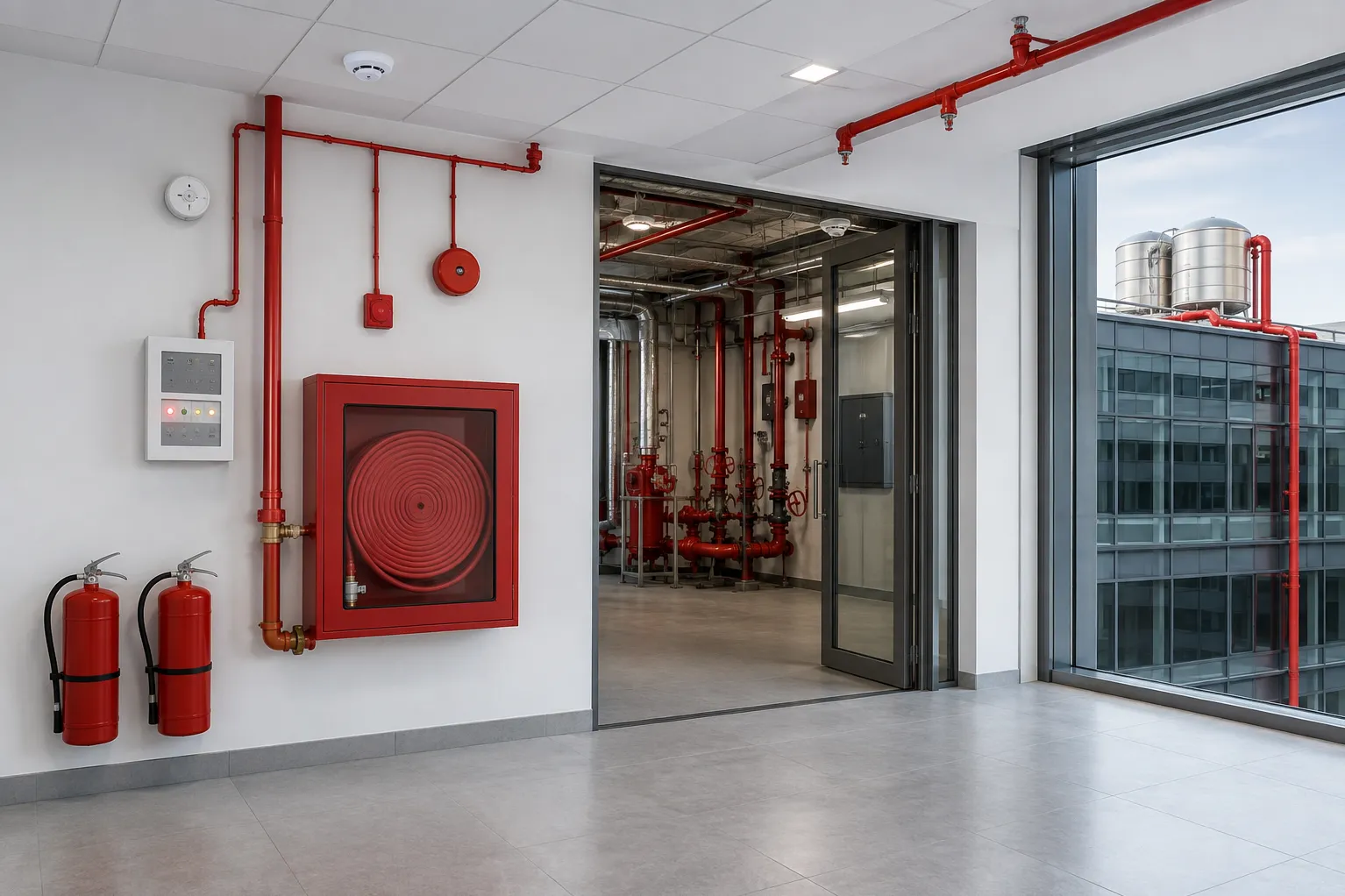
Hydrant and Sprinkler Protection May Form Part of the Strategy
Depending on the building type and applicable requirements, hydrant and sprinkler systems may form part of the overall fire protection arrangement.
These systems need ongoing attention.
Pumps, valves, pipes, water storage, hose equipment, sprinkler heads, and related components can deteriorate or become obstructed if they are not maintained.
Facility managers should not assume that an installed system is automatically operational simply because it has never been used.
Special Risks May Need Local Suppression
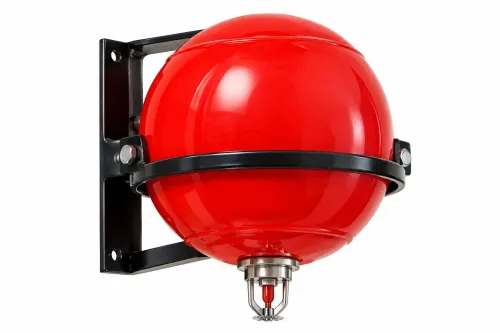
Some areas justify dedicated suppression systems.
Examples can include:
- Electrical panels
- Server rooms
- Control cabinets
- Commercial kitchens
- Critical equipment enclosures
- Specific process risks
These applications require more focused planning than general building protection.
The suppression agent, detection method, protected volume, equipment sensitivity, and post-discharge requirements all need to be considered.
Check Whether Existing Systems Still Match the Building
Commercial properties change over time.
An office floor may be redesigned. A pantry may become a larger kitchen. A server room may expand. Storage quantities may increase. Electrical loads may grow. Parking areas may be modified.
These changes can affect the original fire protection assumptions.
A periodic review should determine whether the existing system still reflects the current building layout and risk profile.
What to Look for in a Fire Protection Provider
When comparing commercial fire protection providers in Bhandup, facility managers should evaluate more than product availability.
Important factors include:
- Ability to assess the actual site
- Clear explanation of recommended systems
- Product specification transparency
- Installation capability
- Testing and commissioning support
- Maintenance services
- Documentation practices
- Ability to support multiple fire safety requirements
A provider should be able to explain why specific equipment has been recommended and where it fits within the overall protection strategy.
Compare Complete Scope Before Comparing Cost
A lower quotation may exclude installation, testing, training, documentation, or long-term service support.
Procurement teams should compare each proposal on equivalent terms.
Check whether the quotation includes:
- Equipment
- Accessories
- Installation
- Testing
- Commissioning
- Documentation
- Training
- Warranty
- Maintenance support
This gives a much clearer picture of overall value.
A Building-Wide Approach Is More Effective
Ignitek Solutions Pvt Ltd supports commercial fire protection requirements in Bhandup across multiple equipment and system categories.
For building owners and facility managers, the most important purchasing principle is to avoid selecting isolated products without considering how they work together.
Effective commercial fire protection combines hazard identification, appropriate equipment, reliable installation, maintenance, emergency communication, and staff preparedness.
When these elements are planned as one coordinated strategy, the building is better positioned to respond effectively if a fire incident occurs.
Keywords