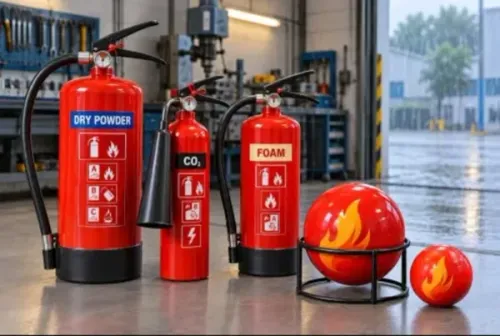
Factories concentrate people, machinery, electricity, raw materials, finished goods, packaging, utilities, and production processes within the same operating environment. Because of this complexity, industrial fire protection rarely depends on a single piece of equipment.
When evaluating an industrial fire safety equipment supplier in Bhandup, factory owners and safety teams should first map their risks by area. The goal is to understand what can ignite, how a fire might spread, who could be affected, and what type of protection is appropriate.
Divide the Factory Into Fire Risk Zones
Walking through an entire factory and treating it as one uniform risk can hide important differences.
Instead, divide the premises into practical zones.
These might include:
- Production areas
- Raw material storage
- Finished goods storage
- Electrical rooms
- Control panel areas
- Utility sections
- Maintenance workshops
- Offices
- Loading areas
- Parking areas
- Canteens
- Server or control rooms
Each zone can then be assessed separately.
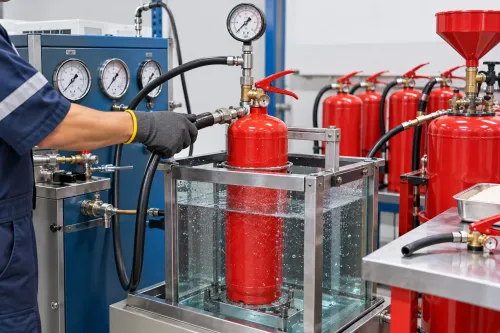
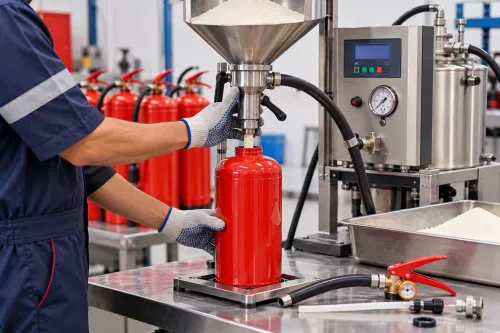
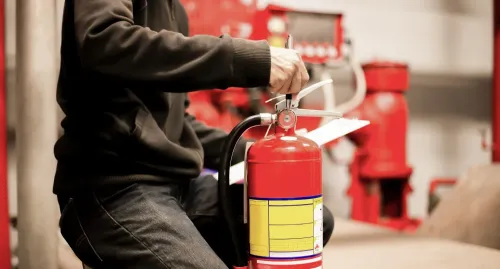
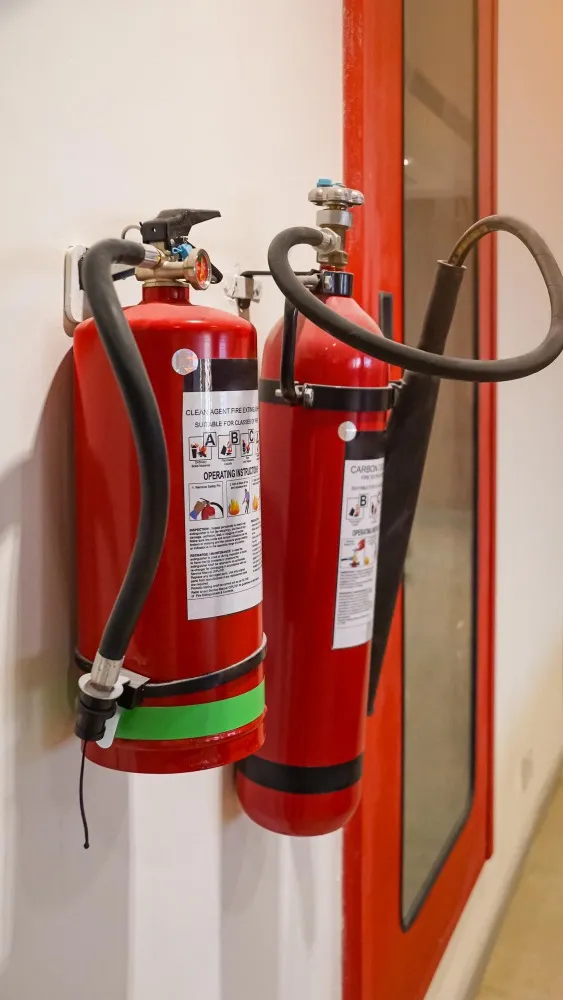
Portable Fire Extinguishers
Portable extinguishers are often the first fire safety equipment people think about.
They are intended for suitable early-stage fire situations when the correct extinguisher is available and conditions allow safe use.
Factories may require different extinguisher types for different hazards.
Selection should consider:
- Combustible materials
- Flammable liquids where present
- Electrical equipment
- Machinery
- Process hazards
- Equipment capacity and rating
- Accessibility
Simply placing identical extinguishers at regular intervals without considering the underlying risks is not a complete strategy.
Fire Detection and Alarm Arrangements
Early warning is essential where a fire may not be immediately visible to everyone in the facility.
Detection and alarm arrangements can help identify developing conditions and alert occupants so emergency procedures can begin.
The appropriate detection approach depends on the building, environment, processes, and potential sources of false alarms.
Industrial environments containing dust, heat, fumes, or unusual operating conditions may require more careful detector selection than a standard office.
Hydrant-Based Fire Protection
Larger industrial premises may use hydrant systems as part of their firefighting infrastructure.
Such systems involve more than installing hose points.
The complete arrangement can include water storage, pumping equipment, piping, valves, hydrant points, hoses, and associated components depending on the system design.
Regular inspection and testing are important because a hydrant installation may remain unused for long periods before being required during an emergency.
Sprinkler Protection
Automatic sprinkler systems can provide protection across designated areas by responding to heat conditions according to system design.
The required arrangement depends on the occupancy and hazard being protected.
Storage configuration is particularly important. Changes in rack height, stored commodities, or warehouse layout can alter the fire risk.
Factories should therefore review fire protection when storage operations change significantly.
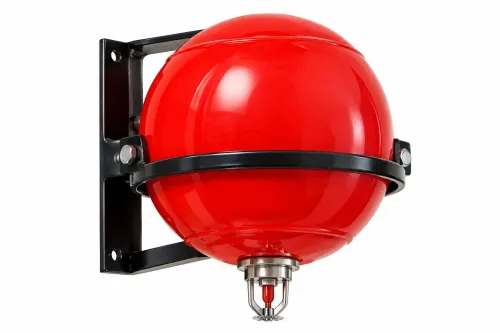
Equipment-Specific Suppression
Certain high-value or high-risk equipment may justify localised suppression.
Examples can include electrical panels, control cabinets, machinery enclosures, server areas, or other defined hazards.
The advantage of localised suppression is that protection can be focused close to the potential fire source.
However, it should be designed around the specific equipment rather than added as a generic accessory.
Fire Doors and Compartmentation
Not every important fire protection measure actively extinguishes a fire.
Passive fire protection can help restrict fire and smoke movement between parts of a facility.
Doors, walls, penetrations, and compartmentation features need to remain in suitable condition.
A fire-rated door that is routinely wedged open or a fire-resistant barrier with unprotected service openings may not perform as intended.
This is why facility housekeeping and modification control matter alongside equipment procurement.
Emergency Signage and Access
Emergency equipment is useful only when people can locate and reach it.
Factory inspections should identify:
- Blocked extinguishers
- Obstructed hydrant points
- Poorly visible signs
- Restricted emergency routes
- Locked access where immediate entry may be necessary
- Material stored around electrical panels
- Equipment moved from designated locations
Production pressure should never result in fire safety access becoming temporary storage space.
Match Equipment to Actual Industrial Operations
An industrial fire safety equipment supplier should understand what happens inside the facility.
Ignitek Solutions Pvt Ltd works with industrial fire protection requirements in Bhandup. For factory teams evaluating equipment, the most productive discussion begins with the processes and hazards rather than a catalogue.
Questions should cover what materials are processed, where ignition sources exist, which equipment is operationally critical, what protection already exists, and where gaps have been identified.
Reassess Fire Safety When the Factory Changes
Industrial facilities rarely remain static.
New machinery arrives. Production increases. Electrical loads change. Storage expands. Layouts are modified. New materials enter the process.
Fire protection that matched the facility several years ago may not perfectly reflect its current risk profile.
A practical review should therefore accompany significant operational changes.
The objective is not to accumulate as much fire safety equipment as possible. It is to create multiple appropriate protection layers around real factory risks, maintain them properly, and ensure employees know how to respond when an emergency occurs.
Keywords