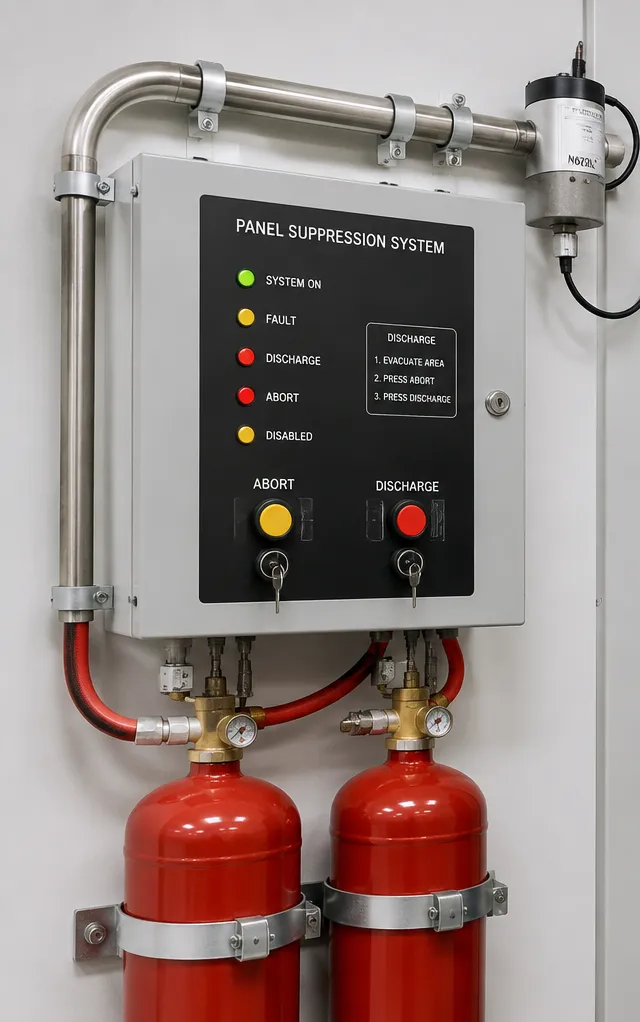
Electrical and control panels can become concentrated fire-risk points within industrial and commercial facilities. Electrical faults, overheating, loose connections, overloaded components, insulation failure, dust accumulation, and equipment deterioration can create conditions where a fire develops inside an enclosure before anyone notices it.
For facilities considering panel suppression system installation in Bhandup, choosing the suppression technology is only one part of the decision. The system also needs to suit the enclosure, equipment configuration, fire risk, operating environment, and maintenance requirements.
Why Electrical Panels Need Focused Fire Protection
A fire inside an electrical panel can be difficult to identify during its earliest stage because the source is enclosed.
By the time smoke or flames become visible outside the panel, damage may already have occurred to wiring, controls, relays, drives, switches, or other components.
The consequences can extend beyond the damaged panel. Depending on its function, an electrical fire may cause:
- Production interruption
- Equipment shutdown
- Damage to connected systems
- Loss of process control
- Operational downtime
- Safety risks for employees
- Secondary fire spread
This makes early detection and suppression particularly relevant for panels supporting important operations.
Start With the Panel Risk
Not every electrical enclosure requires an identical suppression arrangement.
Before installation, evaluate what the panel controls and what would happen if it were lost.
A facility can review:
- Panel dimensions
- Electrical load
- Internal component arrangement
- Ventilation openings
- Enclosure characteristics
- Operating temperature
- Nearby combustible materials
- Criticality of connected equipment
- Accessibility
- Existing fire protection measures
A panel controlling a non-critical auxiliary function does not necessarily represent the same operational risk as a main control panel supporting an important production process.
Localised Suppression Has a Different Purpose
General building fire protection and panel-level suppression solve different problems.
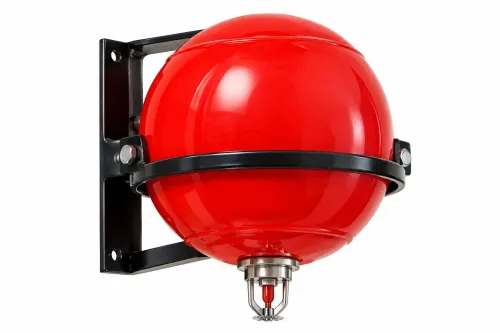
Building systems are intended to address broader fire detection or protection requirements. A localised panel suppression system is designed to act much closer to the specific protected enclosure or equipment.
That can be valuable where a fire needs to be addressed before it develops beyond the panel.
Facility managers should therefore avoid treating local suppression as a substitute for the property's wider fire protection arrangements. It is an additional protection layer for a defined risk.
Consider the Suppression Agent Carefully
The agent used around electrical equipment requires careful evaluation.
Questions to discuss with the system provider include:
- Is the agent appropriate for the protected electrical equipment?
- Does it leave residue?
- How is the agent discharged?
- Could sensitive equipment be affected?
- What quantity is required for the protected enclosure?
- What environmental conditions influence performance?
- What happens after activation?
The cheapest agent is not necessarily the most appropriate choice when the protected panel contains valuable or operationally critical equipment.
Detection Method Is Equally Important
Suppression cannot work effectively unless the system can respond appropriately to a developing fire.
Different systems may use different detection arrangements depending on their design and application.
During evaluation, understand how the system identifies fire conditions and what initiates discharge.
Ask the installer to explain the sequence clearly:
Detection → activation → agent discharge → protected-area response → post-discharge action
Facility teams should understand this sequence before commissioning rather than discovering it during an emergency.
Enclosure Condition Can Affect Protection
Panel condition itself should not be overlooked.
Openings, cable entries, ventilation arrangements, damaged covers, modifications, and poor enclosure maintenance can influence the protected environment.
Before installing suppression equipment, inspect the panel physically.
This is also an opportunity to address basic electrical fire prevention issues such as loose connections, excessive dust, overloaded circuits, poor ventilation, and inappropriate temporary wiring.
Suppression should support preventive maintenance, not replace it.
Think About Downtime Before Selecting a System
Procurement decisions often focus on equipment cost. For critical panels, the cost of downtime may be more important.
Consider a production unit in Bhandup where a particular control panel supports a major machine or process. If that panel is severely damaged, operations could stop while electrical components are inspected, sourced, repaired, and recommissioned.
The financial impact can include lost production, labour disruption, repair expenses, and delayed deliveries.
For critical applications, suppression system evaluation should therefore include business continuity considerations.
Ask What Maintenance Will Be Required
A suppression system cannot simply disappear into the background after installation.
Facility managers should know:
- How the system is inspected
- Which components require periodic checks
- How detection components are assessed
- How agent condition is verified
- What happens after accidental activation
- How the system is restored after discharge
- Whether panel modifications require a protection review
Documentation should also identify the protected panel and relevant system details.
Review the System After Panel Modifications
Electrical panels evolve as facilities change.
Additional components may be installed. Cable routing may change. Ventilation can be modified. Enclosures may be replaced or expanded.
When significant changes occur, the existing suppression arrangement should be reviewed to determine whether the original protection remains appropriate.
Ignoring modifications can create a mismatch between the installed system and the current enclosure.
Evaluate the Complete Protection Strategy
Ignitek Solutions Pvt Ltd provides fire suppression solutions for electrical and equipment risks in Bhandup. When considering panel suppression system installation, facility teams should evaluate the hazard before comparing individual products.
The strongest decision considers the panel's criticality, enclosure characteristics, detection approach, suppression agent, installation quality, maintenance requirements, and consequences of downtime.
That provides a more practical basis for deciding where dedicated panel suppression can strengthen an existing fire protection strategy.
Keywords