Fire extinguishers are designed to remain ready for an emergency, but they cannot simply be installed and forgotten. Discharge, leakage, servicing requirements, damaged components, or changes in equipment condition can make professional attention necessary.
Understanding when to use fire extinguisher refilling services in Bhandup helps facility managers avoid two common mistakes: assuming every extinguisher needs frequent refilling regardless of condition, or leaving equipment untouched for years because it has never been used.
Refilling After an Extinguisher Has Been Used
One of the clearest reasons for refilling is discharge.
Even if only a small amount of extinguishing agent was released, the extinguisher should be treated as used equipment rather than returned directly to its mounting position.
Partial discharge can affect pressure or agent quantity and may also compromise the extinguisher's readiness.
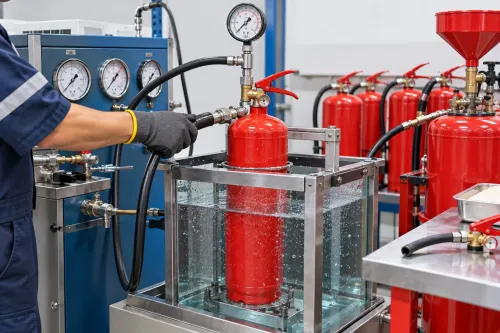
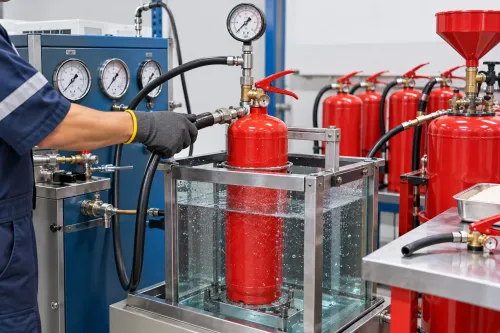
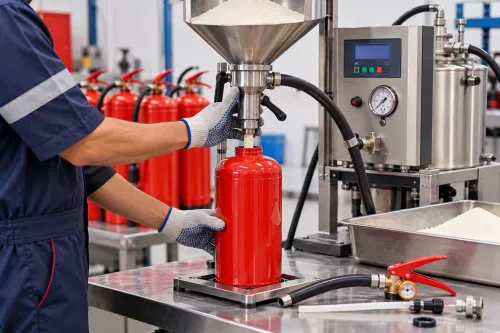
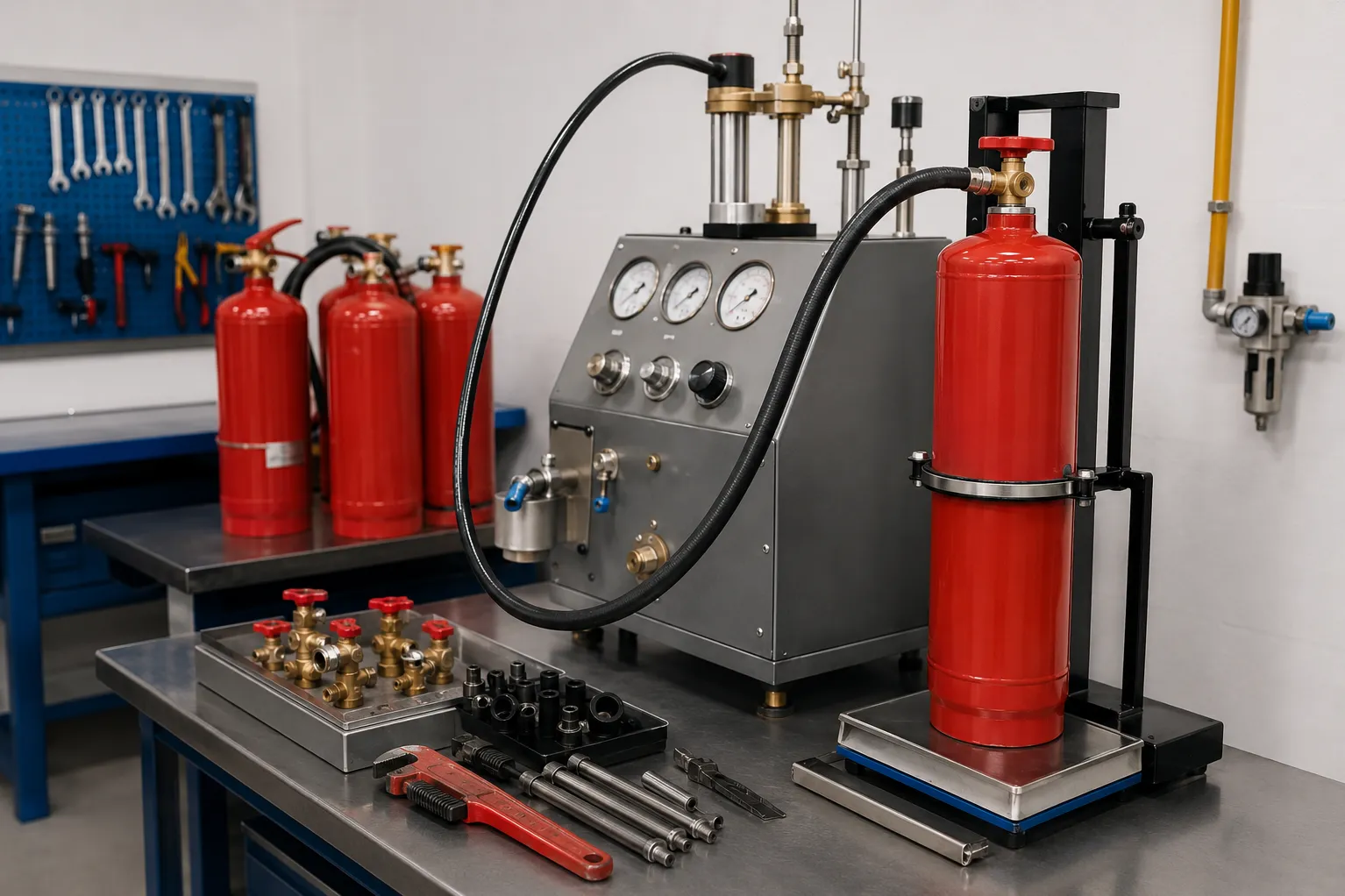
After use, appropriate servicing may include examination of the cylinder and components, refilling or recharging as applicable, pressure restoration where relevant, sealing, and other checks required for the extinguisher type.
Low Pressure Should Not Be Ignored
Some extinguishers have pressure gauges that provide a quick visual indication of their condition.
If the needle is outside its appropriate operating range, facility staff should not assume that simply adding pressure will solve the problem. The reason for the pressure loss needs to be investigated.
Possible causes can include leakage, valve problems, seal deterioration, damage, or previous discharge.
A professional inspection can determine what corrective action is appropriate.
Refilling Is Only One Part of Servicing
It is useful to understand that the terms refilling, inspection, and maintenance do not mean exactly the same thing.
Refilling focuses on the extinguishing medium and the extinguisher's readiness following servicing. Maintenance can involve a wider examination of the unit.
Depending on extinguisher design, technicians may need to consider:
- Cylinder condition
- Valve assembly
- Hose
- Nozzle
- Pressure gauge
- Safety pin
- Tamper seal
- Extinguishing medium
- Labels and identification
- Service history
This broader approach helps prevent a situation in which an extinguisher receives fresh agent while another important defect remains unnoticed.
Different Extinguishers Require Different Handling
Not all fire extinguishers contain the same extinguishing medium or work in the same way.
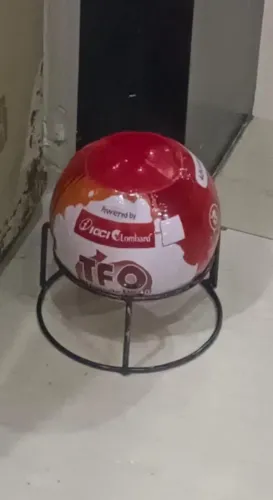
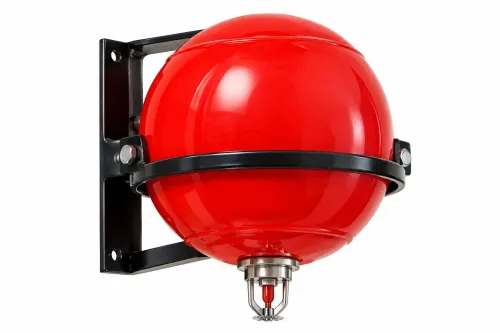
Common categories may include water-based, foam, dry chemical powder, carbon dioxide, and other application-specific extinguishing systems.
The correct extinguisher depends on the nature of the fire hazard. Consequently, servicing and refilling practices should also match the extinguisher design.
Using an inappropriate extinguishing medium or unsuitable servicing method can affect performance and safety.
Why Facility Managers Need an Extinguisher Inventory
A building with only a few extinguishers may be relatively straightforward to monitor. A factory, commercial property, warehouse, or large housing society in Bhandup may have extinguishers distributed across multiple floors and risk areas.
Without an inventory, individual units can easily be missed.
A useful asset register should identify each extinguisher by:
- Location
- Extinguisher type
- Capacity
- Identification number
- Inspection history
- Service date
- Refill information
- Testing history
- Reported defects
This makes maintenance easier to plan and provides facility teams with a clearer picture of equipment condition.
Avoid Refilling an Obviously Damaged Cylinder
Refilling should never become an automatic response to every extinguisher problem.
An extinguisher showing significant corrosion, severe physical damage, compromised threads, or other cylinder concerns may require further examination, testing, or replacement rather than straightforward refilling.
This distinction matters because the extinguisher cylinder is a pressure-bearing component.
The goal is not merely to make an extinguisher appear ready. The complete unit needs to remain suitable for safe service.
Consider the Environment Around the Extinguisher
Equipment condition can also be affected by where it is installed.
For example, extinguishers in an industrial section of Bhandup may be exposed to dust, humidity, vibration, process conditions, or frequent movement. Units in parking areas or semi-exposed locations may experience different deterioration from extinguishers kept inside conditioned office spaces.
Routine visual inspections can help identify problems early.
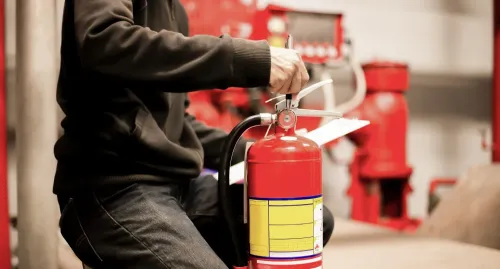
Facility personnel can look for corrosion, obstruction, physical damage, missing components, accessibility issues, or signs of tampering between professional service intervals.
What Happens After Refilling
Once an extinguisher has been appropriately serviced and refilled, it should be returned to its designated location with the relevant service identification updated.
The mounting position also deserves attention.
An extinguisher should not be hidden behind furniture, blocked by stored material, or moved to an unrelated area simply because it is convenient.
During an emergency, accessibility and correct placement can matter as much as equipment condition.
A Practical Approach to Extinguisher Readiness
Ignitek Solutions Pvt Ltd provides fire safety equipment support in Bhandup, including requirements associated with extinguisher servicing. For property teams, the most useful approach is to view refilling as one component of an organised maintenance programme.
Do not wait for an emergency to discover that a unit has lost pressure, been partially discharged, or deteriorated.
Regular inspection, appropriate professional servicing, accurate records, correct refilling, and timely replacement collectively help maintain extinguisher readiness across a facility.
Keywords