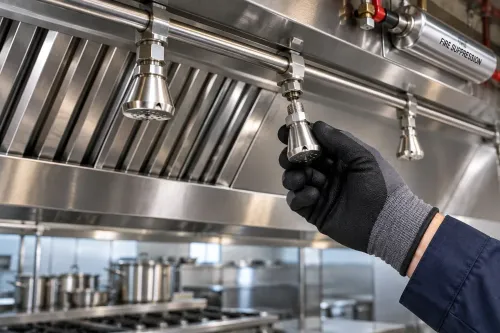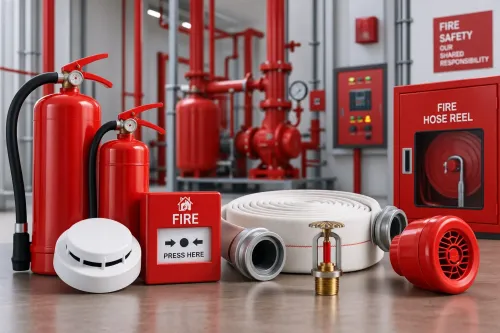
Portable extinguishers are an important first line of defence, but some risks require faster or more localised protection. A fire may start inside an electrical enclosure, commercial kitchen, server room, machinery area, or other critical space where manual response may not happen quickly enough.
This is where fire suppression system installation services in Bhandup may become relevant.
The decision to install suppression should not be based on product popularity. It should be based on the nature of the hazard, how quickly fire can develop, the value of the protected asset, and the operational consequences of damage.
Begin With the Risk That Needs Protection
Suppression systems are most effective when they are designed around a clearly defined hazard.
Ask four basic questions:
- Where could a fire start?
- How quickly could it spread?
- What equipment or operations are at risk?
- How quickly can people realistically respond?
These questions help determine whether manual fire fighting measures alone are sufficient or whether automatic or dedicated suppression should be considered.
Common Areas Where Suppression May Be Evaluated
Different facilities may consider suppression for different applications.
Examples include:
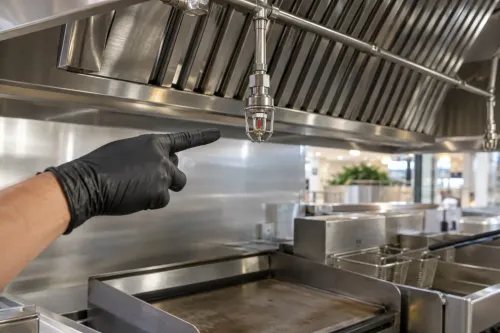
- Commercial kitchens
- Electrical control panels
- CNC or machinery enclosures
- Server rooms
- Data areas
- Critical control cabinets
- Generator-related areas
- Process equipment
- Specialised industrial hazards
Each application may require a different agent, detection arrangement, discharge method, and system configuration.
There is no universal suppression package that is suitable everywhere.
Determine Whether Automatic Response Adds Value
Automatic suppression can be particularly useful when early-stage fire control is important and human response may be delayed.
Consider a critical electrical panel operating after normal working hours. If overheating or electrical failure starts a fire inside the enclosure, there may be no person standing nearby with an extinguisher.
A suitable local suppression system may provide an additional protective layer by responding at or close to the protected equipment.
The value of this feature increases when equipment downtime could seriously affect operations.
Understand the Cost of the Asset Being Protected
Suppression system evaluation should consider more than the price of the system itself.
Think about the potential loss if the protected equipment is damaged.
Possible consequences include:
- Equipment replacement
- Production interruption
- Loss of inventory
- Repair labour
- Business downtime
- Delayed deliveries
- Data loss
- Damage to adjacent assets
A suppression system that protects a critical production machine may have a different business case from one protecting a low-value non-critical area.
This is why ROI should be considered in terms of potential loss reduction, not simply equipment price.
Agent Selection Needs Technical Review
Different suppression agents behave differently.
Before installation, ask:
- Is the agent appropriate for the fire hazard?
- Is it compatible with sensitive equipment?
- Does it leave residue?
- Is the protected space occupied?
- How is the required agent quantity determined?
- What happens after discharge?
- What cleanup may be required?
- How will the system be restored?
The agent should be selected for the application rather than chosen solely because it is commonly available.
Detection and Activation Need to Be Understood
A suppression system is only as useful as its ability to identify and respond to the fire condition it is designed to address.
Facility teams should understand:
- How detection occurs
- What activates the system
- Whether activation is automatic
- Whether manual release is provided
- What warning occurs before discharge where applicable
- Which connected equipment shuts down
- What happens after activation
The operating sequence should be documented and explained during handover.
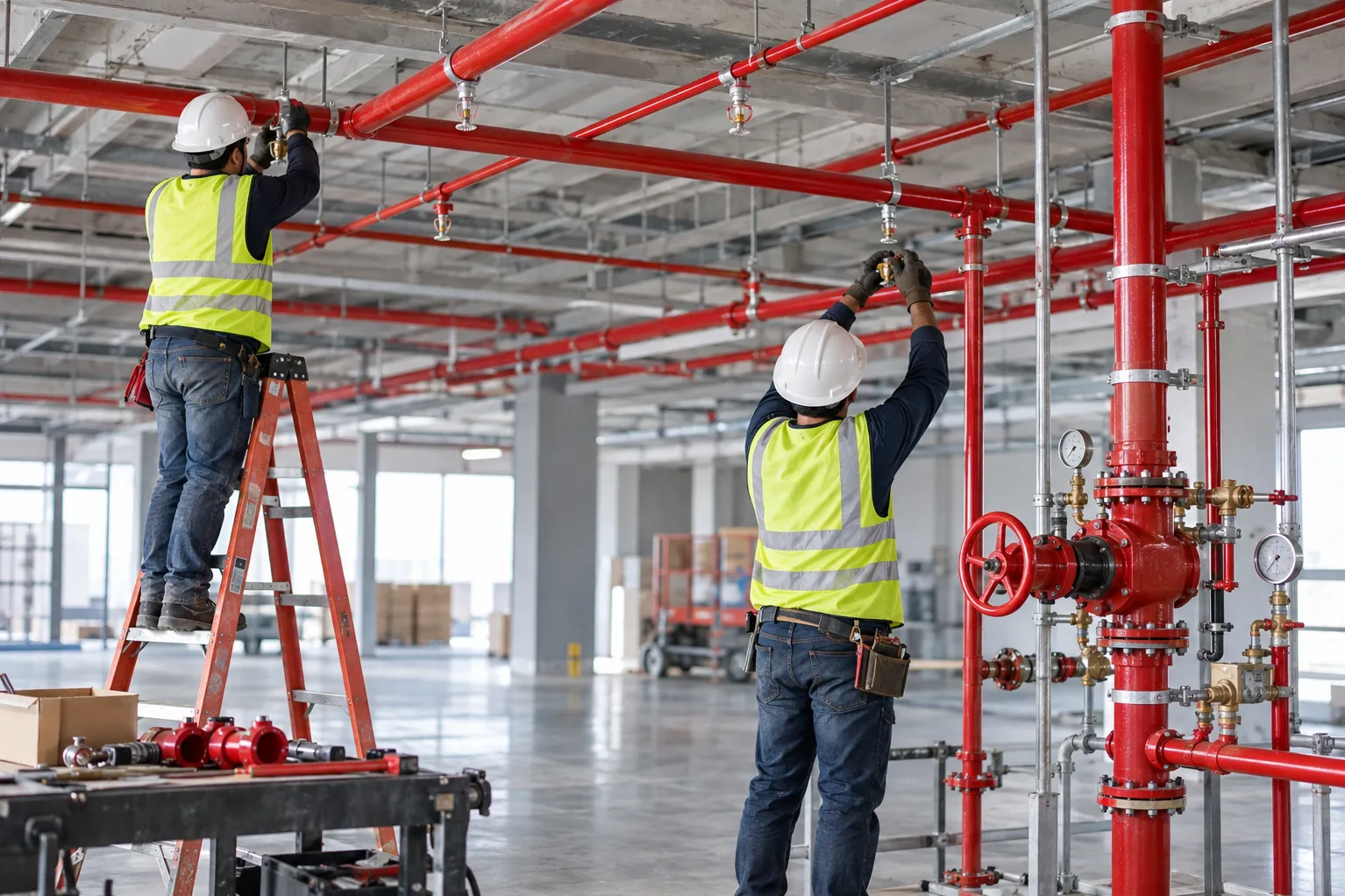
Installation Quality Has a Direct Impact
Suppression performance depends heavily on installation.
Nozzle positions, piping, detection routing, enclosure condition, protected volume, agent quantity, and integration with other systems may all influence effectiveness.
A technically sound design can be weakened by poor installation.
This makes the installation provider's capability as important as the suppression equipment itself.
Ask for Testing and Commissioning
A newly installed system should not simply be left in place after physical installation.
Commissioning helps verify that relevant components and system logic are functioning as intended.
The handover process should explain:
- Protected area
- System components
- Detection method
- Activation method
- Manual controls
- Warning indicators
- Maintenance requirements
- Action after discharge
Facility personnel responsible for the area should understand these points.
Maintenance Must Be Planned From Day One
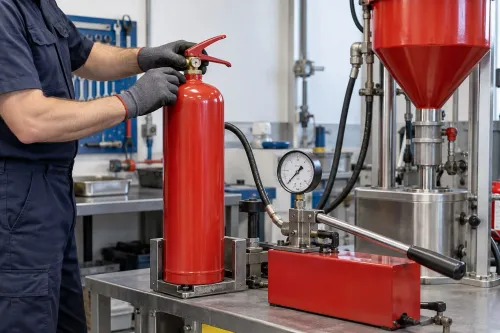
A suppression system can remain unused for years, which is precisely why maintenance is important.
The maintenance plan should consider:
- Agent container condition
- Detection components
- Piping
- Nozzles
- Electrical connections
- Manual activation devices
- Control equipment
- System indicators
- Physical damage
- Changes to the protected area
Any significant modification to machinery, panels, kitchen equipment, or room layout should prompt a protection review.
When a Facility Is Ready for Suppression Installation
A facility is usually better prepared to proceed when:
- The hazard has been clearly identified
- The protected area is defined
- Equipment layout is known
- The system objective is understood
- Agent suitability has been reviewed
- Installation responsibilities are clear
- Maintenance can be supported
- Staff can be trained
- Relevant documentation can be maintained
If these elements remain unclear, further assessment may be necessary before procurement.
Choose the Provider Around the Application
Ignitek Solutions Pvt Ltd provides fire suppression system solutions for different commercial and industrial applications in Bhandup.
When selecting an installation provider, facility managers should look for someone who can explain the complete protection approach not just provide a system quotation.
A suitable provider should be able to connect hazard assessment, system selection, installation, commissioning, maintenance, and post-discharge support.
Fire suppression is most valuable when it protects a clearly understood risk and remains serviceable throughout the life of the facility. The right decision is therefore not simply whether to install suppression, but where it adds meaningful protection and how well the complete system is designed, installed, and maintained.
Keywords