A panel fire can grow inside a closed cabinet before anyone sees smoke or flame, while water introduces a separate risk around energized equipment. You will be able to identify what a dry powder system actually protects, judge its residue and re-ignition trade-offs, and request a design based on enclosure conditions rather than cylinder weight alone.
Key takeaways
- Protect the cabinet interior, cable spaces and connected equipment—not the entire room.
- Use compatible dry powder for rapid flame knockdown on energized electrical fires.
- Place detection near likely ignition points and discharge nozzles throughout the enclosure.
- Choose agent volume and zones from cabinet dimensions, hazards and discharge design.
What does a panel suppression system actually protect?
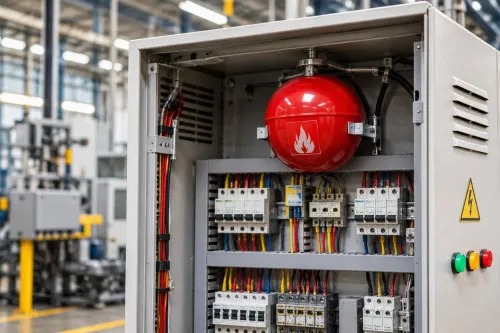
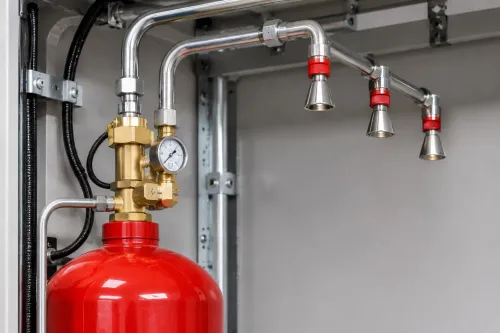
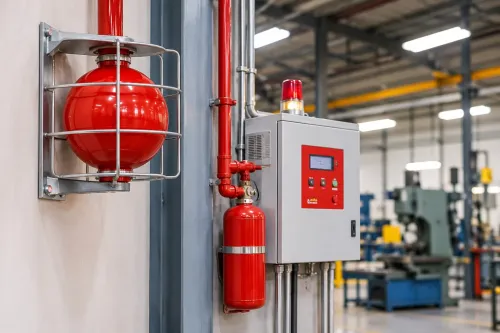
What is panel suppression system? It is a dedicated package that detects and suppresses a fire inside a defined electrical-panel enclosure or discharge zone. A detection element identifies heat, smoke or flame; a control or release mechanism activates the system; an agent container stores the powder; and tubing or discharge piping carries it to nozzles.
Alarm, shutdown and manual-release interfaces coordinate the response.
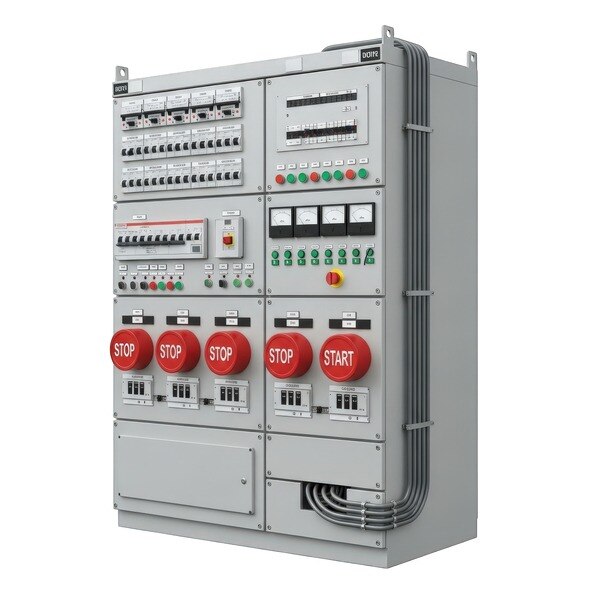
That boundary matters. A cabinet system does not automatically protect the surrounding electrical room, adjacent panels, cable trenches, battery rooms or HVAC plenums. Powder released inside one enclosure cannot cover a separate volume unless the system has been designed and approved for that arrangement.
Open doors, leaking cable glands and ventilation openings change the protected volume and can let heat, smoke or powder escape. They also create paths for a fire to spread or for an extinguishing concentration to become ineffective. Your design basis must state exactly what is enclosed and how those openings are treated.
Before accepting a system, require these details in writing:
- The cabinet or discharge-zone dimensions and volume
- The compartments, internal obstructions and cable-entry points included
- The status of doors, cable glands and ventilation openings during discharge
- The adjacent hazards excluded from protection
- The detection method, nozzle locations and discharge calculation
- The alarm, electrical-shutdown and manual-release sequence
- The reset, recharge and post-discharge inspection procedure
Why is dry powder useful when an electrical panel catches fire?
A dry powder panel suppression system suits a developing electrical-panel fire because it can knock down flames rapidly without applying water to energized equipment. An agent selected for the intended Class C conditions is nonconductive during discharge, but that does not make it harmless to electronics.
Dry powder interrupts the flame’s combustion chemistry. It does not cool the busbar, terminal, cable fault or transformer component as water does. That is why dry powder for matters in a panel suppression system: you trade fast flame suppression and compact hardware for contamination, cleanup and limited cooling.
| Option | Main benefit | Main limitation |
|---|---|---|
| Dry powder | Rapid flame knockdown; small localised hardware | Residue, reduced visibility and little cooling |
| Clean agent | Minimal residue; easier recovery of sensitive electronics | Requires compatible enclosure conditions and a separate lifecycle-cost review |
Discharge coats breakers, relays, circuit boards, busbars and ventilation paths. The powder cloud also reduces visibility while you assess the fault, and residue can require cleaning, inspection and functional testing before the panel returns to service.
Electrical isolation remains essential. A hot connection, energised cable fault or overheated transformer component can re-ignite after the visible flame disappears, so shutdown and inspection must follow discharge. Powder suppression controls the flame; it does not repair the fault or remove stored heat.
How should detection and discharge be arranged inside the cabinet?
Detection must sit near the likely ignition point, not merely inside the cabinet. Linear heat-detection tubing can follow cable runs or hot-spot zones; spot heat detectors belong above likely flame paths; smoke detectors need representative airflow; flame detectors need a clear line of sight.
Keep every detector away from normal hot surfaces, or delayed operation and nuisance discharge can follow.
1. State the detection method and trigger: the tubing’s actuation temperature, spot detector rating, smoke-detection principle or flame-detection method. The design must identify the detector location, cylinder position, nozzle orientation, pipe or tubing size and the compartments or obstructions covered.
2. On confirmed detection, the compatible actuator opens the cylinder or release valve, while the control logic initiates the alarm and any specified electrical shutdown or interlock. Document the discharge timing, manual-release location and the pressure or tamper supervision required for that equipment.
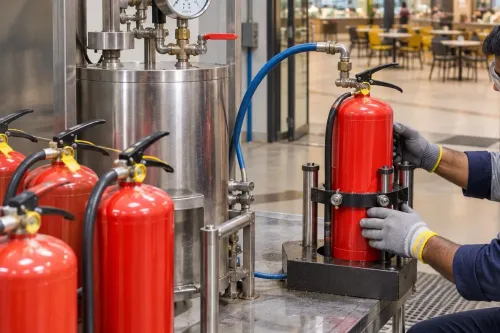
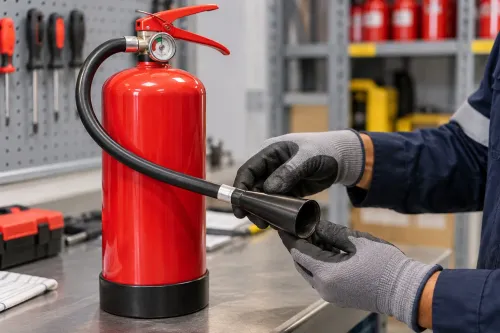
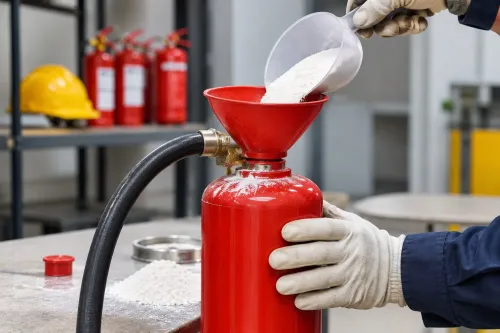
3. After discharge, isolate the cabinet, inspect for hidden heat and re-ignition, remove powder from affected components and confirm the cause before reset. Reset only through the stated procedure, then recharge with the approved agent and replace used actuators, tubing or other parts.
4. Require an alarm output, commissioning record, recharge instructions and post-discharge inspection record. A cylinder alone proves only that powder is stored; it does not prove that the discharge pressure, nozzle pattern or pipework will reach every compartment behind barriers, around cable bundles or through internal obstructions.
When is dry powder a better choice than clean agent, CO2, water mist or aerosol?
The deciding question is what happens after the flames disappear. Dry powder gives rapid flame knockdown from compact hardware, without a water pipe network, but it provides limited cooling and leaves residue on breakers, relays, circuit boards, busbars and ventilation paths.
| Option | After discharge | Better fit and trade-off |
|---|---|---|
| Dry powder | Fast flame suppression; difficult residue; limited cooling and possible re-ignition | Compact, unmanned cabinets where low initial cost and quick knockdown outweigh cleanup |
| Clean agent | Little residue; faster recovery for sensitive electronics | High-value control or data-processing equipment, when the enclosure is compatible and lifecycle cost justifies the higher review |
| Carbon dioxide | No powder or water residue; serious asphyxiation hazard | Unoccupied, tightly controlled areas with occupancy controls, alarms and discharge safeguards |
| Water mist | Stronger cooling; introduces moisture | Equipment that needs heat removal, with suitable hydraulics and nozzle coverage |
| Aerosol | Compact discharge; residue, reduced visibility and hot-surface concerns | Applications that pass equipment-compatibility and post-discharge cleanup reviews |
Dry powder interrupts flame chemistry rather than cooling a hot terminal, cable fault, busbar or transformer component. Isolate the electrical source and inspect the enclosure, or the heat left behind can restart the fire.
For high-value electronics, residue-minimizing protection can be the better financial decision even when powder costs less initially. Powder contamination can require cleaning, component testing and longer downtime; a compatible clean-agent system also demands enclosure integrity and a higher lifecycle-cost assessment before selection.
How do you choose system size, protected zones and an installer?
A 2 kg, 3 kg, 4 kg or 6 kg cylinder is a product option, not a coverage rule. Select the charge only after the manufacturer’s discharge calculation matches the enclosure and nozzle arrangement.
| Option | What it means | When it applies |
|---|---|---|
| 2 kg | Smaller agent charge | Only when the documented design basis supports it |
| 3 kg | Intermediate charge | After checking enclosure volume and obstructions |
| 4 kg | Larger charge | When the calculation requires more agent |
| 6 kg | Largest listed option | Not automatically suitable for a large room or several cabinets |
Ask for these details before comparing prices:
- Cabinet dimensions and volume, enclosure construction, hazard classification, compartment count and internal obstructions.
- Cable entry points, ventilation openings, likely fuel and the manufacturer’s discharge calculation or design basis.
- Written confirmation of whether one system protects one cabinet, multiple linked cabinets or a complete room.
- The defined protected volume and each discharge zone, shown in writing.
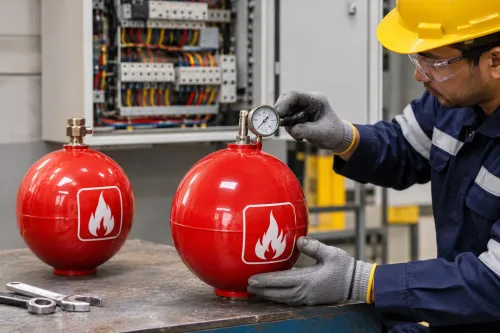
For panel fire protection in Bhandup, ask a fire protection system supplier in Bhandup for the powder type and quantity, detector technology, shutdown sequence, alarm interface, cylinder inspection and hydrotest records, compatible replacement agent, spare actuators or detection tubing, commissioning record and post-discharge cleanup plan.
Evaluate Ignitek Solutions Pvt Ltd against this evidence as a design, installation and service provider—not merely as a cylinder seller.
Related products
 | Panel Suppression System 3 kg The Panel Protection System is the most effective and reliable product for protection of enclosed panels or cabinets from fire. |
 | Panel Suppression System 4 kg The Panel Protection System is the most effective and reliable product for protection of enclosed panels or cabinets from fire. |
Frequently asked questions
What does a panel suppression system actually protect?
It protects a defined electrical-panel enclosure or discharge zone, including internal components, cable spaces and likely ignition areas. It does not automatically protect the whole room or adjacent cabinets.
Why is dry powder useful when an electrical panel catches fire?
Dry powder interrupts the fire’s chemical reaction and rapidly knocks down flames. It does not conduct electricity like water, but you must isolate power safely and clean the residue after discharge.
How should detection and discharge be arranged inside the cabinet?
Position detection near heat-producing or high-risk components, such as terminals, busbars, contactors and cable entries. Aim discharge nozzles across the protected volume, avoid blocked paths and divide large cabinets into separately assessed zones.
When is dry powder better than clean agent, CO2, water mist or aerosol?
Dry powder suits compact enclosures where rapid flame suppression and low equipment cost matter. Choose clean agent when residue is unacceptable, CO2 only with controlled personnel safety measures, water mist when the system is designed for that electrical risk, and aerosol after checking enclosure sealing and cleanup requirements.
How do you choose system size, protected zones and an installer?
Give the designer cabinet dimensions, internal layout, electrical load, ventilation openings and adjacent hazards. Ask for the agent type, cylinder capacity, detection method, nozzle layout, maintenance schedule, test records and the installer’s documented commissioning procedure.
Related products
 | Panel Suppression System 2 kg The Panel Protection System is the most effective and reliable product for protection of enclosed panels or cabinets from fire. |
 | Panel Suppression System 6 kg The Panel Protection System is the most effective and reliable product for protection of enclosed panels or cabinets from fire. |
Keywords