
A kitchen suppression nozzle can fail because of grease, corrosion, a damaged cap, restricted pipework or a fault elsewhere in the system. By the end, you will know how to isolate the hazard safely, distinguish a nozzle fault from a system-wide failure, verify a replacement part and assess a supplier’s service evidence.
Key takeaways
- Trace the discharge path from nozzle to actuator and agent container.
- Compare nozzle position, type and orifice with the approved system design.
- Demand service records, agent details and test results from the supplier.
- Verify discharge-path clearance, alarms and appliance coverage after repairs.
How to diagnose a kitchen suppression nozzle failure
Start at the nozzle and work backward through the discharge path. A kitchen suppression nozzle failure can begin with a blocked or damaged orifice, but the fault may also sit in the pipework, agent container or actuator.
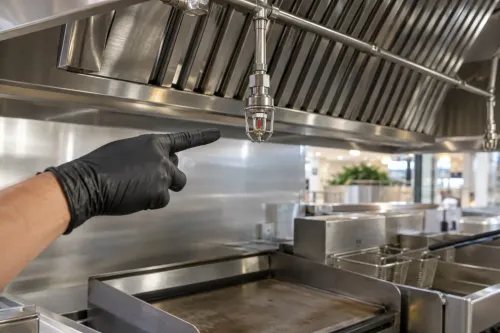
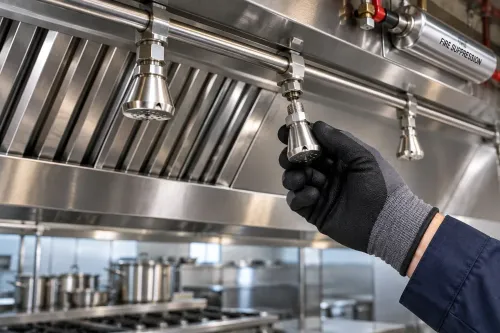
1. Inspect the nozzle face and blow-off cap. Look for a missing or loose cap, hardened grease, carbonised oil, dust, paint, corrosion products, insect nests and any visible obstruction at the orifice. A clean-looking nozzle is not automatically serviceable; partial blockage can distort the spray pattern without showing from outside.
2. Trace the pipework back from the nozzle. Check for leakage at the threaded joint, a loose fitting, kinked pipe and damaged or missing pipe supports. Do not poke the orifice, remove the cap or release agent as a test; those actions can damage the nozzle or create a false result.
3. Check the pressure indicator or gauge, then inspect the cylinder or cartridge condition and confirm whether the actuator has already discharged. A low-pressure container, empty cartridge or discharged actuator can stop release even when the nozzle appears intact.
4. Confirm that the installed nozzle is the correct type for the appliance below it. Orifice size, spray pattern, flow rate, orientation, elevation and thread must match the listed system and hazard coverage; a matching thread alone proves nothing.
For anyone investigating kitchen suppression nozzle failure in Bhandup, record the nozzle location, photographs, system make and model, observed defect and last service date before requesting a quotation. Do not approve a replacement nozzle until the service provider checks pressure, piping and actuation.
How to tell a nozzle fault from a system-wide failure
A nozzle can be intact while the suppression system cannot discharge. Treat the fault as system-wide until the complete discharge path and controls have been checked.
1. Stop using the affected appliance. Control the gas supply or electrical source only if you can do so without entering danger. Keep the hood, manual release and suppression equipment accessible.
2. Ask the technician to check the cylinder or cartridge, pressure indicator, control head, detection cable, fusible links, manual release, piping, isolation valves, interlock and gas or electrical shut-off. A released actuator, closed valve, empty cartridge or failed detection line can prevent discharge even when the nozzle is clean.
3. Do not poke the orifice, remove the cap, release extinguishing agent as a test, or open the cylinder and actuator. These actions can damage the system, release stored pressure or create an unprotected hazard.
4. Require the technician to identify the impairment, apply the site’s lockout and tagout controls, isolate stored pressure according to the manufacturer’s instructions and prevent accidental actuation. Only an authorised, competent person should open a cylinder, cartridge or actuator.
Ask a fire protection system supplier for kitchen nozzle problems in Bhandup for a written fault-finding sequence. It should state whether the defect is at the nozzle, upstream equipment, detection circuit, actuation system or protected appliance—not recommend a nozzle-only replacement.
How grease, appliance layout and nozzle type affect performance
Grease bonded to a blow-off cap can delay discharge or distort the spray. Clean the hood, plenum, filters and surrounding nozzle area, but do not scrape the orifice or dislodge the cap. A damaged, painted-over or missing cap is a functional defect, not a cosmetic issue.
Check each nozzle against the appliance beneath it. Use this checklist:
- Confirm coverage for fryers, griddles, ranges, woks and charbroilers.
- Match the listed spray pattern, elevation, orientation, agent quantity and piping arrangement.
- Recheck the design after moving an appliance, adding equipment or changing the hood configuration; an old arrangement can become unsuitable without visible nozzle damage.
- For commercial kitchen nozzle replacement in bhandup, verify the manufacturer, system model, nozzle code, orifice or flow rating, thread size, agent type, hazard classification and approved configuration.
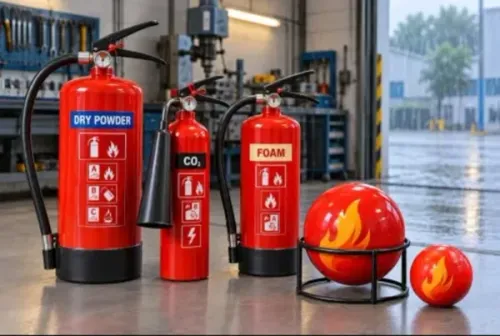
- Do not replace a wet-chemical kitchen nozzle with an ABC dry-powder extinguisher nozzle because both parts are called nozzles. Thread compatibility alone proves nothing about design compatibility.
- For dry powder nozzle service in bhandup, distinguish a blocked nozzle from low cylinder pressure, caked powder, moisture contamination, a restricted hose or an actuator fault. Do not probe or blow through the nozzle; that can damage the orifice without proving the system will discharge correctly.
The nozzle’s listed arrangement matters because spray characteristics, agent discharge and piping calculations work together. A supplier must verify the system documentation before quoting, especially where UL 300-listed kitchen protection applies.
What to demand from a fire protection supplier before approving the work
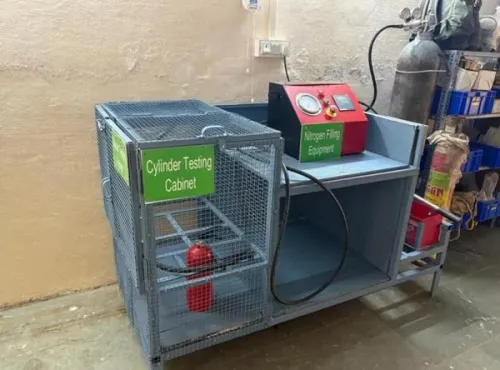
Approve the work only after the supplier agrees to inspect the complete installed system, not merely sell a threaded replacement. A fire protection supplier for restaurants in bhandup should show evidence of trained service personnel, original or manufacturer-approved nozzles, suitable test equipment, cylinder-refilling capability, hydrostatic-test arrangements and written commissioning records.
| Supplier evidence | What it proves | Reject it when |
|---|---|---|
| System inspection report | The technician examined nozzles, piping, cylinder, actuator, detection line, manual release, interlock and shut-off | The offer covers only nozzle replacement |
| Component traceability | The proposed nozzle matches the system make, model, part number, flow rating and approved configuration | The supplier relies on thread size alone |
| Test and refill capability | Pressure, detection, actuation, cylinder condition and restoration can be checked properly | Tests are unspecified or outsourced without records |
| Return-to-service plan | The kitchen’s temporary fire risk and safe restart conditions are defined | Staff are told to keep cooking during isolation without controls |
Give the supplier hood dimensions, appliance list, fuel types, duct arrangement, system make and model, previous discharge history, photographs, last service date and exact symptom. Require the quote to name part numbers, nozzle locations, agent-container details, detection components, tests to be performed and every outstanding item.
Ask how the kitchen remains protected while the system is isolated and who authorises cooking to resume. Ignitek Solutions Pvt Ltd can be compared with other local providers using this checklist: judge the diagnosis, traceability, service report and commissioning plan, not proximity or a generic maintenance sticker.
Related products
 | Kitchenhood Fire Suppression System 9L Ignitek Solution Pvt. Ltd. Kitchen Hood Fire Suppression System is specially developed for Kitchen Fire application against specific requirement A... |
Fire Extinguishers Spare Nozzle - Stored Pressure Dry Powder ₹50 Discharge Nozzles for ABC Stored Pressure Dry Powder Type Fire Extinguishers View product → |
How to verify restoration after a nozzle is repaired or replaced
A repaired nozzle is not a completed job when the new part has only been screwed into place. Restoration means proving that the replacement matches the system documentation and still protects the appliance beneath it.
1. Verify the installed part number, system make and model, agent type, orifice or flow rating and thread size. Confirm nozzle position, orientation, elevation, appliance coverage and every piping support against the approved layout.
2. Ask for photographs and a service record identifying the removed and installed part numbers, cylinder or cartridge status, pressure condition, detection-line inspection, fusible-link condition, manual-release check, control-head status and gas or electrical interlock test.
3. After any discharge, inspect the agent container, actuating mechanism, piping, nozzles and every protected hazard. Cleaning the hood and fitting a new cartridge alone leaves failures such as restricted piping, damaged detection components or uncovered appliances.
4. Require the technician to state one status in writing: fully operational, temporarily impaired or awaiting another component. Do not resume cooking on an impaired system without the site’s fire-safety controls and a clear return-to-service decision.
5. Keep the report, photographs and commissioning record in the kitchen’s fire-safety file. A generic service sticker cannot prove that coverage was restored.
6. Request a new coverage review if equipment moved, a fryer was added, fuel changed or the hood was altered. The previous nozzle schedule may no longer protect the changed hazard.
Frequently asked questions
How do you diagnose a kitchen suppression nozzle failure?
Inspect the nozzle, cap, orifice and pipe connection first, then trace the pipework to the agent container and actuator. Check for blockage, impact damage, corrosion, loose fittings, pressure loss and an actuator that failed to operate.
How can you tell a nozzle fault from a system-wide failure?
A blocked or damaged single nozzle with normal container pressure and actuator operation points to a local fault. Low pressure, an empty or discharged agent container, failed actuation or restricted common pipework indicates a wider system failure.
How do grease, appliance layout and nozzle type affect performance?
Grease deposits can block the orifice or alter the discharge pattern. Appliance movement can place pans, fryers or ducts outside the nozzle coverage area. Use the nozzle type, orifice and position specified for the protected appliance and suppression system.
What should you demand from a fire protection supplier before approving the work?
Request the technician's findings, replaced-part details, agent information, nozzle specifications, photographs, test records and a clear statement of which appliances and ducts are protected. Ask for service credentials and itemised work records.
How do you verify restoration after a nozzle is repaired or replaced?
Confirm the nozzle is secure, unobstructed and correctly aimed; check pipe connections, caps, pressure indication, actuator readiness and alarm interfaces. Obtain a completed service report and confirm the system is ready before returning appliances to use.
Related products
 | Refilling and Hydrotesting Set Up Provider Refilling and hydrotesting of fire extinguishers must adhere to IS 2190: 2024, requiring annual maintenance, 3-year refilling for water/foam/powder,... View product → |
 | Refilling and Hydrotesting of Fire Extinguishers 4 kg Refilling a fire extinguisher is a critical safety procedure that involves replenishing the extinguishing agent and repressurising the unit to ensure... |
Keywords