Rainwater, humidity, condensation and muddy factory traffic can turn a reachable extinguisher into a corroded, blocked or poorly positioned one. By the end, you will know what to inspect, when to refill or hydrotest, how to decide whether to remove a unit, and how to maintain fire cover while equipment is being serviced.
Key takeaways
- Inspect seals, gauges, hoses, brackets and cylinder surfaces after rain or washdown.
- Refill contaminated or discharged extinguishers; hydrotest cylinders showing pressure or corrosion concerns.
- Keep spare extinguishers in service while units undergo testing or refilling.
- Require service records, test results, seals and updated inspection tags on return.
Why Bhandup factories need a monsoon extinguisher inspection
High humidity, roof and wall leaks, flooding, and condensation after washdown give Bhandup factories a reason to inspect extinguishers during the monsoon. The benefits of monsoon hydrotesting and refilling fire extinguishers in Bhandup factories come from finding damage early, not from testing every cylinder automatically.
Water entering cabinets can corrode the cylinder base, neck, valve and mounting hardware while the pressure gauge still appears normal. Wet floors, muddy access routes, moved pallets, plastic sheeting and temporary storage can block an extinguisher or hide its sign.
Use this inspection process:
1. Check each location after heavy rain, leakage, flooding or washdown, especially around loading bays, production lines and storage areas where housekeeping changes quickly.
2. Look for moisture-related corrosion, blocked discharge paths, damaged seals, hose problems, leakage and poor placement. A normal gauge reading does not prove that the valve, hose or extinguishing agent remains usable.
3. Separate hydrotesting from refilling. Refill after discharge, loss of pressure or moisture damage; hydrotest only when due under IS 2190, the manufacturer’s instructions or a condition requiring a pressure-vessel test.
4. Treat monsoon servicing as risk detection, not waterproofing. It does not reset a hydrotest date, and monsoon conditions alone do not justify hydrotesting every cylinder.
What to check on every extinguisher after rain or washdown
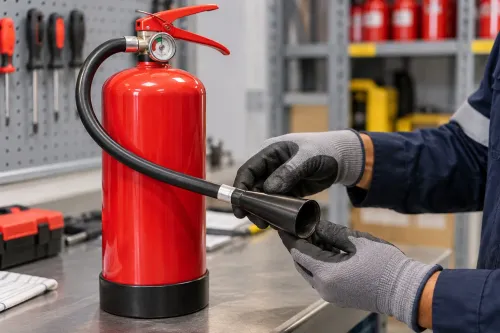
After rain or washdown, inspect each extinguisher where it stands, not only on the service bench. Look for:
- Rust, blistering, pitting, bulging or deep dents on the cylinder, especially around the base and neck
- Damaged threads, loose handles, valve parts or mounting brackets
- A bent safety pin, broken tamper seal, damaged gauge or leakage at the valve, hose or joints
- White or powdery deposits around the valve, hose or nozzle
- A blocked hose or nozzle, unreadable signage, or floor clearance reduced by pallets, plastic sheets or wash water
For dry powder extinguisher seasonal maintenance, check for caking, lumps, compaction and powder residue at the valve. Compare the current gross weight or agent weight with the marked value. A normal pressure-gauge reading proves pressure, not that usable powder remains inside.
| Agent or unit | Monsoon concern | What to inspect |
|---|---|---|
| Dry powder | Moisture causes caking and blocked discharge | Powder condition, valve, hose, nozzle and weight |
| Foam or water | Contamination, freezing or heat exposure can weaken the product according to its specification | Agent condition, container, seals and service label |
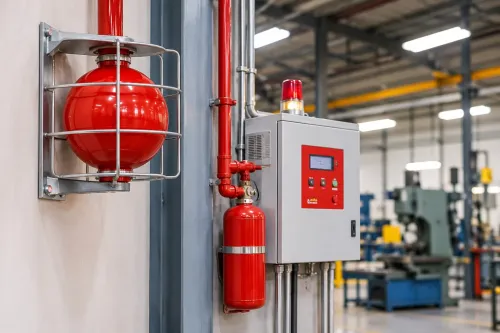
| Carbon dioxide | The gauge is not a reliable basis for judging contents | Valve, horn, cylinder, damage and weight |
| Clean agent | Leakage reduces protection without visible powder residue | Seals, weight and enclosure condition |
Quarantine any extinguisher submerged, wet inside the valve or hose, chemically exposed or severely corroded. Do not restore caked powder by shaking alone; send it for approved servicing.
When to clean, refill, hydrotest, replace or remove a unit
1. Start with an external visual inspection. Check the cylinder’s condition, access, identification and obvious leakage without opening it. If dirt, an obscured sign, reduced floor clearance or poor positioning is the only fault, clean and reposition the unit.
2. Record the annual maintenance scope, not merely “serviced.” Annual maintenance is a scheduled examination and service activity covering the extinguisher, operating parts, agent condition, seals, hose, mounting and required records. Wiping the cylinder or reading the gauge alone is not annual maintenance.
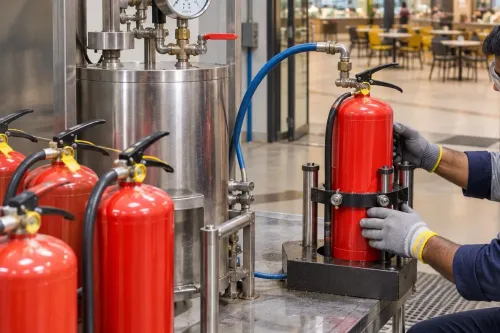
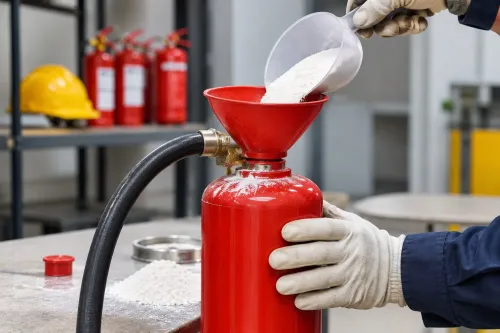
3. Refill the extinguisher after any discharge, including partial discharge, loss of pressure, underweight condition, contaminated or moisture-damaged agent, or an unserviceable seal or valve assembly. Replacing the safety pin or resealing the handle does not restore a partially discharged extinguisher. A normal gauge cannot confirm usable powder remains.
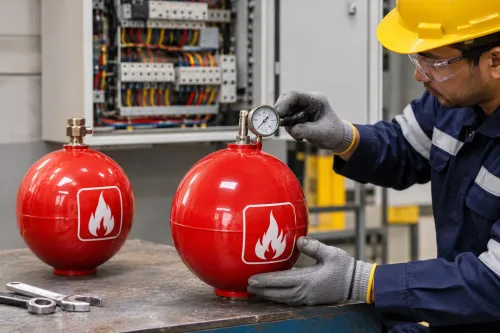
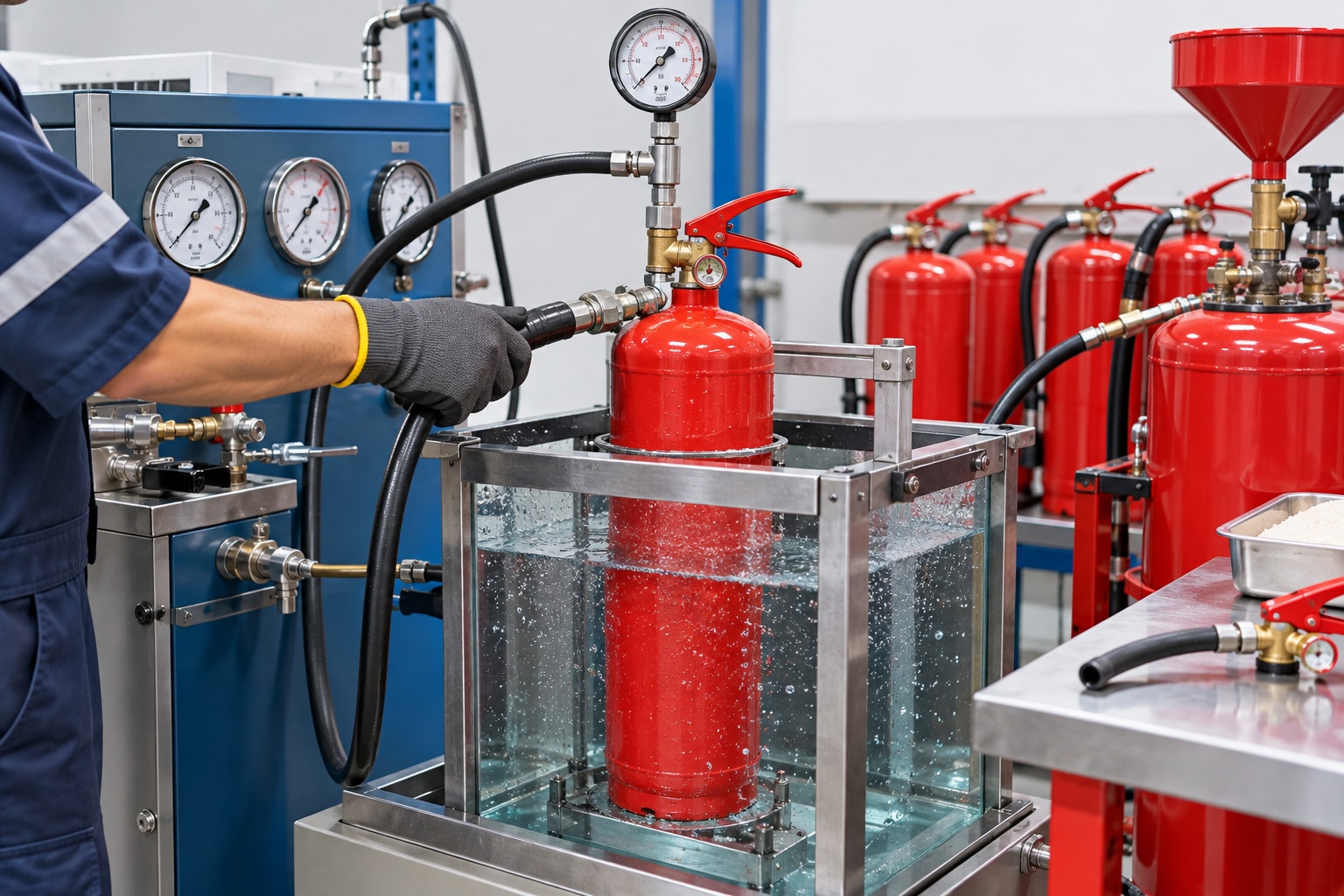
4. Arrange hydrotesting when the due date under IS 2190 or the manufacturer’s instructions arrives, or when damage warrants it. Industrial extinguisher hydrotesting in Bhandup requires the unit to be emptied and depressurised, the valve removed, internal and external inspection, and testing for leakage or unacceptable permanent expansion. A gauge check is not a hydrotest.
Remove the cylinder from service if it fails testing or has deep pitting, damaged threads, bulging, heat damage, chemical damage or unacceptable expansion; replace it rather than refill it. Monsoon conditions alone do not reset due dates or justify testing every cylinder.
How to keep fire cover while extinguishers leave the factory
Plan factory fire extinguisher monsoon service in Bhandup around a shutdown or planned inspection window. Controlled batches keep fire cover in place while units leave the site.
1. Before collection, record each asset number, location, extinguisher type, capacity, agent, hazard served and hydrotest due date. Mark whether it is the sole extinguisher protecting an electrical panel, DG room, paint or solvent store, commercial kitchen, hot-work area, loading bay or production process.
2. Place a suitable temporary replacement before removing any unit. Do not treat an ABC powder extinguisher as a substitute for electrical isolation, cooking-oil protection or a special-hazard system. The wrong agent can leave a fire uncontrolled or contaminate sensitive machinery.
3. Maintain a temporary-equipment register showing the outgoing unit, replacement unit, location, date, responsible person and return status. If a temporary unit remains after servicing, keep it recorded until the original is reinstalled and checked.
4. Send equipment in controlled batches, not all extinguishers from one production area at once. A missing extinguisher creates a compensating risk during the service visit.
5. Require an extinguisher-wise service record showing cylinder identification, manufacture or commissioning information where available, test date and result, refill date, agent type and quantity, parts replaced, and technician or provider details. An invoice marked “serviced” does not prove that the correct work occurred.
What to require when serviced extinguishers return
Require inspection and maintenance of every unit, refilling where required, and hydrotesting only for cylinders due for testing or otherwise requiring it under IS 2190 and the manufacturer’s instructions. A seasonal visit is not a reason to hydrotest every cylinder.
After each refill, require the provider to confirm:
- Correct agent type and weight
- Correct pressurisation and leak-free condition
- Correct valve and hose reassembly
- Unobstructed hose and nozzle
- Fitted safety pin and tamper seal
- Readable operating instructions
- Correct bracket installation and accessibility
Return each cylinder to its original hazard assignment. Restore its recorded location, signage, mounting bracket and required floor clearance; a full cylinder left behind a pallet is not operational protection.
Ask for an extinguisher-wise service register showing cylinder identification, type, capacity, refill date, agent and quantity, hydrotest date and result, parts replaced, technician details and next due action. Require a return-and-reinstallation check signed by the responsible factory representative, including every cylinder rejected for replacement and every temporary unit still deployed.
For Bhandup factories, the benefits of monsoon hydrotesting and refilling fire extinguishers depend on this evidence, not on a generic “serviced” invoice. A buyer comparing factory fire extinguisher monsoon service in Bhandup, including Ignitek Solutions Pvt Ltd, can use it to judge coverage.
The same specification makes industrial extinguisher hydrotesting in Bhandup a controlled program of detection, intervention and continuous fire cover.
Related products
 | Refilling and Hydrotesting Set Up Provider Refilling and hydrotesting of fire extinguishers must adhere to IS 2190: 2024, requiring annual maintenance, 3-year refilling for water/foam/powder,... View product → |
 | Refilling and Hydrotesting of Fire Extinguishers 4 kg Refilling a fire extinguisher is a critical safety procedure that involves replenishing the extinguishing agent and repressurising the unit to ensure... |
Frequently asked questions
Why should Bhandup factories inspect extinguishers during the monsoon?
Humidity, leaks, flooding and washdown condensation can damage cylinders, gauges, hoses, seals and dry powder before an emergency.
What should you check after rain or washdown?
Check for water or powder residue, corrosion, dents, blocked hoses, damaged seals, missing pins, unreadable labels and abnormal gauge readings.
When should a factory clean, refill, hydrotest, replace or remove an extinguisher?
Clean surface contamination when the cylinder remains sound; refill discharged or contaminated agents; hydrotest when the cylinder requires pressure testing; replace damaged units; remove unsafe or failed cylinders from service.
How can a factory maintain fire cover while extinguishers are serviced?
Use suitable spare extinguishers in the same locations and confirm coverage before sending units off-site.
What documents and checks should accompany serviced extinguishers?
Require the service date, work performed, cylinder identification, test result where applicable, agent details, technician or provider information, seal and updated inspection tag.
Related products
 | Refilling and Hydrotesting of Fire Extinguishers 6kg Refilling a fire extinguisher is a critical safety procedure that involves replenishing the extinguishing agent and repressurising the unit to ensure... |
 | Refilling and Hydrotesting of Fire Extinguishers 9 kg Refilling a fire extinguisher is a critical safety procedure that involves replenishing the extinguishing agent and repressurising the unit to ensure... |
 | Refilling and Hydrotesting of Fire Extinguishers 2 kg Refilling a fire extinguisher is a critical safety procedure that involves replenishing the extinguishing agent and repressurising the unit to ensure... |
Keywords