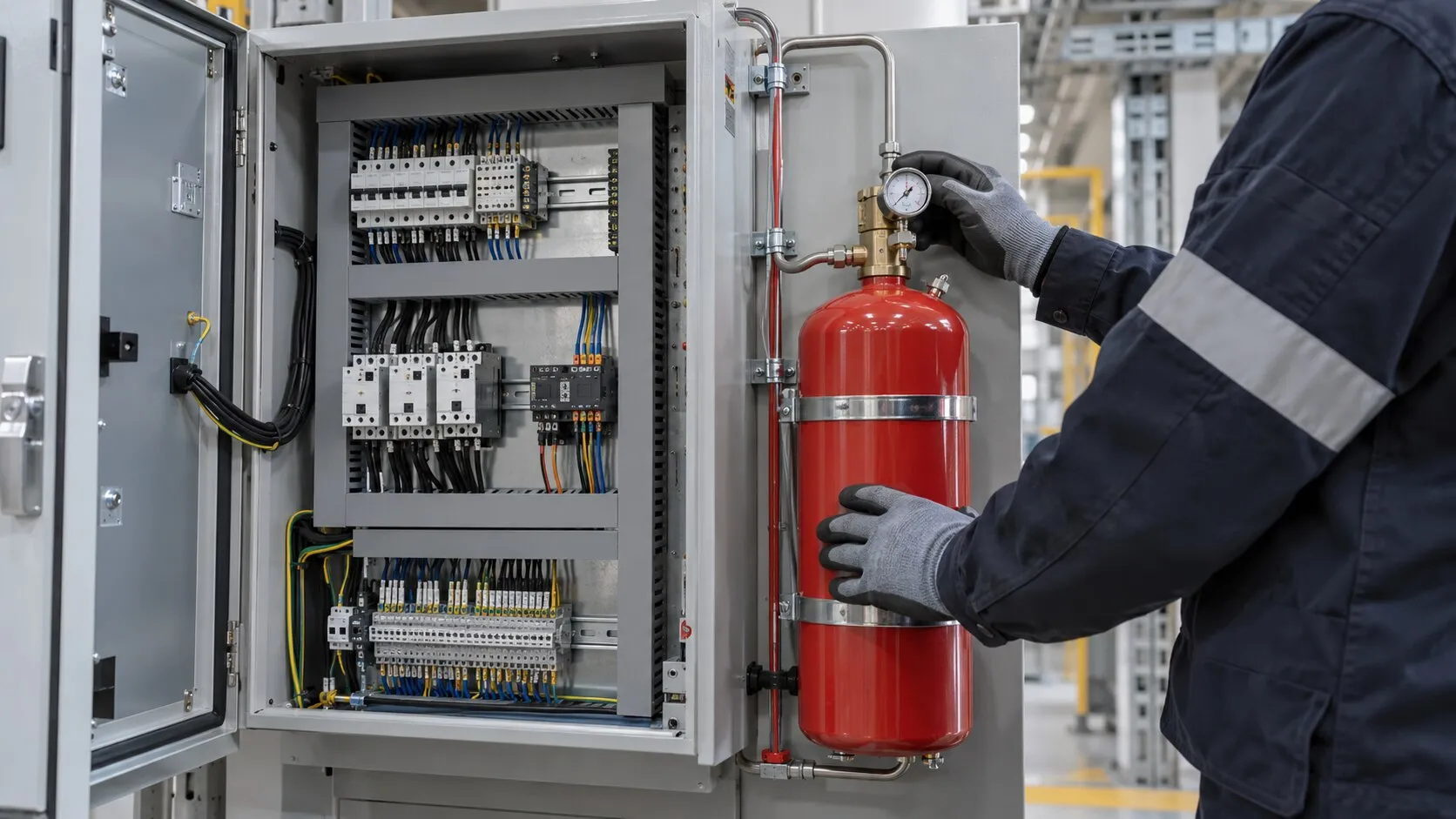
A normal pressure gauge does not prove that a dry-powder panel suppression system will detect heat, release agent, shut down equipment and discharge through an unobstructed nozzle. Use the seasonal procedure below to separate safe visual checks from controlled functional tests and specialist cylinder service, while preserving electrical and personnel safety.
Key takeaways
- Inspect before monsoon, after wet weather, and before restart following shutdown.
- Check cylinder pressure, hose condition, seals, bracket, nozzle, and powder-service records.
- Isolate release energy before testing detection devices or working near the actuator.
- Record defects, label impairments, and restore automatic protection after service.
Set the seasonal inspection around the panel’s real exposure
Inspect before the monsoon, immediately after the wet season, during prolonged summer heat, and before returning an extended-shutdown panel to service. These seasonal checks supplement the inspection intervals in the system listing and service manual; they do not replace them.
For panel suppression system maintenance in Bhandup, match each visit to the exposure:
- Before monsoon: inspect roof and wall leaks, cabinet-gasket compression, drainage around the panel, condensation risk, corrosion, and moisture inside the enclosure.
- After monsoon: look for water tracks, damp insulation, rusted terminals, blocked drains, and powder or residue affected by humidity.
- During summer heat: check cabinet ventilation, dust accumulation, overheated or loose terminations, insulation damage, overloaded circuits, and temperature effects on detection components.
- Before restarting after shutdown: remove unauthorized wiring, confirm covers and barriers are fitted, check battery and power connections, and verify that no stored material blocks the protected volume.
- After any modification: stop and obtain a design review if new cable trays, bus sections, drives, batteries, partitions, ventilation openings, or a replacement enclosure alter the discharge pattern or protected volume.
A clean enclosure is not automatically a safe one. Water ingress, poor drainage, blocked ventilation, or an electrical defect can start a panel fire or prevent detection and suppression. Record each defect, keep the system impaired until protection is restored, and escalate conditions the manual does not define to an authorised service technician.
Check the dry-powder cylinder beyond the gauge
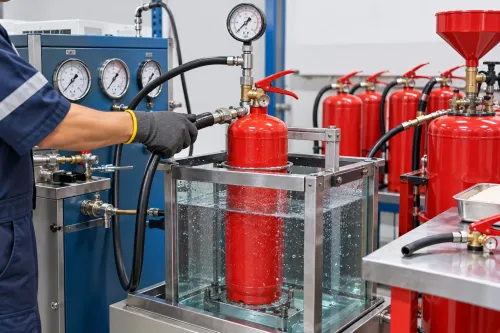
A gauge in the normal zone does not prove that the cylinder remains serviceable. For panel suppression system dry-powder checks in Bhandup, inspect the agent container for moisture, caking, lost mass, corrosion and physical damage, then apply the system manufacturer’s listed service procedure.
Never open a pressurised cylinder or disturb its valve without an authorised technician.
- Confirm the gauge pointer sits in the marked operating range and check for a cracked lens, bent stem or pressure loss.
- Inspect the cylinder body, neck, valve and mounting bracket for rust, dents, abrasion, leakage or movement.
- Check the tamper seal, safety pin, actuation mechanism and discharge outlet; a missing seal, displaced pin or blocked outlet is a defect.
- Examine filling ports, hose connections, conduit entries, cabinet gaskets and drainage for condensation, water marks or powder residue.
- Compare the cylinder or cartridge identification, agent type, fill mass and service date with the system record. A missing or illegible marking prevents reliable acceptance.
- Have the technician verify agent mass and powder condition using the manufacturer’s method. Do not shake, tap or invert the cylinder to break suspected compaction.
Caked dry powder can fail to flow even while pressure appears normal. Treat unexplained weight loss, moisture ingress, severe corrosion, a damaged valve or failed seal as an impairment: isolate the release circuit, protect the enclosure with an approved temporary control, and arrange service under NFPA 17 and the installed system’s manual.
Inspect the detection and release path without creating a hazard
Before testing detection or release, make the enclosure safe to open and the release path incapable of discharging powder. Notify the monitoring station or building control point, identify the release-isolation method, and apply electrical isolation with lockout/tagout at the panel.
1. Confirm that the installed agent matches the system listing and electrical hazard. Sodium-bicarbonate, potassium-bicarbonate and monoammonium-phosphate powders are not interchangeable; substitution or mixing can invalidate dry powder panel protection.
2. Inspect the protected volume for new cable trays, bus sections, drives, battery units, partitions, ventilation openings or a replacement enclosure. Any change that redirects discharge or alters volume requires a design review before testing.
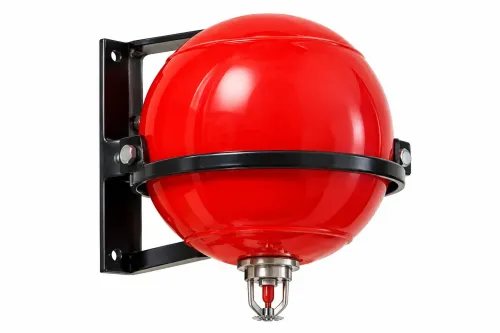
3. Check the detection and actuation route: heat-detection tubing for cracks, kinks or loose clips; fusible links for contamination or damage; nozzles for blockage and correct direction; brackets, hoses, valves and actuation mechanisms for movement, corrosion or moisture ingress. Inspect conduit entries, enclosure seals and cabinet drainage for monsoon-related water paths or powder caking.
4. Verify wiring continuity, alarm transmission, equipment shutdown and other interlocks without energising an unsafe circuit. Dry chemical provides limited cooling, so a panel that releases powder but fails to shut down can reignite.
5. Test manual-release points only under the approved controlled procedure, with personnel clear and the release isolated. Refit guards, remove lockout under the authorised sequence, restore automatic service, and confirm the monitoring signal has returned to normal. Never treat a successful indication as proof that a discharge test is safe.
Separate a visual check from a functional test or discharge service
A visual check covers seasonal electrical panel fire protection checks; a functional test does not. From a safe position, observe the enclosure, detector, nozzle, wiring, gauge, tamper seal and safety pin. Inspect inside the panel only after electrical isolation; loose or overheated terminations, damaged insulation, dust, moisture and unauthorised wiring are defects.
| Task | What you can observe or do | Isolation and authorisation |
|---|---|---|
| Seasonal visual check | Look for damage, contamination, blocked nozzles, leaks and altered components | No release test; a trained site person can report defects |
| Detection and release test | Do not rely on alarm lamps or a clear detector alone | Isolate release, notify monitoring, apply lockout/tagout and use an authorised technician |
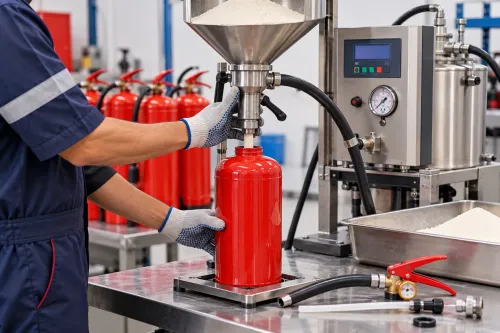
| Discharge or recharge service | Never discharge powder into live equipment | Controlled service by an authorised technician with approved handling |
Before testing, identify the release-isolation method and notify the monitoring station or building control point. The technician tests detection separately from the cylinder, including manual release, abort or delay functions, audible/visual indications, and alarm, release and equipment-shutdown signals. Restore automatic service and verify system status before re-energising.
Dry chemical provides limited cooling, so do not return a hot panel to service until shutdown and reignition risks are controlled. A changed enclosure, cable tray or ventilation opening requires design review.
Record defects, control impairment and restore automatic protection
A signed acceptance record proves the panel returned to automatic protection; a checklist alone does not. Identify the panel, location, inspection date, technician, system listing, agent type, cylinder pressure or weight, and the status before and after testing.
Record each result, not just “passed”:
- Detector, heat-tubing or fusible-link condition; release circuit continuity; alarm and monitoring-station signals
- Nozzle, pipe, bracket, actuation device, manual release, wiring, cabinet seal and enclosure condition
- Electrical panel fire protection checks covering overheated terminations, loose connections, damaged insulation, blocked ventilation, dust, leaks, condensation and unauthorised wiring
- Defect description, photograph or reference number, responsible person, due date and closure evidence
Treat low pressure, incorrect weight, a broken seal, damaged actuation device, failed circuit, blocked nozzle, corroded pipe or unavailable approved agent as a life-safety impairment. Do not accept generic powder or mixed agents; verify the installed agent against the system listing and service manual.
Before a controlled functional test, document release isolation, monitoring-station notification and electrical isolation with lockout/tagout where the enclosure must open. If automatic protection is unavailable, record the impairment period and controls: qualified fire watch, removal of combustible or energized hazards where practicable, and restricted access.
After testing, remove isolation, restore the release mechanism, confirm the automatic mode indication, reseal the system, clear alarms and obtain signatures. For panel suppression system maintenance in Bhandup, Ignitek Solutions Pvt Ltd should leave this completed record with the site owner.
Related products
 | Panel Suppression System 3 kg The Panel Protection System is the most effective and reliable product for protection of enclosed panels or cabinets from fire. |
 | Panel Suppression System 4 kg The Panel Protection System is the most effective and reliable product for protection of enclosed panels or cabinets from fire. |
Frequently asked questions
When should you schedule seasonal checks for a panel suppression system?
Inspect before the monsoon, immediately after the wet season, during prolonged summer heat, and before returning an extended-shutdown panel to service. Follow the system listing and service manual for routine intervals.
What should you check on a dry-powder cylinder besides the gauge?
Inspect the cylinder body for corrosion or damage, confirm the mounting bracket is secure, examine the hose and nozzle, check seals and actuator connections, and review powder-service records.
How can you inspect the detection and release path without causing discharge?
Place the system in the manufacturer’s approved test or isolation condition, control release energy, and follow the service manual before testing detection devices, wiring, tubing, or the actuator.
What is the difference between a visual check and a functional test?
A visual check looks for accessible damage, corrosion, obstruction, loose parts, missing seals, and incorrect indications. A functional test verifies operation under the manufacturer’s procedure; discharge or cylinder servicing requires qualified personnel and controlled equipment.
What should you do when seasonal inspection finds a defect?
Record the defect, identify the affected protection zone, control the impairment, notify responsible site personnel, provide interim fire precautions, and restore automatic protection after repair and verification.
Related products
 | Panel Suppression System 2 kg The Panel Protection System is the most effective and reliable product for protection of enclosed panels or cabinets from fire. |
 | Panel Suppression System 6 kg The Panel Protection System is the most effective and reliable product for protection of enclosed panels or cabinets from fire. |
 | Refilling and Hydrotesting Set Up Provider Refilling and hydrotesting of fire extinguishers must adhere to IS 2190: 2024, requiring annual maintenance, 3-year refilling for water/foam/powder,... View product → |
Keywords